Interactive DJ desk - build page
Main project page here.
This was a relatively straightforward project from a technical viewpoint, it was just very important to get it all working reliably as it was going overseas and had to function correctly for the duration of the festival.
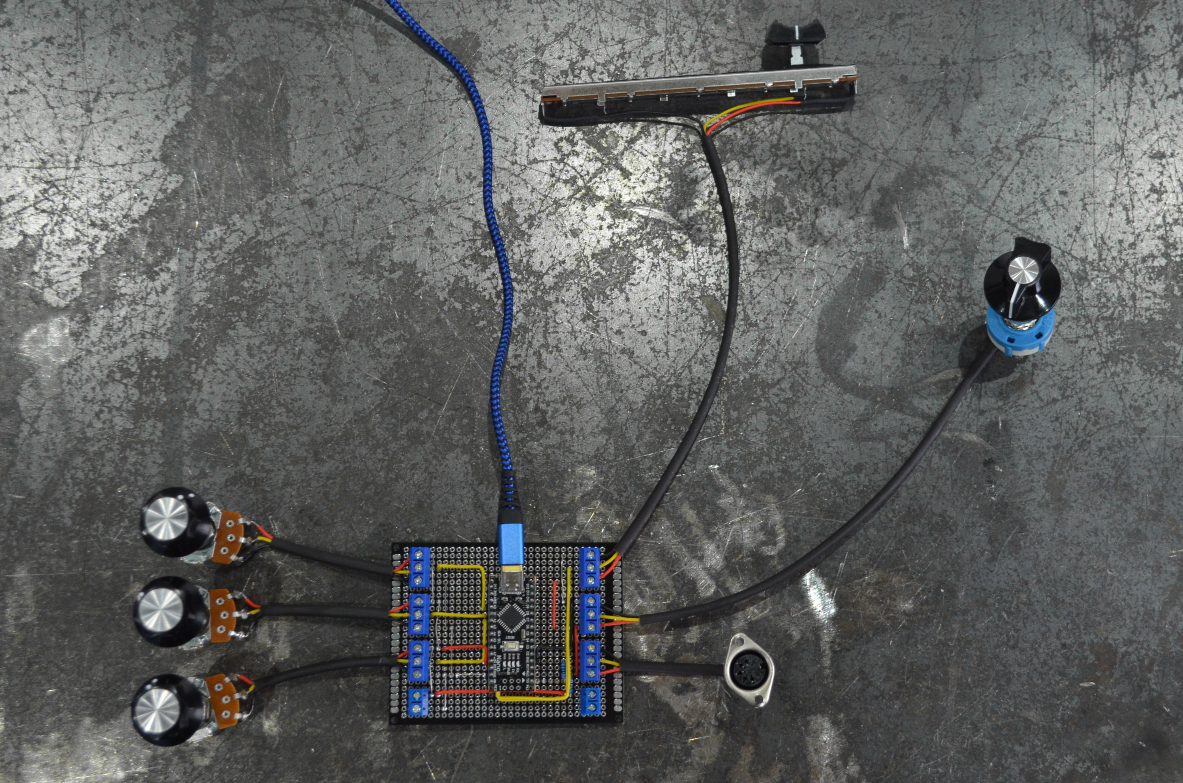
As always the first thing to do was to test the basic idea, and so this little MIDI controller was wired up. The pots sent MIDI CC messages, and the selector switch had 5 positions to emulate the 5 turntables.
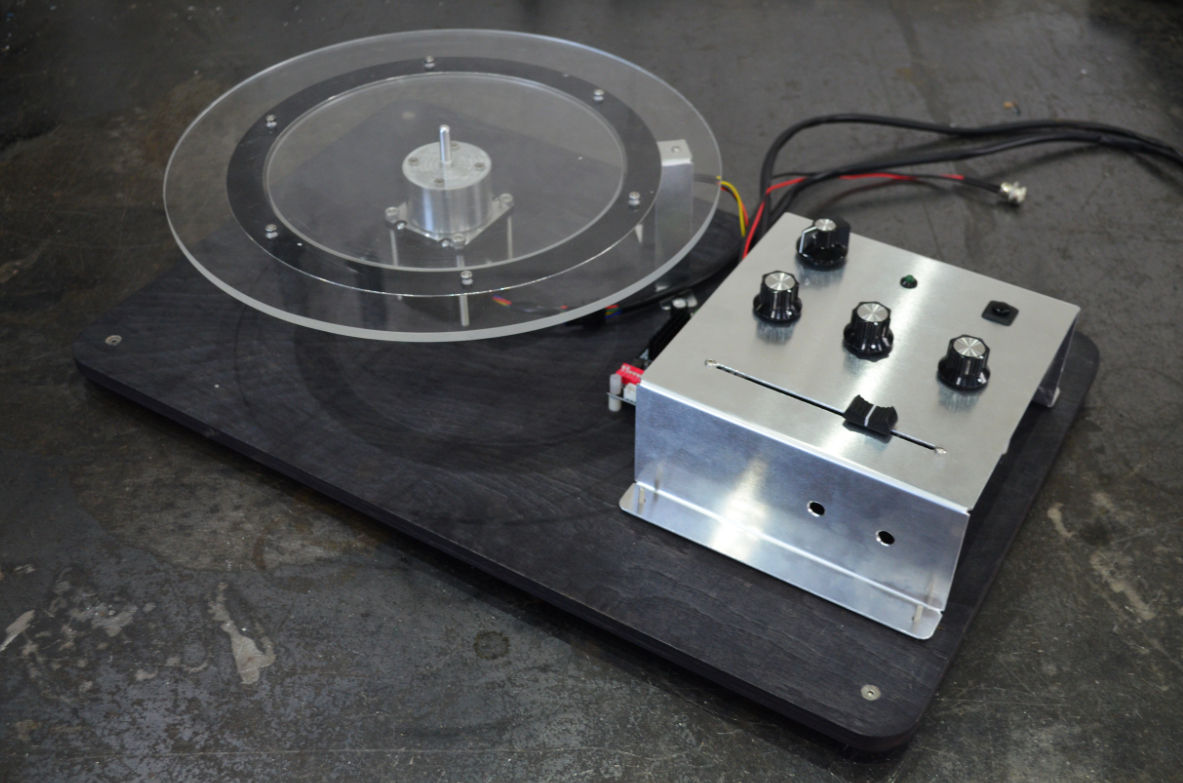
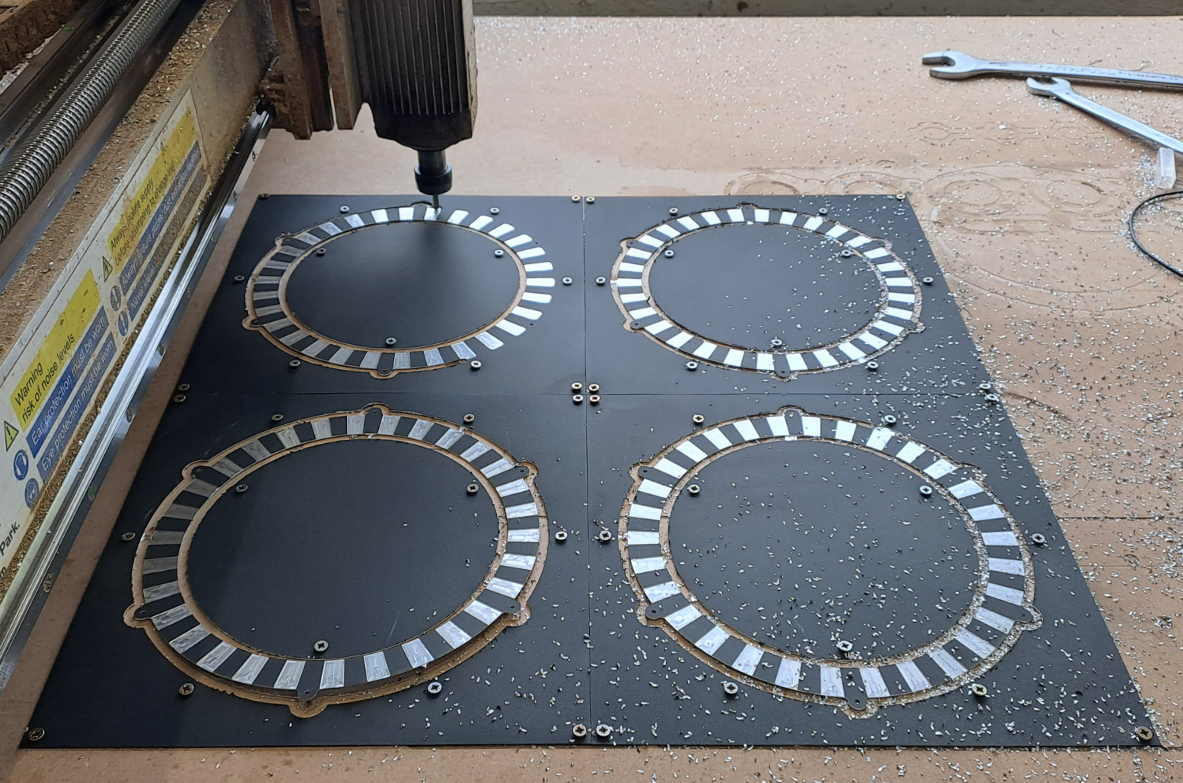
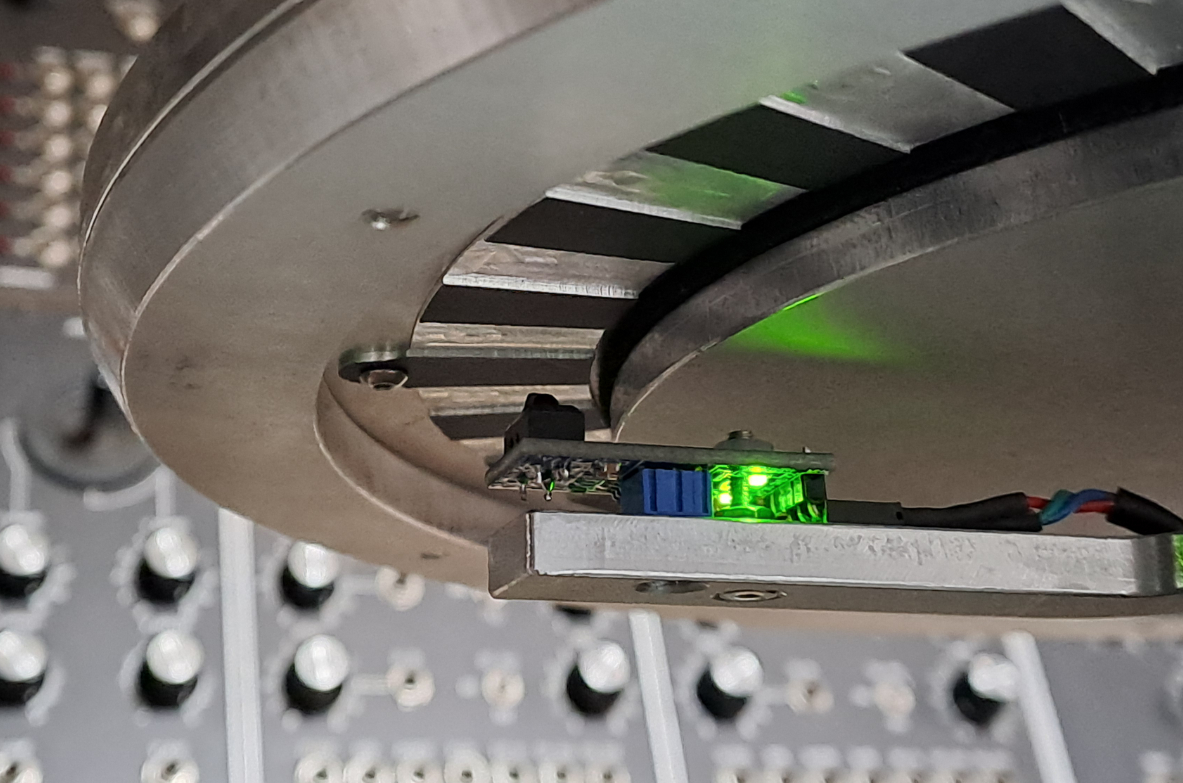
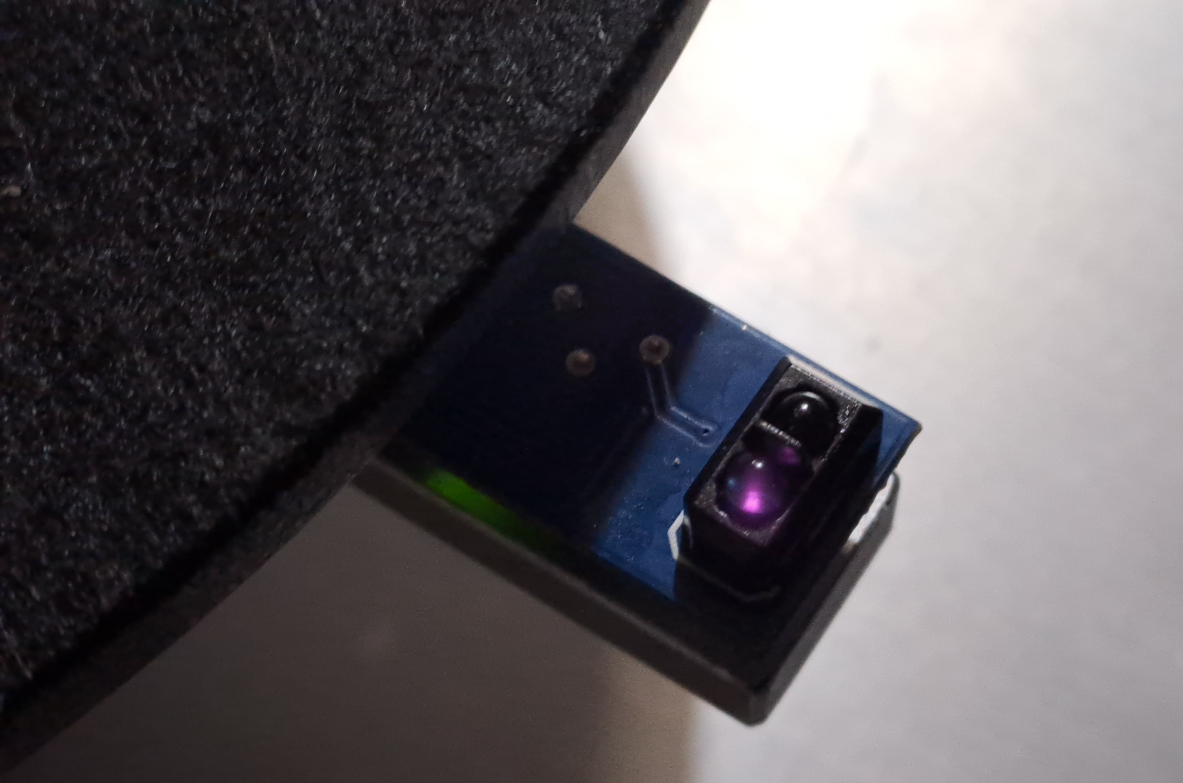
This prototype was quickly put together to test the interactive turntable. An optical sensor reads a striped ring on the underside of the platter, and the system detects a decrease in speed if someone places their hand on top. The platter is free to move on a slipmat. The decrease in frequency is then mapped to a MIDI message sent to Ableton Live, which activates a plug-in that alters the pitch of the audio on that channel.
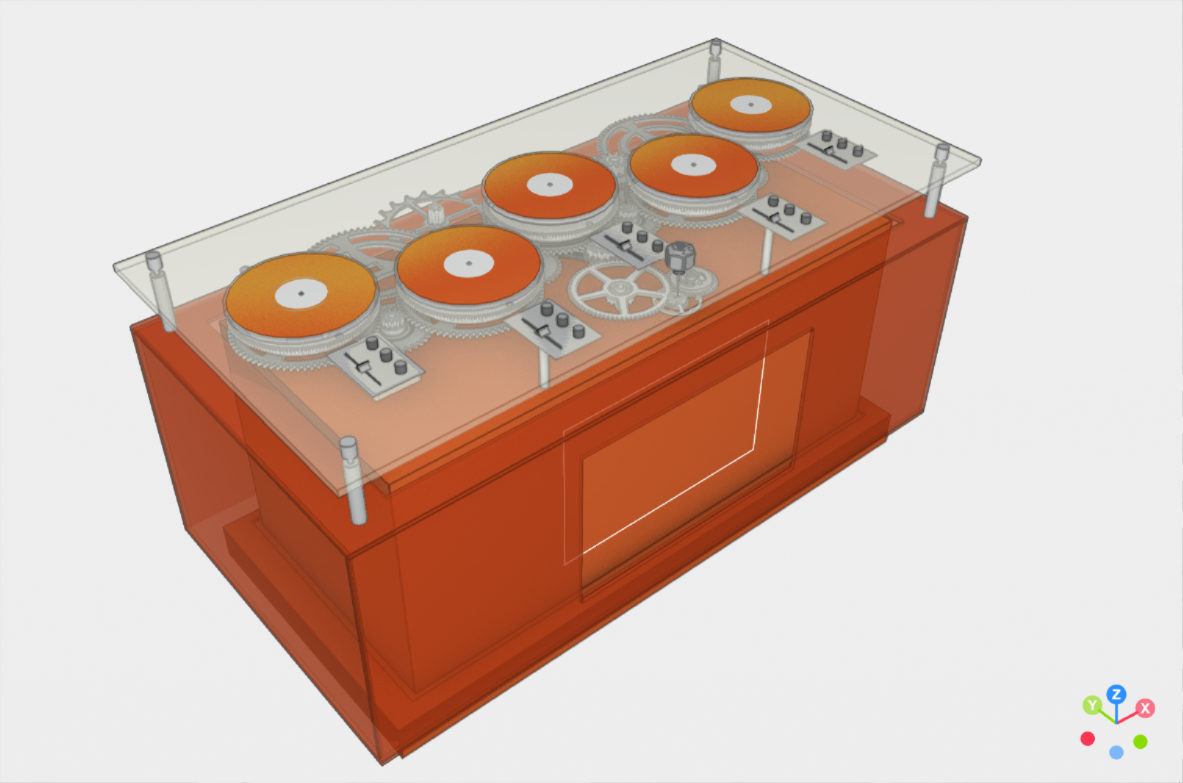
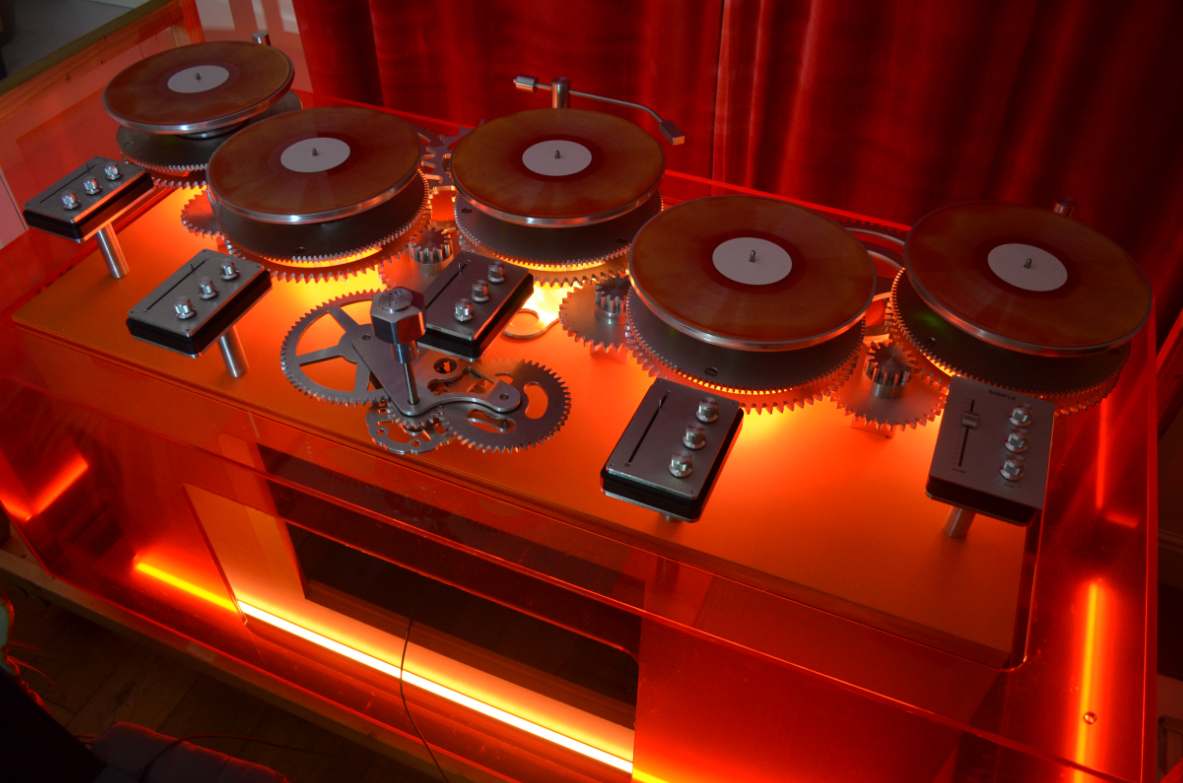
There wasn't very much time to make the DJ desk, so it was hugely helpful that the agency provided a Sketchup model of how they wanted it to look. I just aimed to make everything look as close as possible to the model, but added brackets, fixings, wiring etc. to make it work in real life.
There is a danger sometimes of the client seeing the perfect computer generated model before the real thing, as the model doesn't have to take gravity or other inconveniences into account, but this time the end result was a relatively close match.
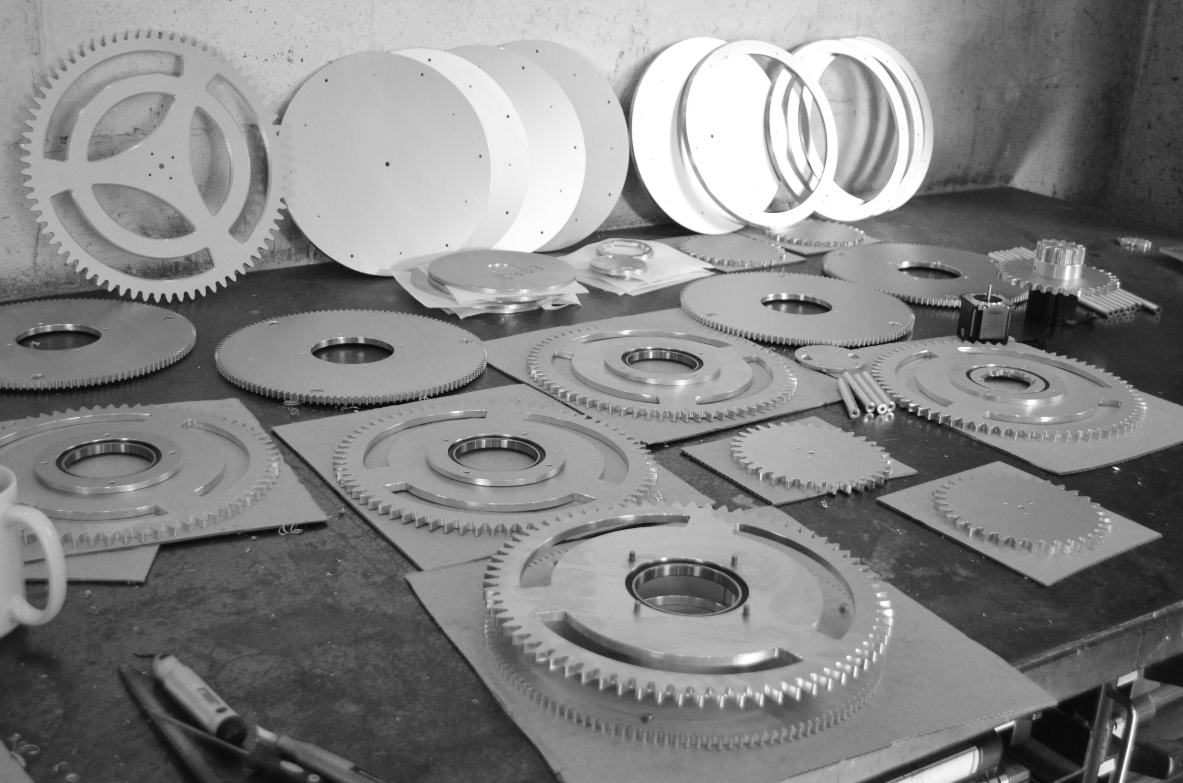
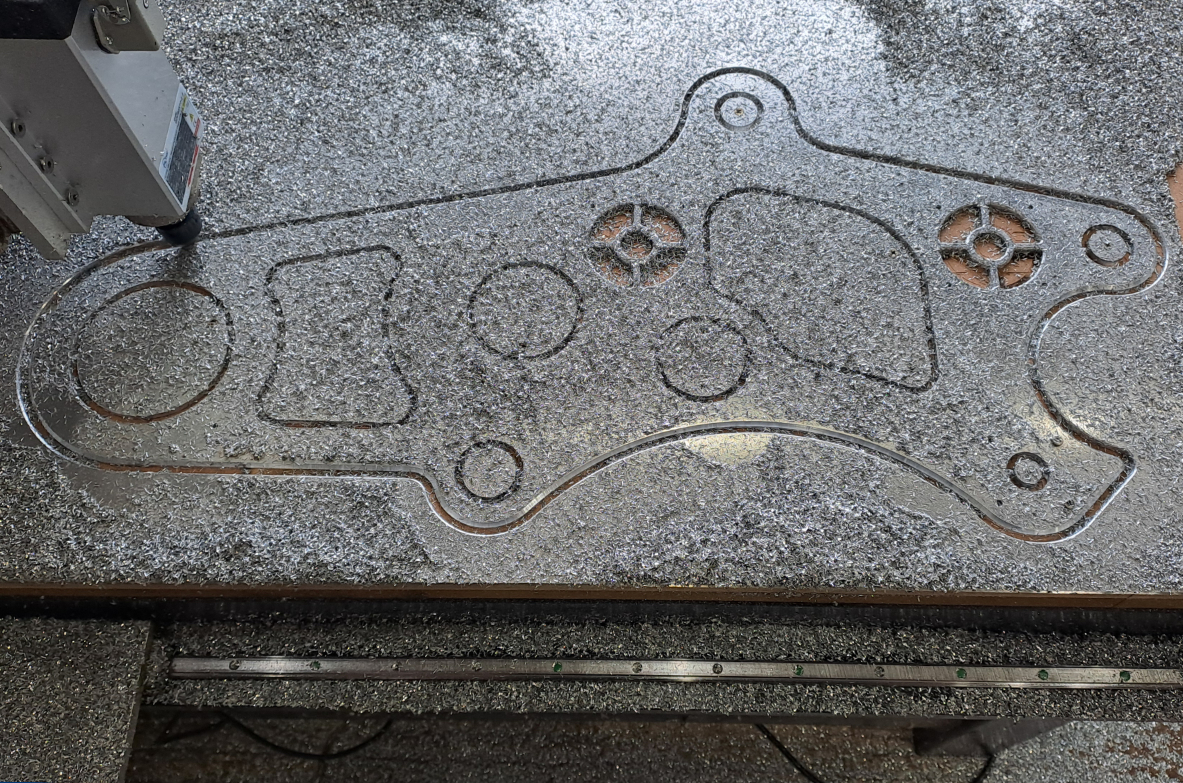
I started cutting the gears as soon as I could, to try and leave as much time as possible to work on making everything super reliable. The CNC machine was running 15 hours a day.
I realise the components could've been laser cut, but I prefer to work on a few parts at a time to allow those parts to inform the design of the next batch. This method of feedback allows corrections and improvements as the project progresses, rather than committing to one big parts order that in hindsight contains oversights and missed opportunities for improvement.
It's great when the project gets into an efficient rhythm of drawing up the next batch of parts while the CNC machine is busy.
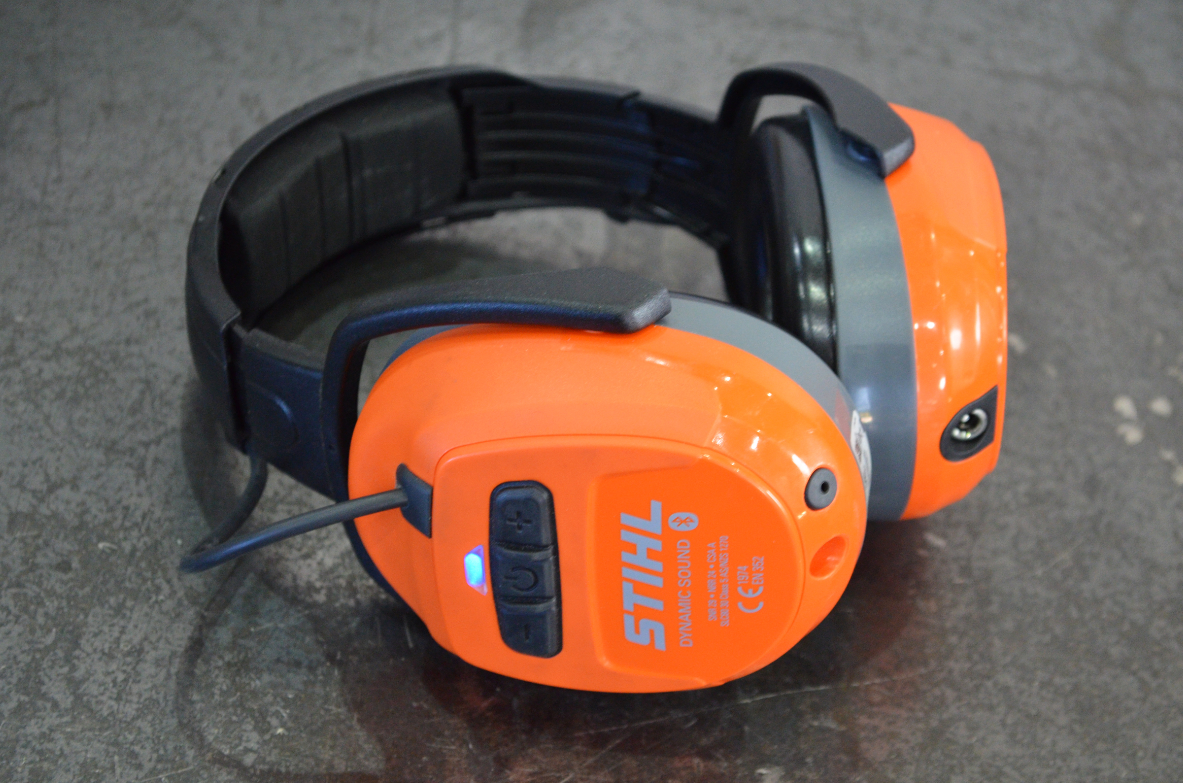
These were great for dealing with the constant noise while the gears were being cut. So good to be able to get work done and explore new music at the same time. Stihl dynamic bluetooth ear defenders, GBP £93.
100mm bearings were used to fit a second nema 23 motor within the turntable assemblies, so that the different layers could rotate in different directions.
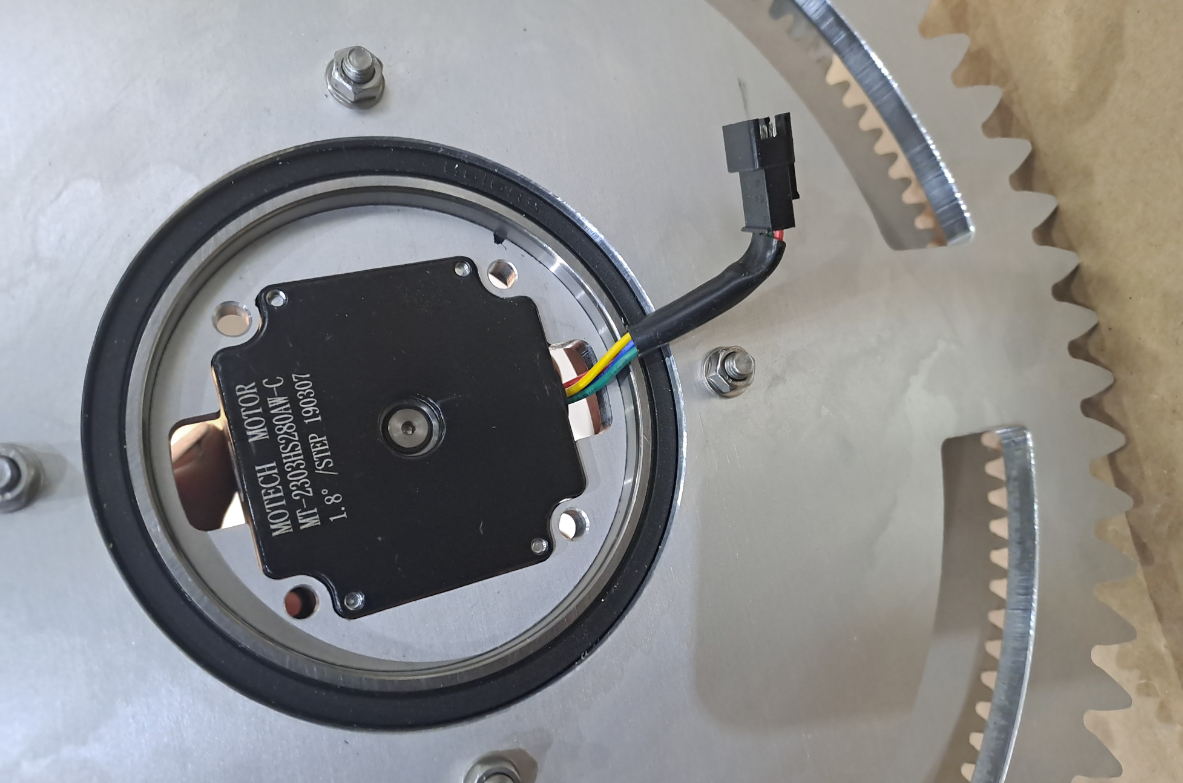
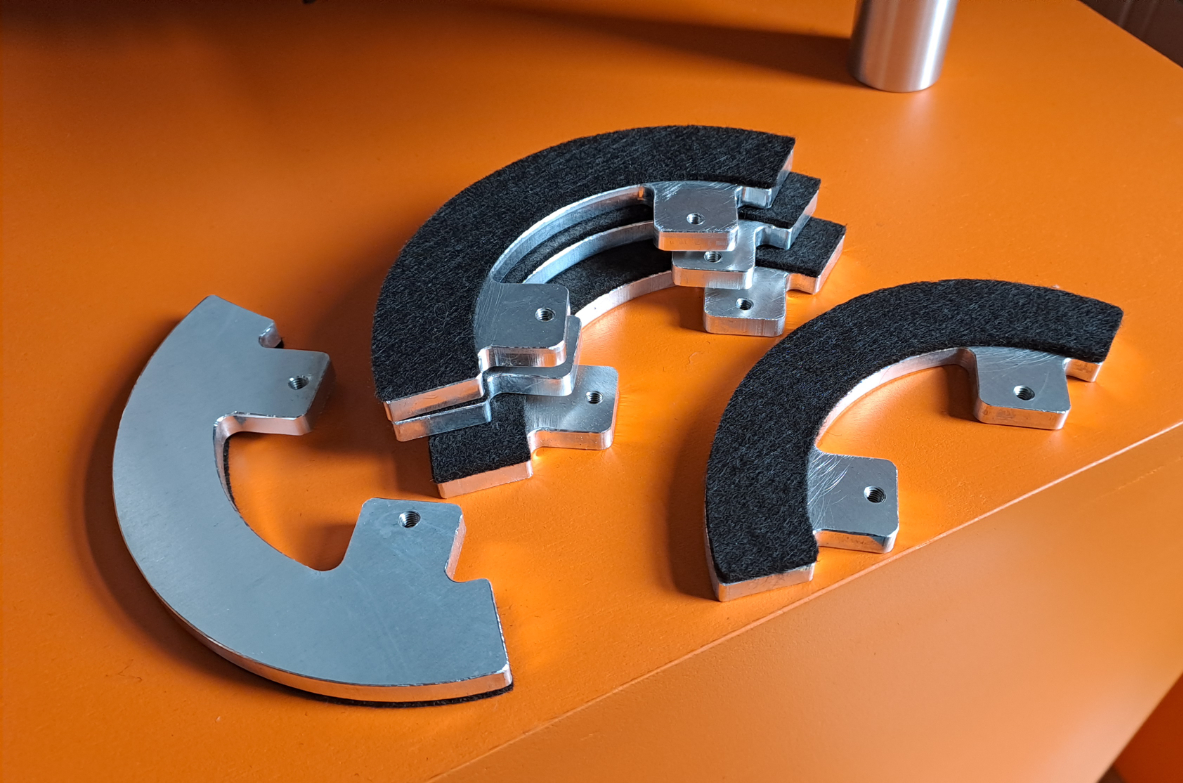
These are the felt slipmats, which allow the top platters to be stopped by hand while the motor continues to rotate.
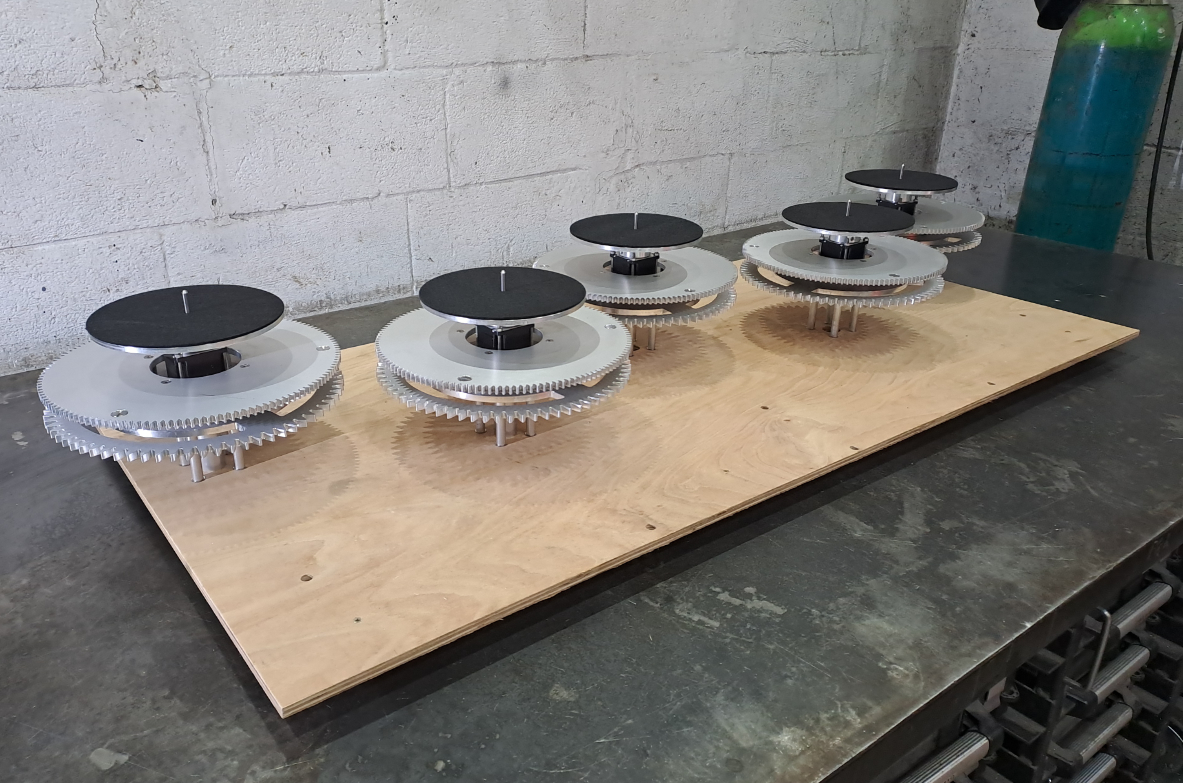
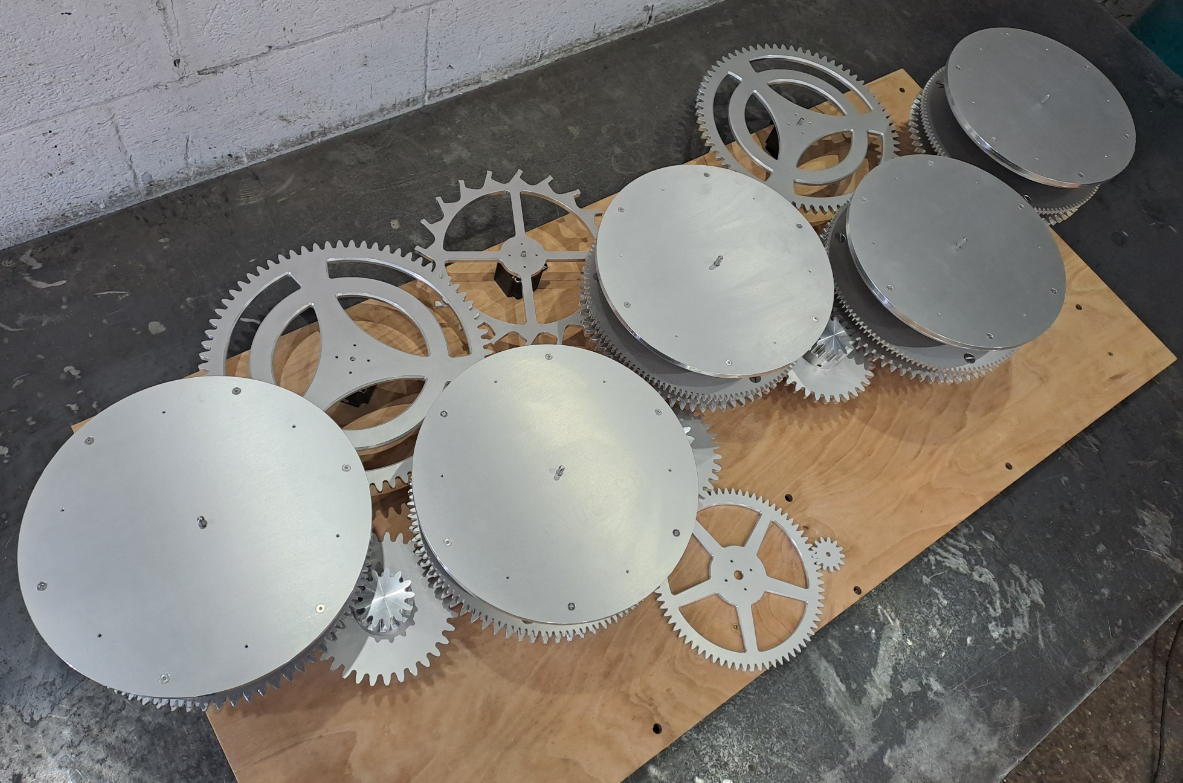
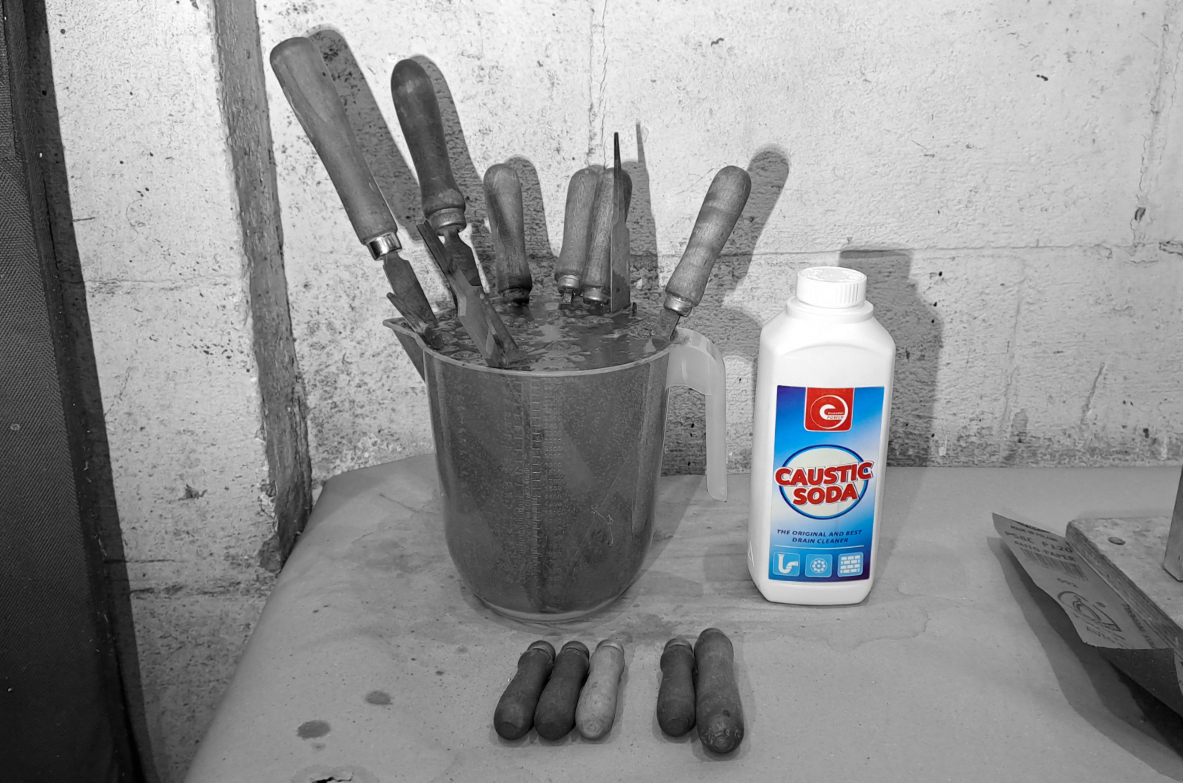
Sodium hydroxide is a great way to clean files clogged with aluminium - leave overnight and the aluminium melts away, but the steel isn't affected.
During this project the bearings seized in the CNC spindle, but luckily I had a spare. The old one lasted 10 years and saw an incredible amount of use.
Years ago I was heading out to install something or other and I remember the van driver telling me that there was no point worrying about the job as there was nothing that could be done during the van journey. I actually disagree with this advice, as incessant worrying can be quite useful sometimes. Obsessively imagining how things could go wrong meant that I had a spare spindle ready for the CNC machine.
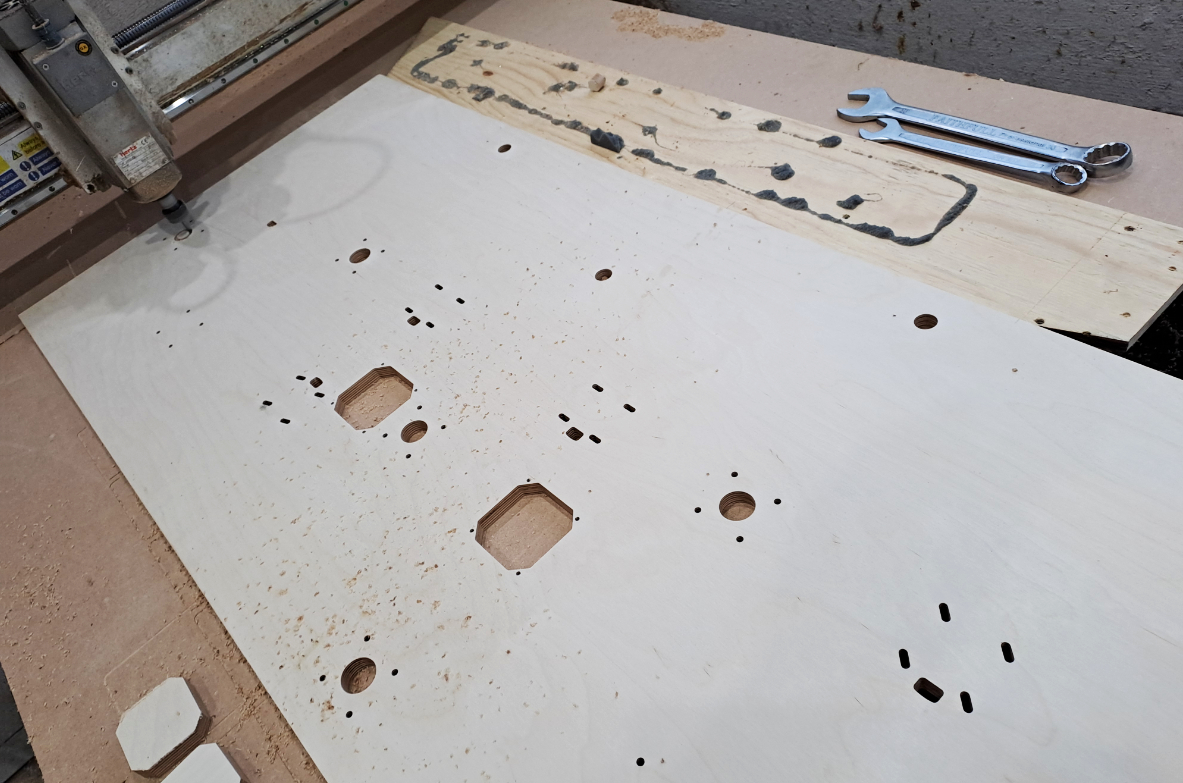
After finalising the positions of everything, the top was cut and sent to Old Rectory Joinery, who used it to build the inner plinth. The slots in the plywood allow the motor positions to be adjusted so that the gear teeth mesh nicely.
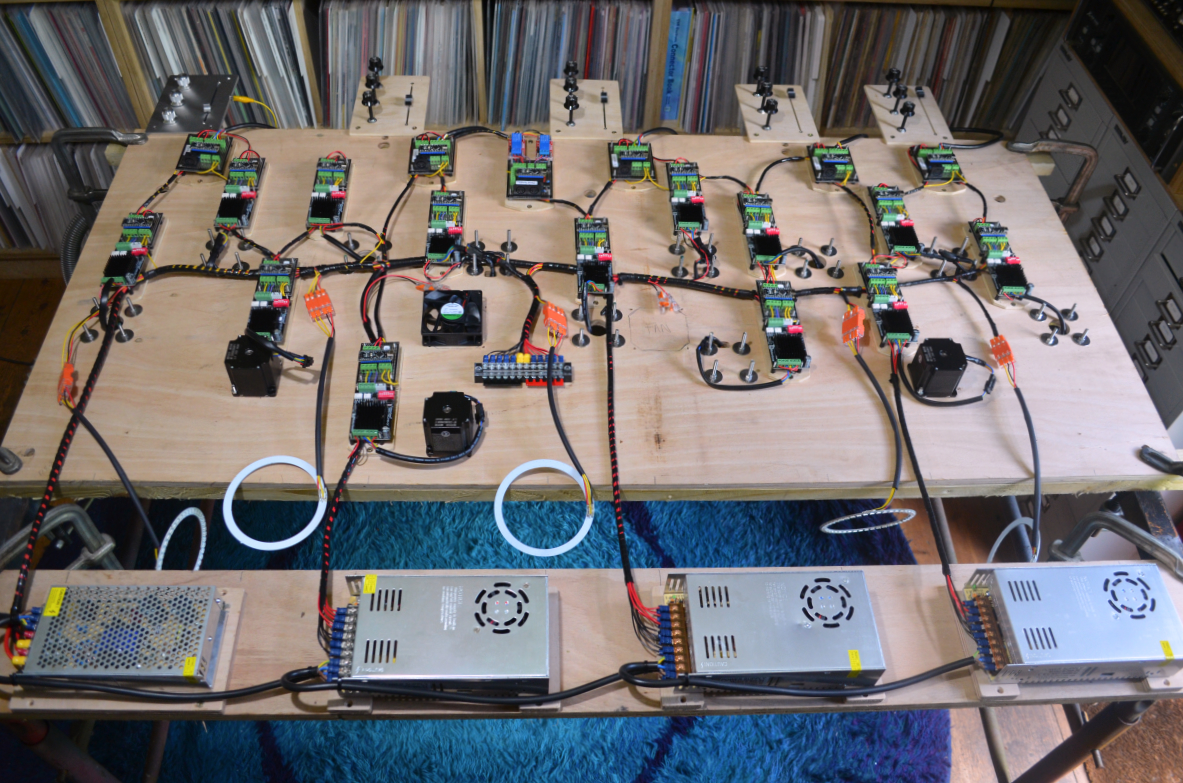
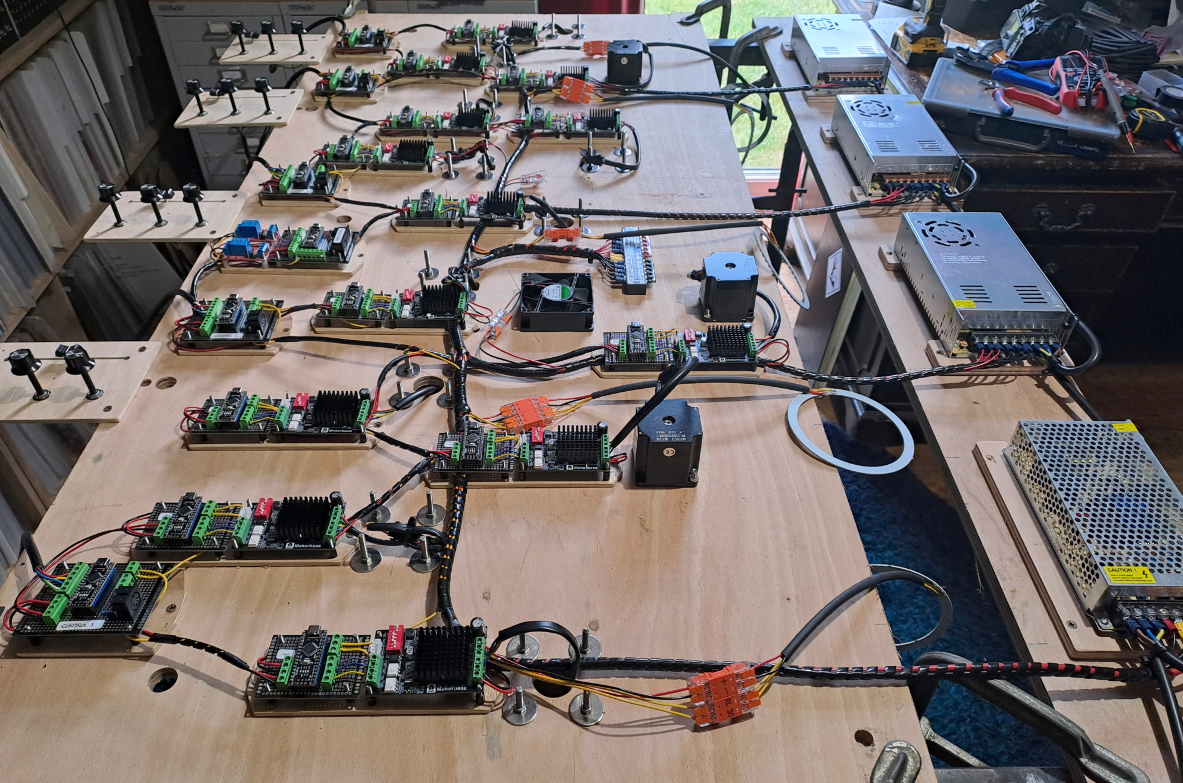
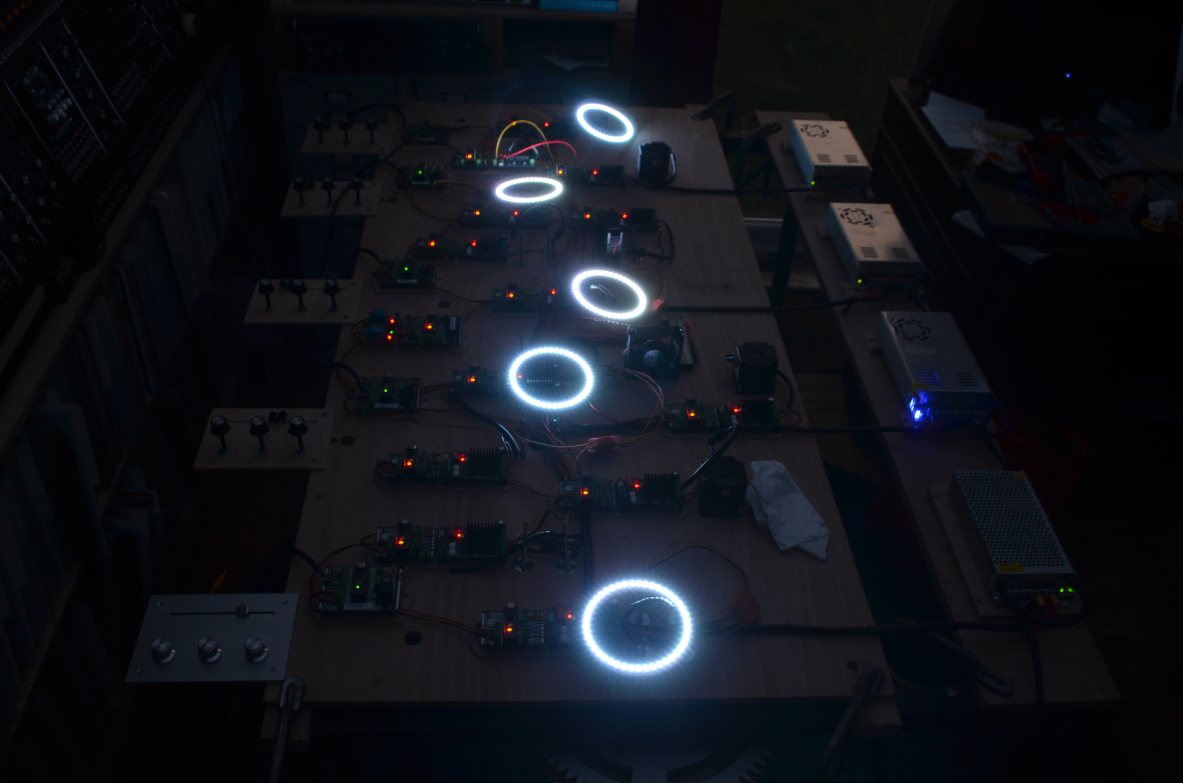
While the plinth was being fabricated a duplicate top was used to lay out the electronics.
There's an Arduino nano and stepper motor driver board for each of the 13 motors. The setup is identical for each, but the code can be adjusted to customise the speed and direction of each motor, including the intermittent motion programmed for the escapement gear.
There are further Arduinos for each of the 5 control panels, and then one control board to tell all the others when to start and stop. The control one also fades the LED lighting up and down.
There are 19 Arduinos in total, and they share a common bus wire that lets them all know when to activate.
The lighting under the turntables was provided by neopixel rings.
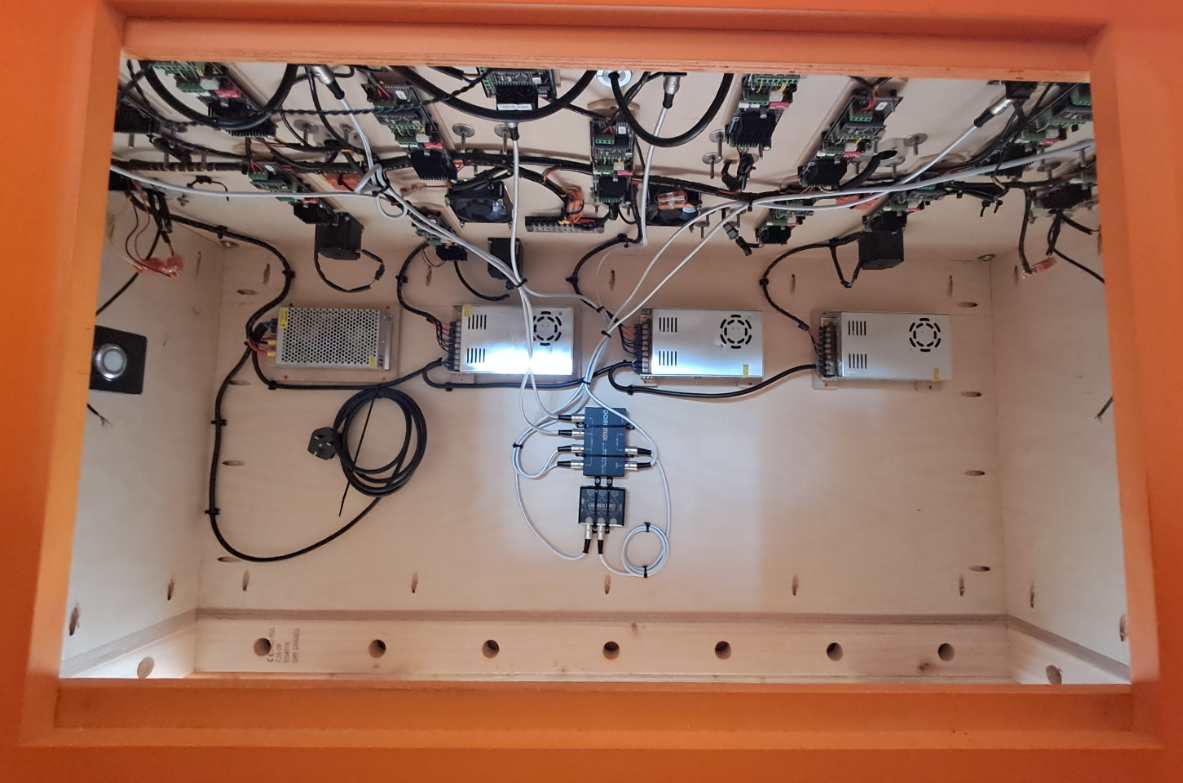
When the finished plinth returned it was carefully tipped on its side and the wiring loom transferred. Leaving the base open was a great idea.
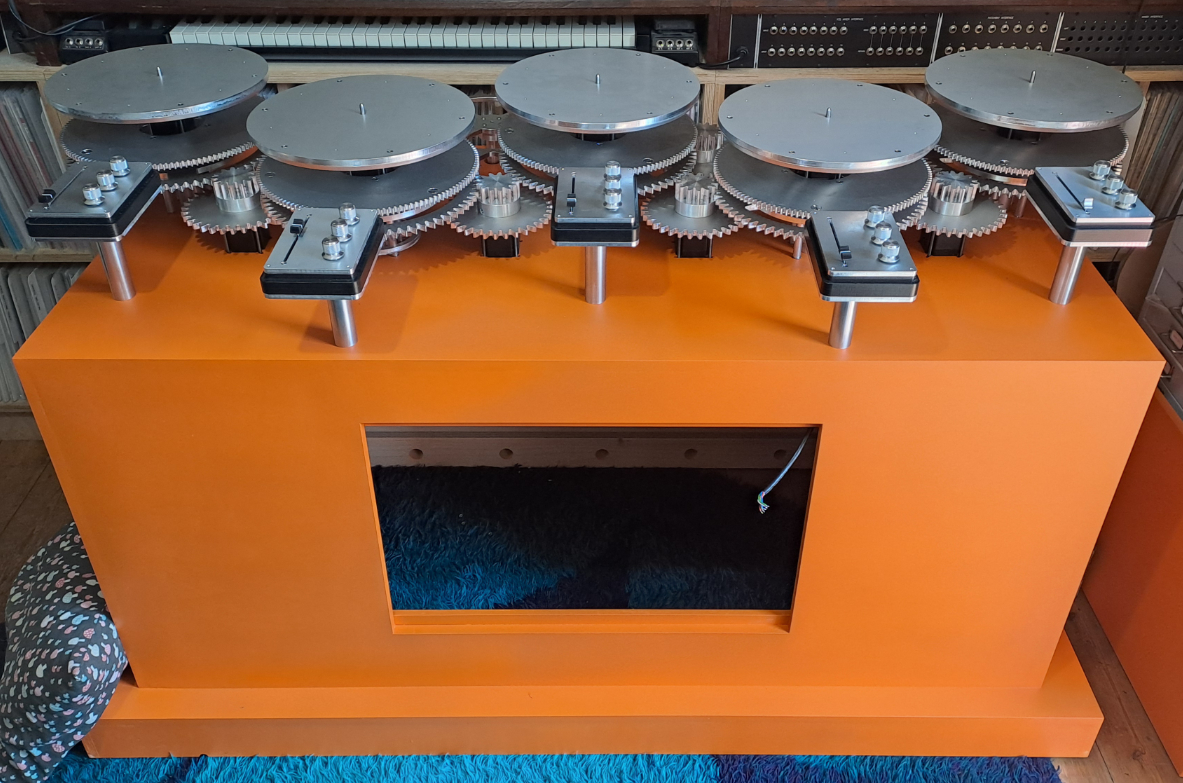
MIDI messages are combined by a merge box and interface connected to Ableton Live 12, on a laptop hidden within the plinth. Mapping the controls to the various parameters in Ableton is fantastically easy - just click the MIDI map button, click on a feature that you wish to control, then wiggle the knob that you want to link to that feature.
The 5 turntables are mounted directly to their respective motors, but the decorative gears underneath are driven by smaller offset gears. It was a wonderful moment switching them all on for the first time, but they made a terrific noise. The subtle rotational pulsing from the stepper motors combined with the fact the driven gear had no load resulted in a spectacular chattering sound.
The motors themselves were incredibly quiet, controlled by MKS TMC2160-OC drivers.
Felt pads were added to stop the gears sounding like a cartoon portcullis.
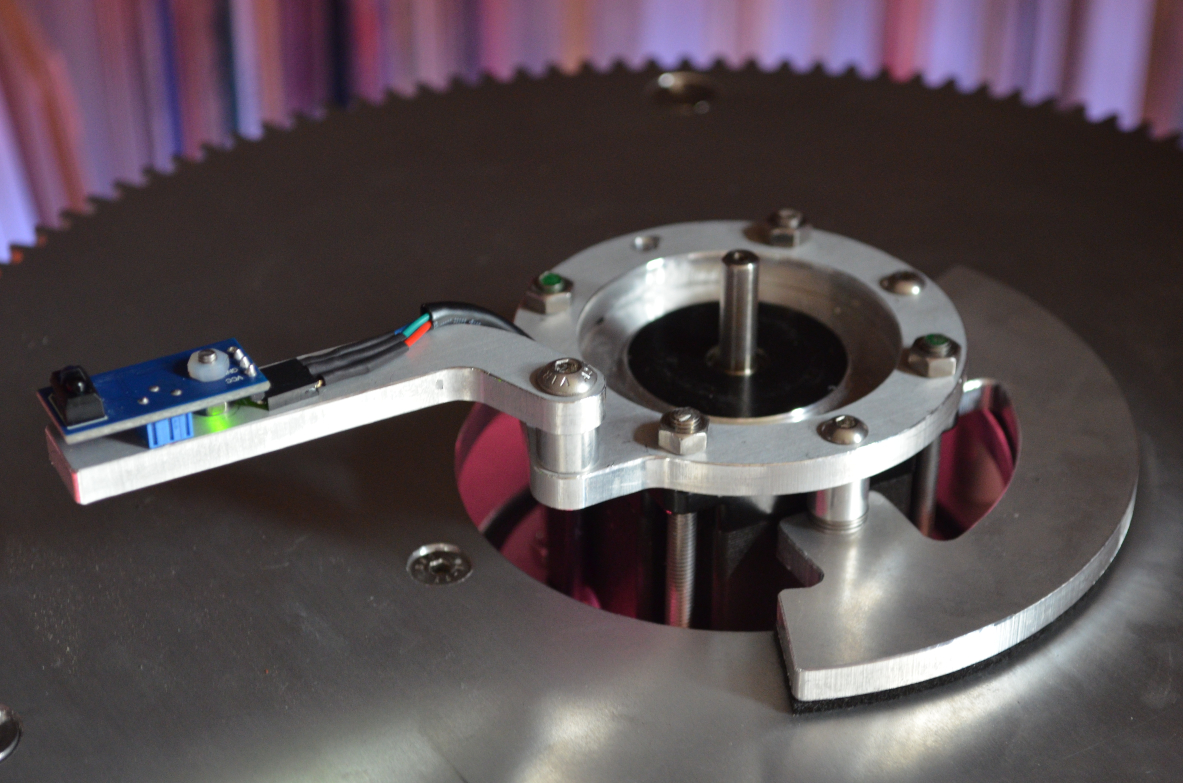
 This image shows the fitted felt damper, and also the opto sensor on its bracket. The bracket could pivot to allow it to pass through the holes when the glass was fitted.
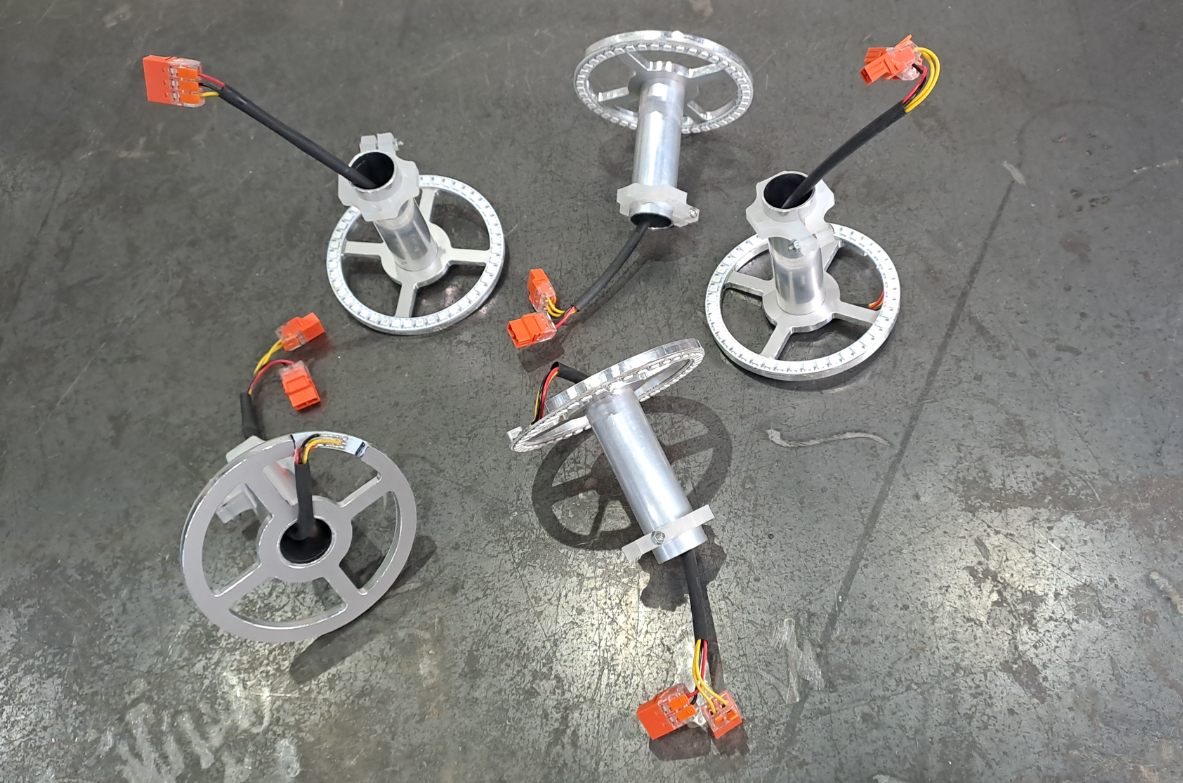
These are the striped rings for the sensors to read.
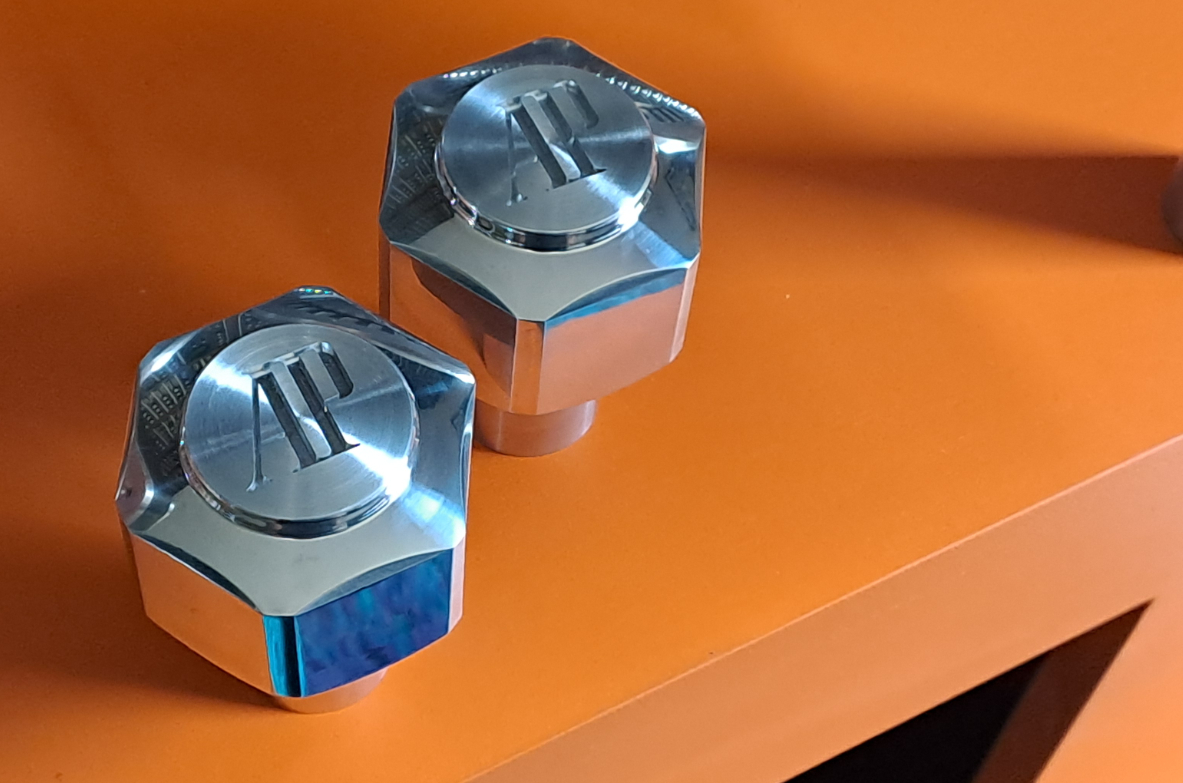
To activate the DJ desk a visitor has to wind an enlarged watch crown, which then starts the motors, lights and music. A roller microswitch and a cam was used to provide some tactile feedback. I ended up cutting out at least 6 different cams to fine tune the "clickiness" so that it felt good.
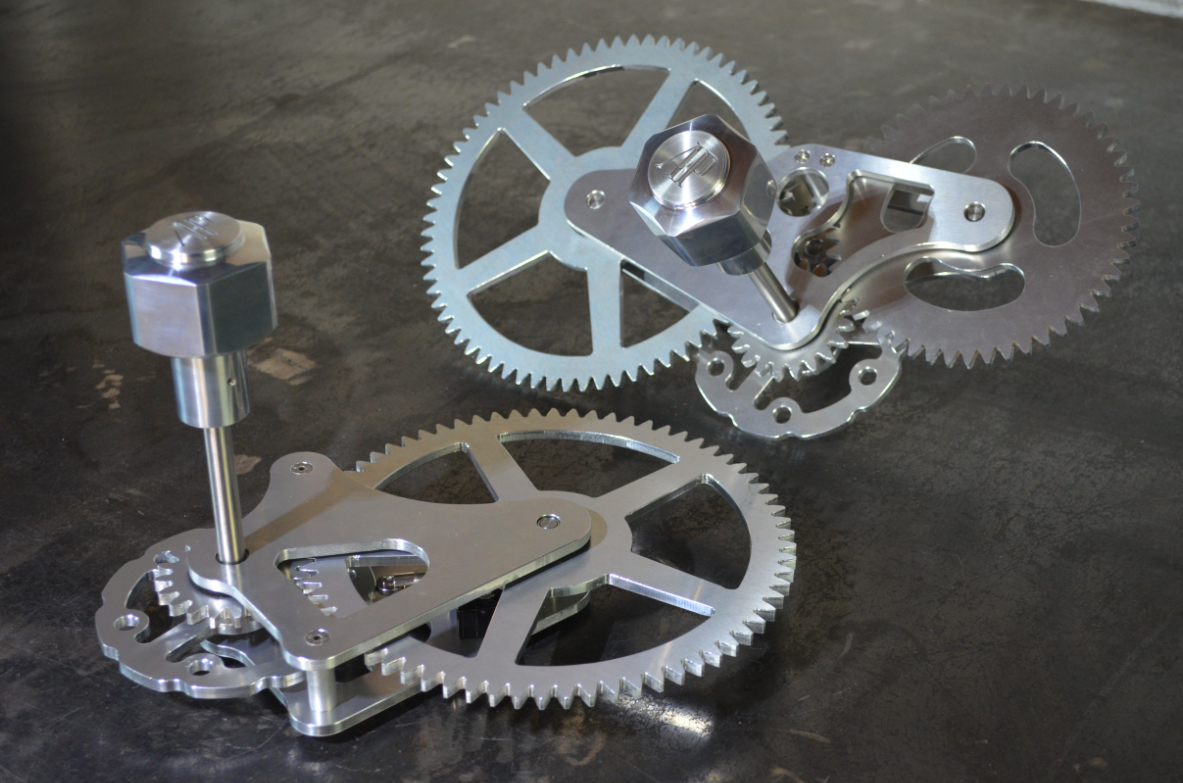
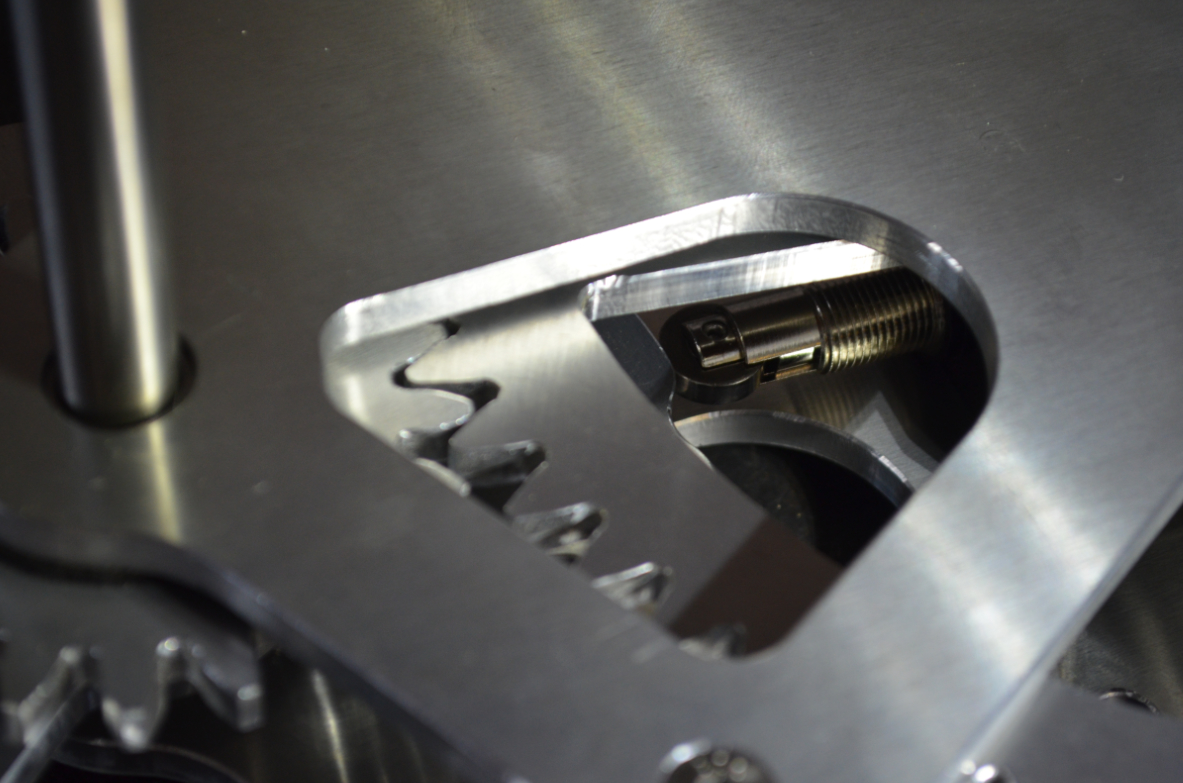
These parts were drawn up by the very capable Sean Malikides of Kai Lab, machined by Geomiq.
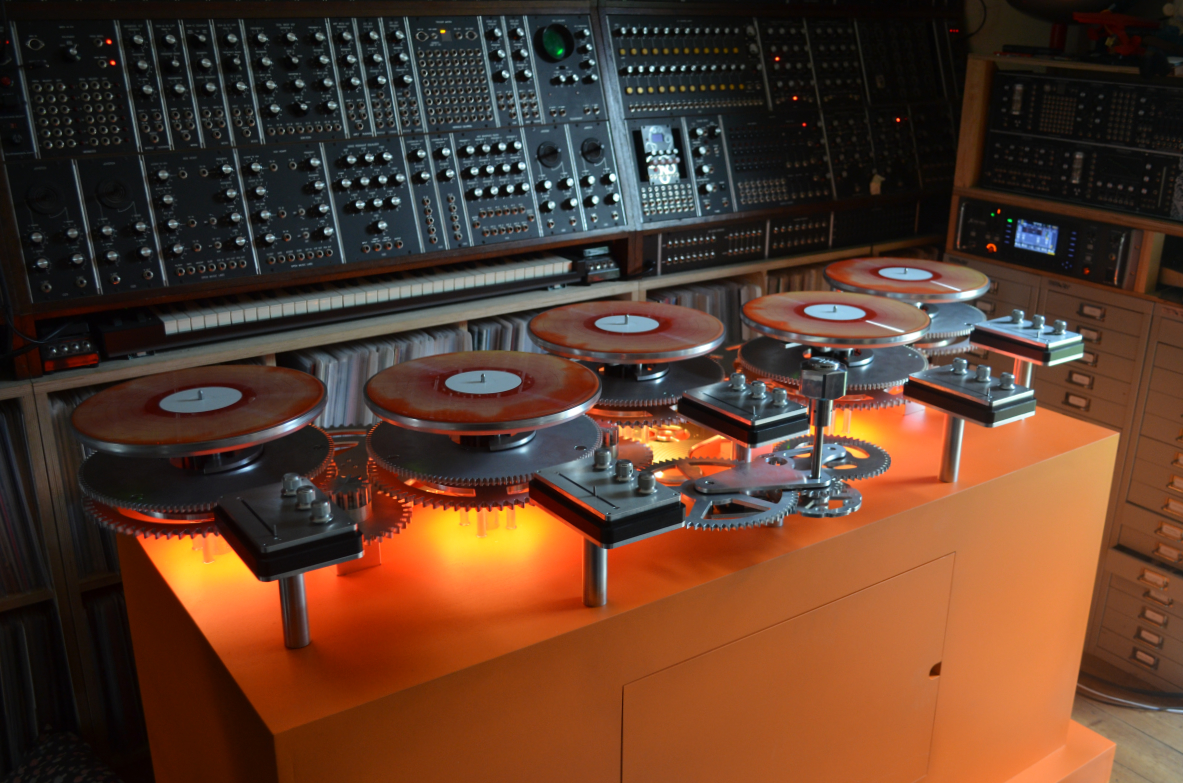
The glass top was cut by Preedy Glass - very glad to see it fit into place!
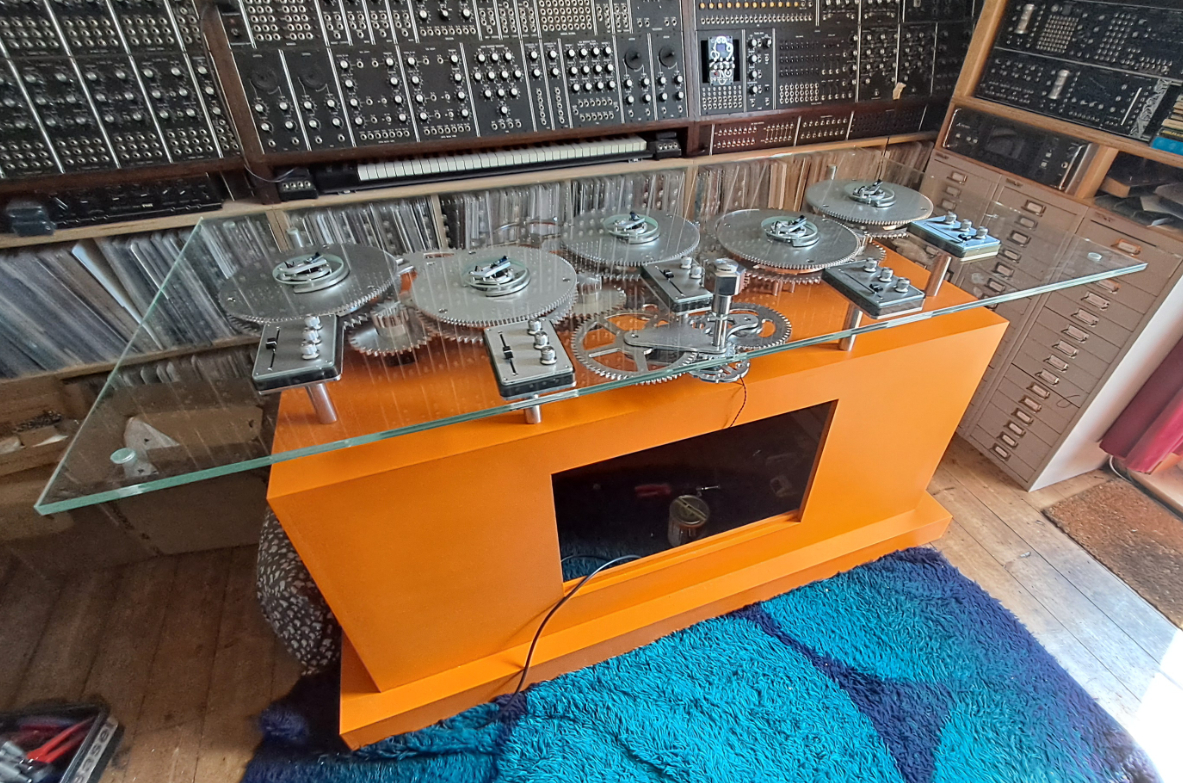
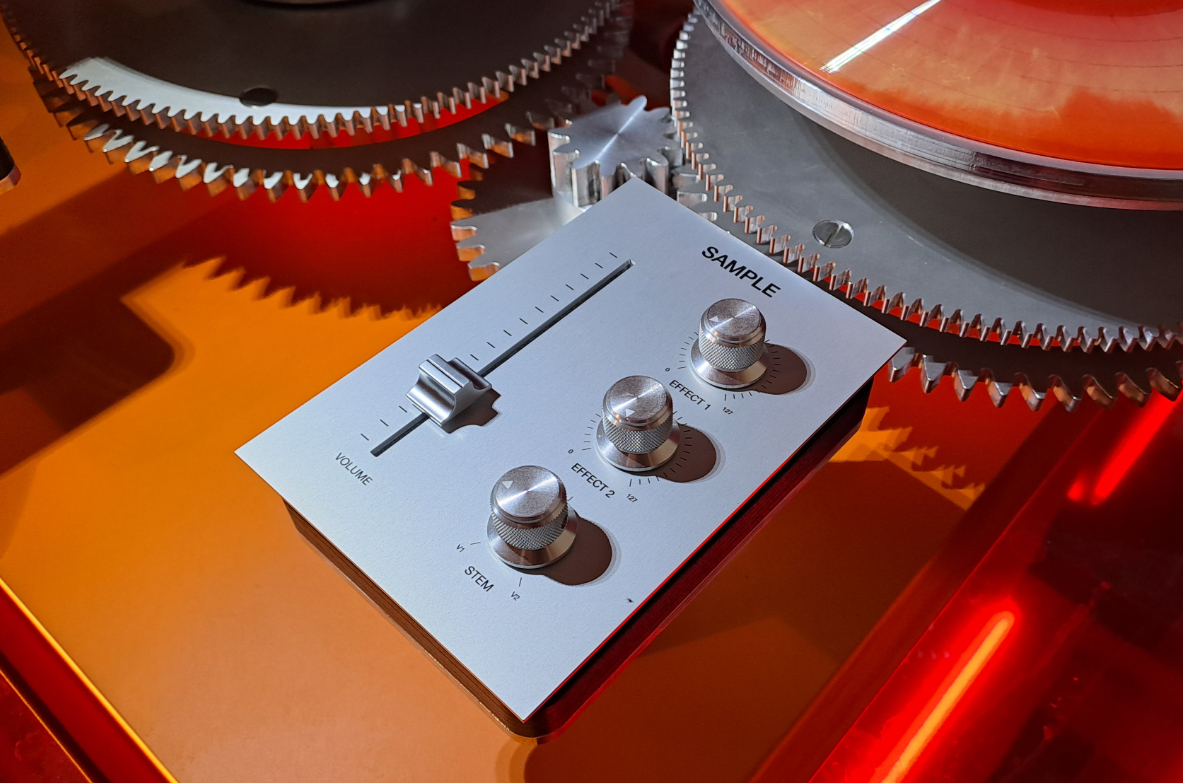
LED strip for the base. The postman had just delivered The Shaolin Afronauts' first LP, Flight of the Ancients.
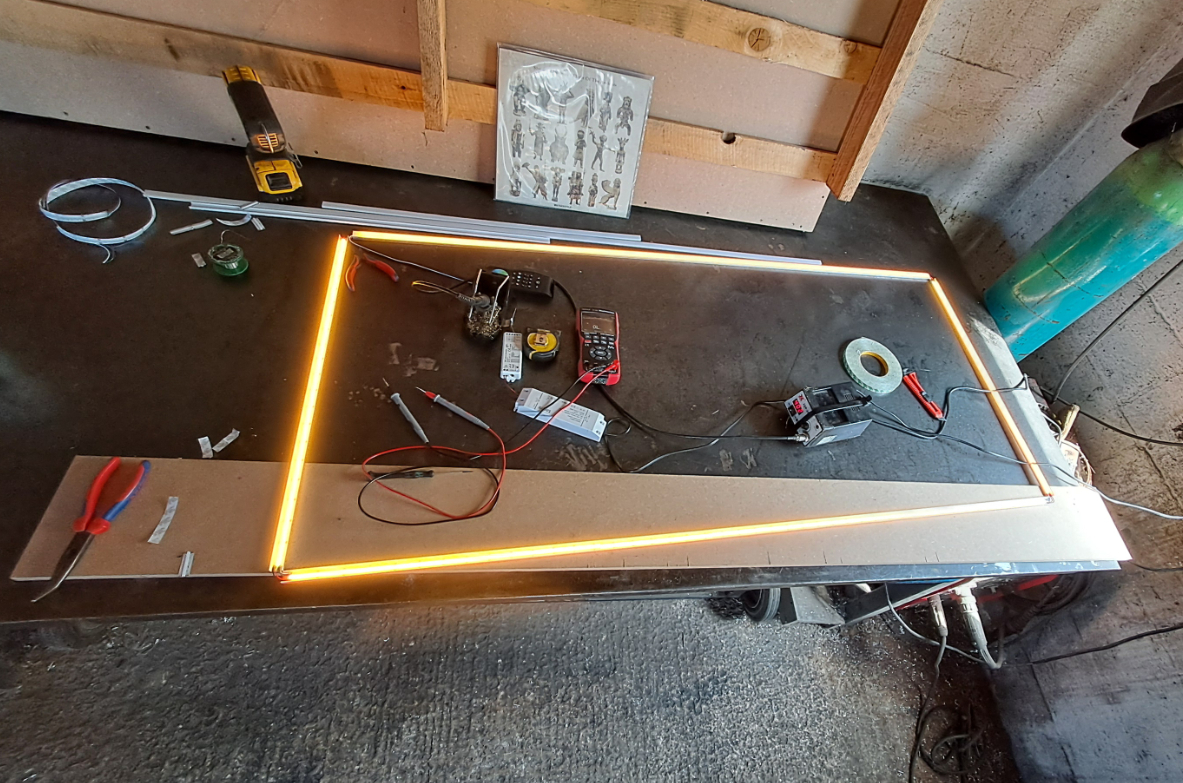
The outer acrylic casing was made by Denny Plastics.
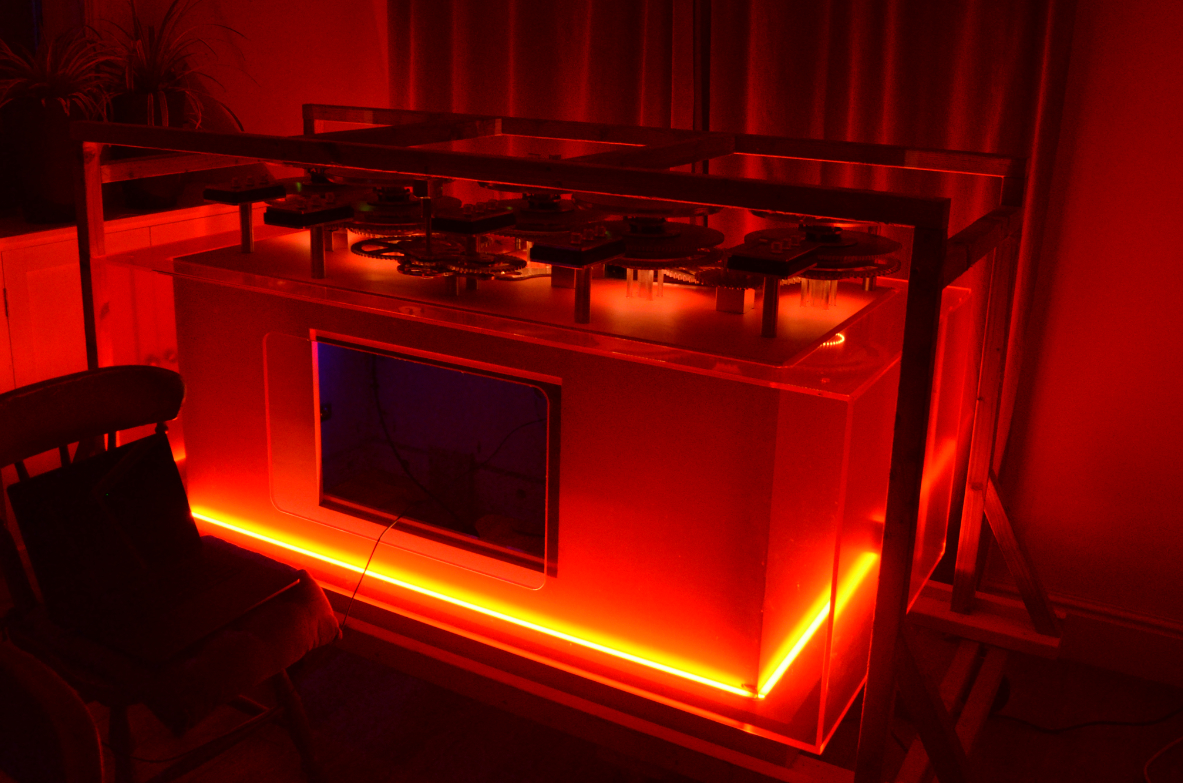
A skate and timber frame were made to help transport the very heavy desk.
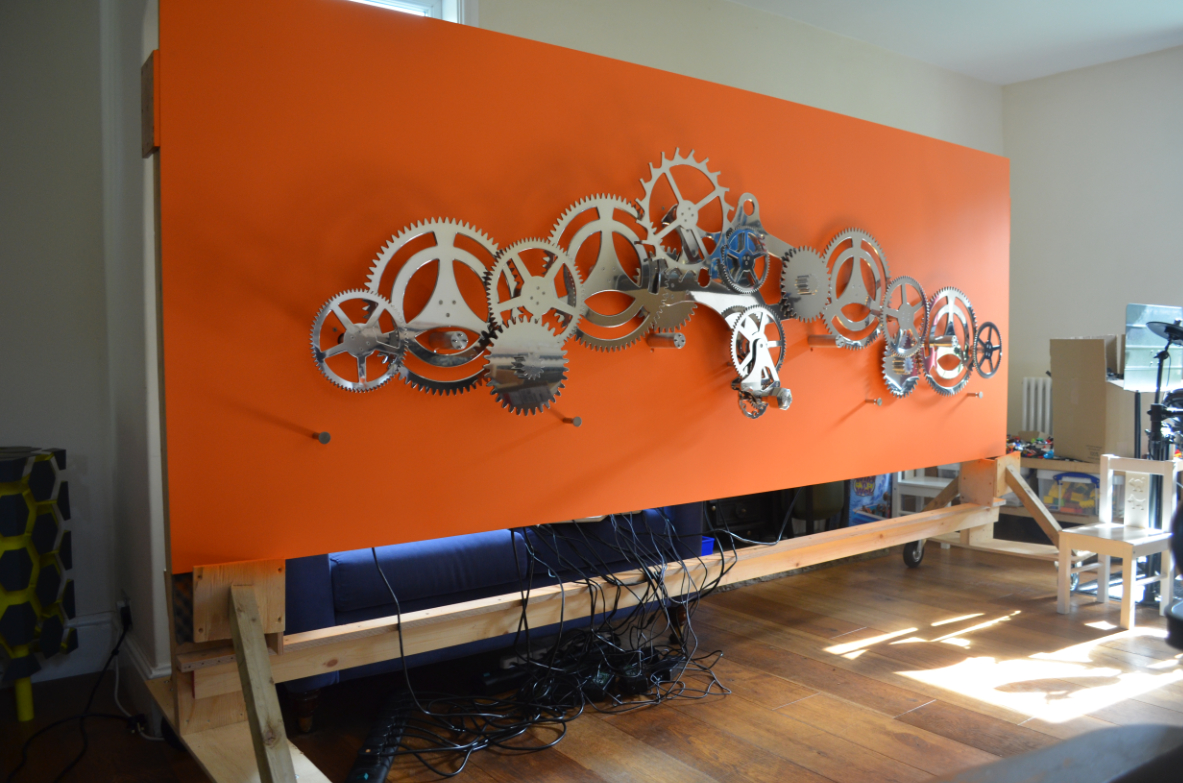
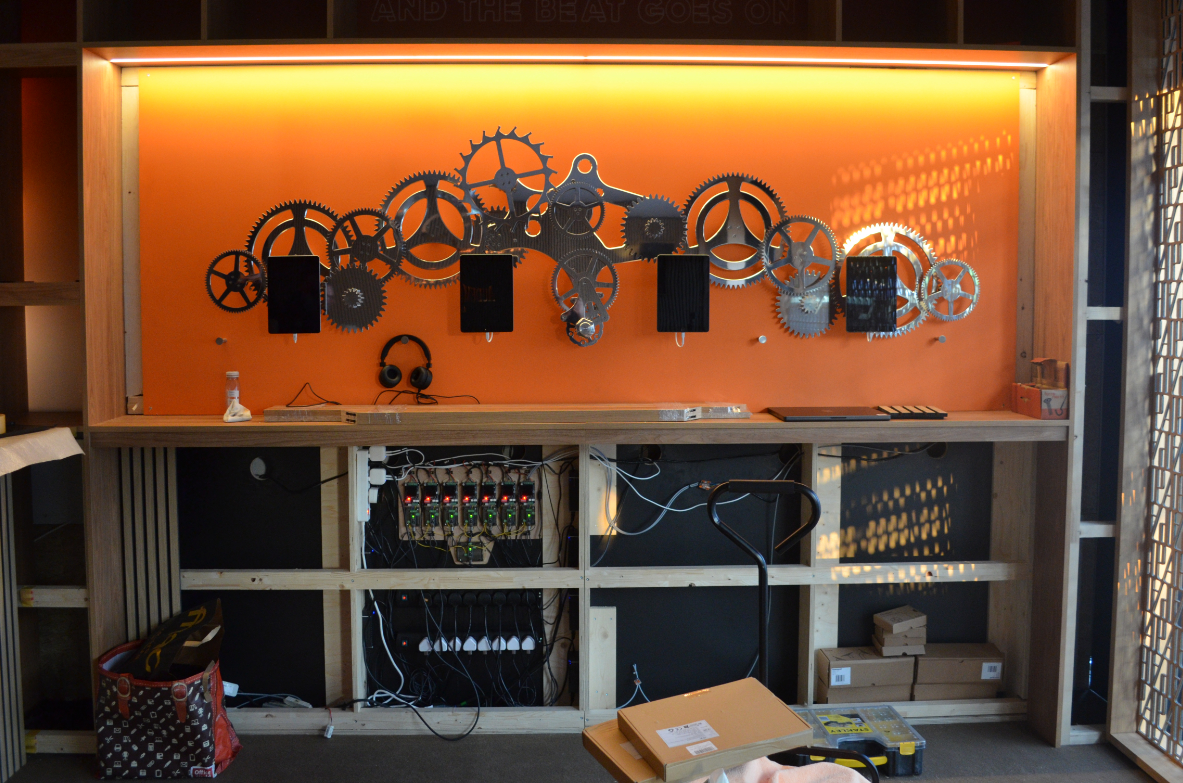
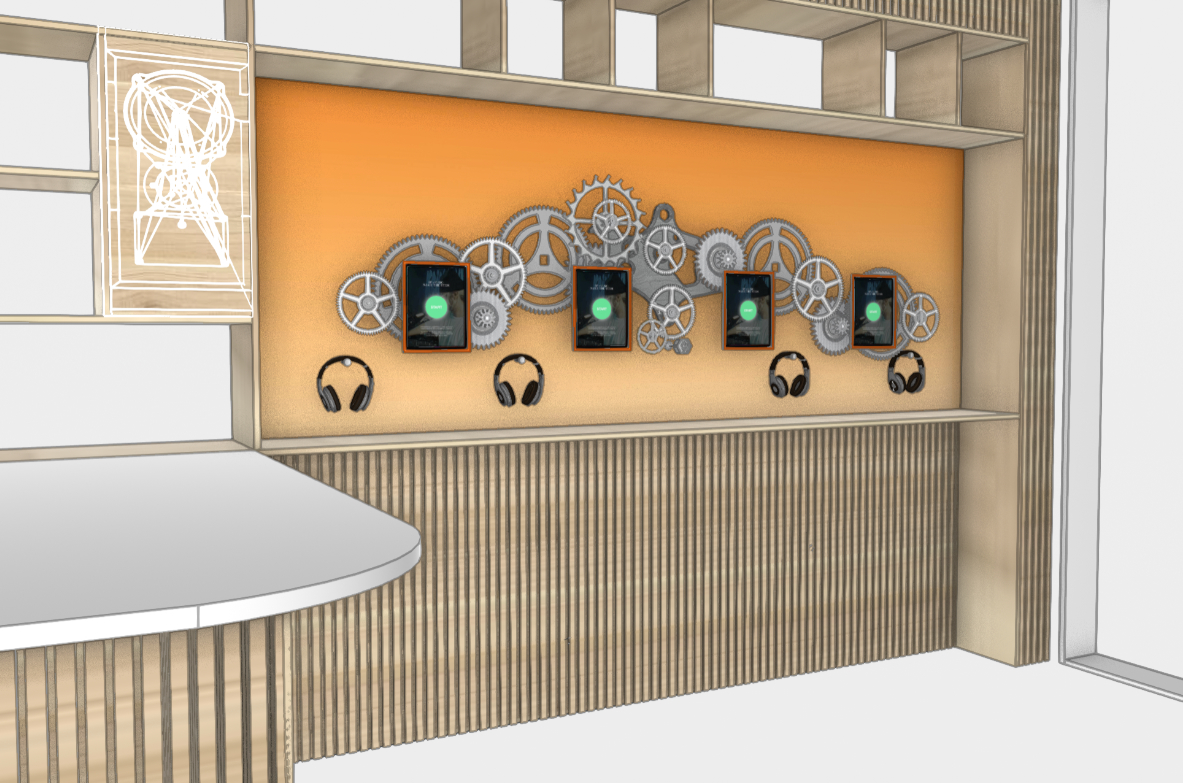
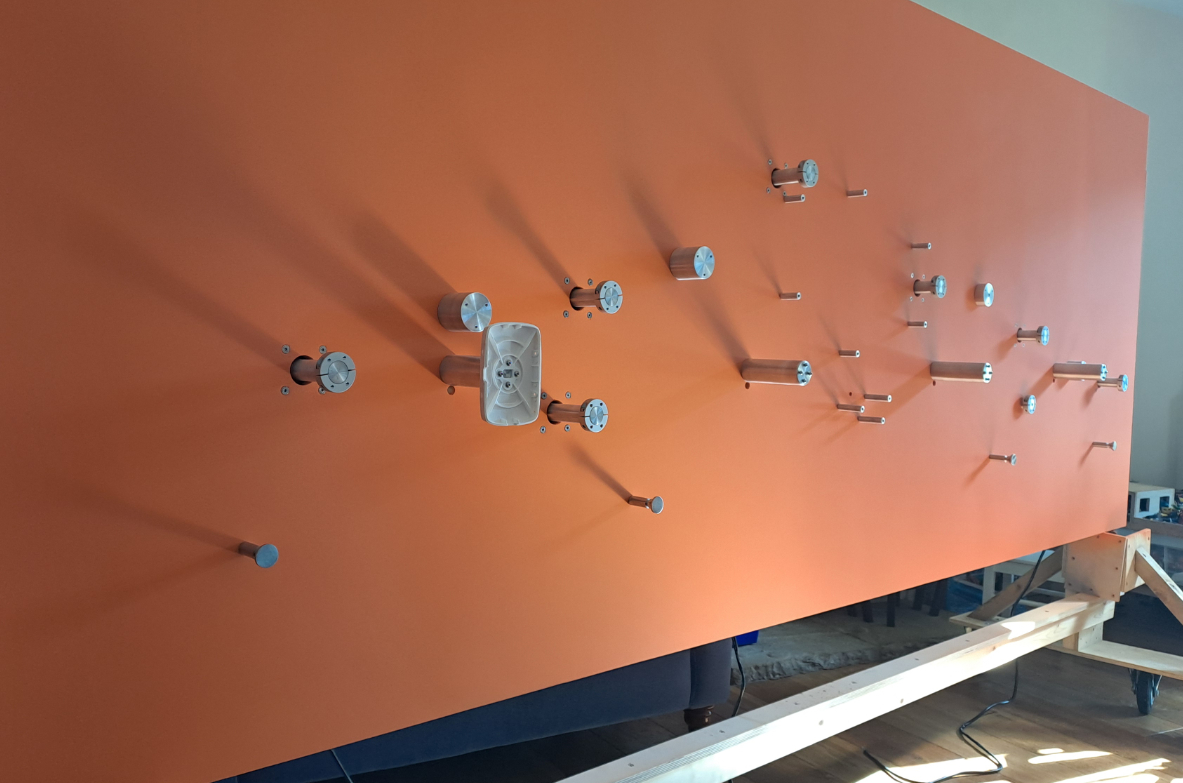
This was another element of the project - an interactive wall with moving parts.
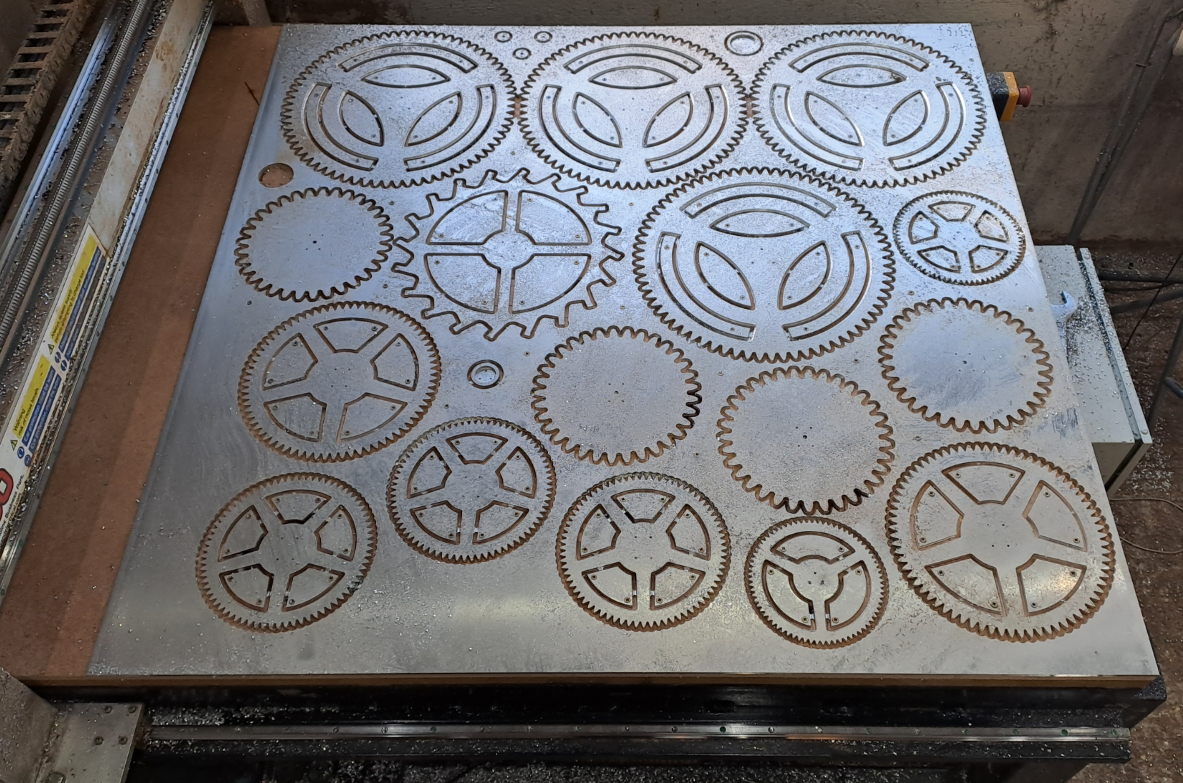
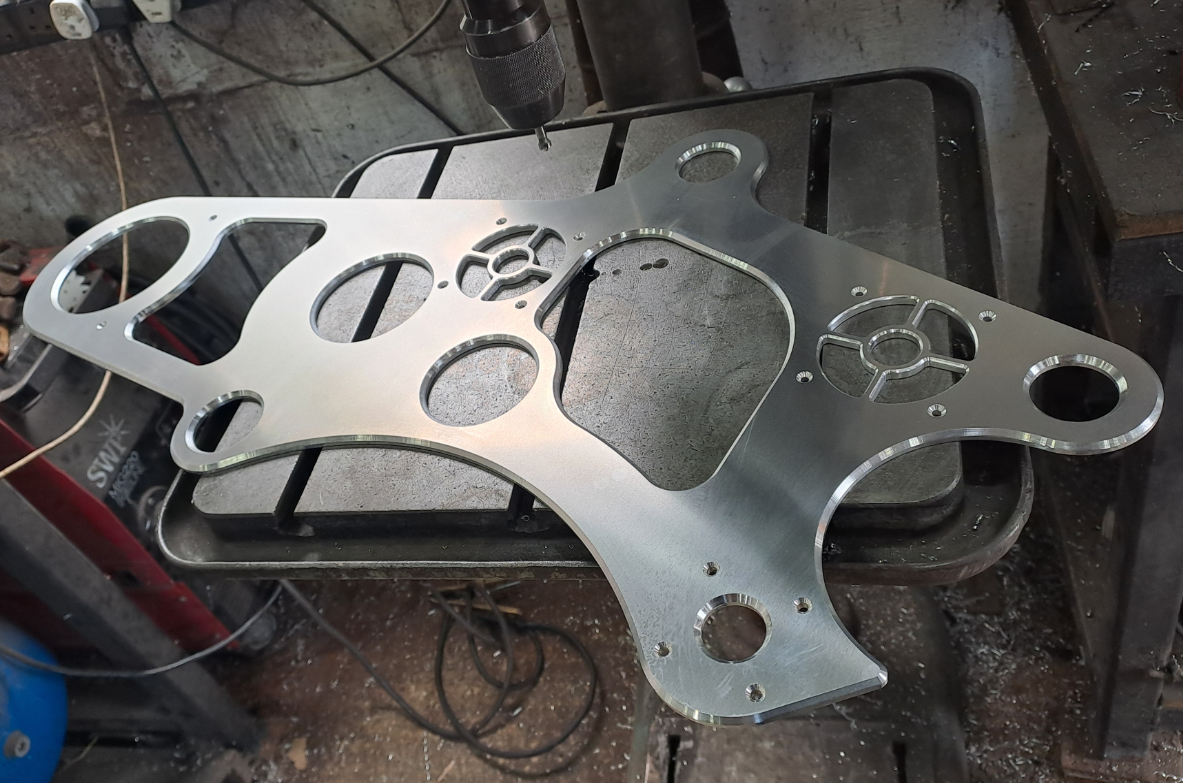
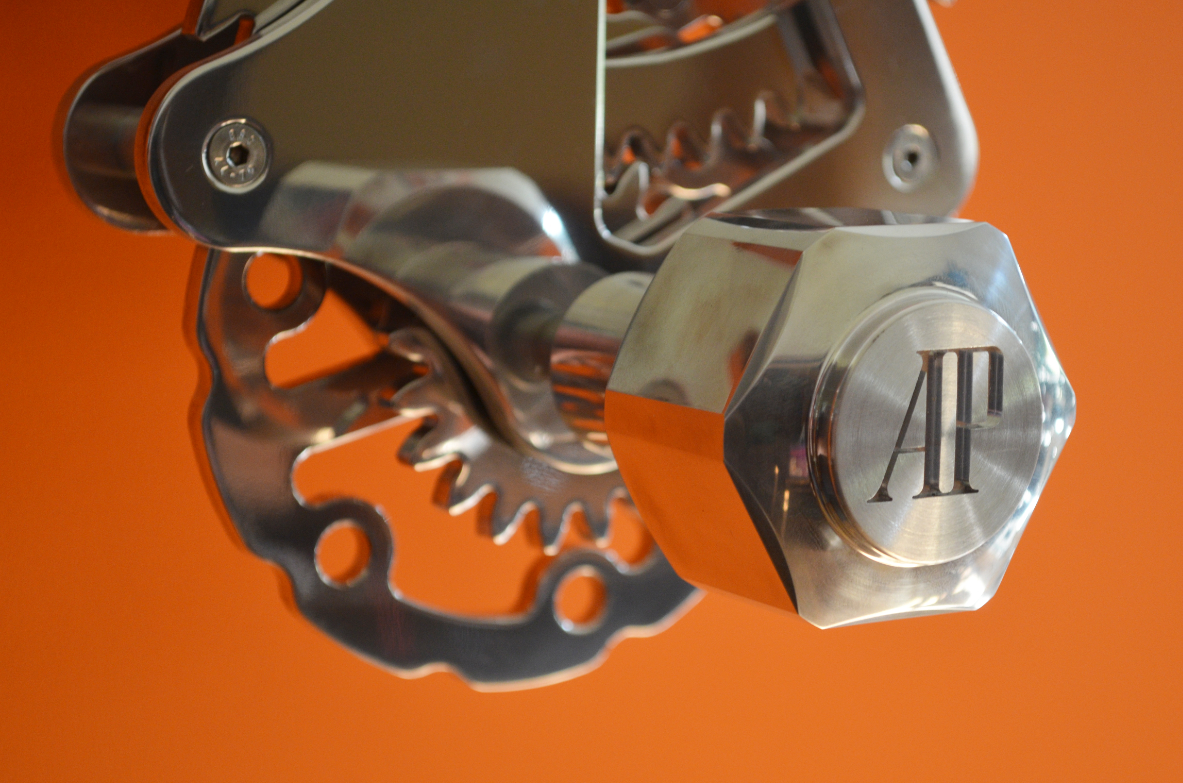
The gears were polished by Almond & Mellor.