Kinetic sculptures for Wake the Tiger: Animatronic Eyeball
This was my favourite part of the project, in fact possibly one of the most enjoyable things I've ever made.
What an absolutely delightful geometric puzzle!
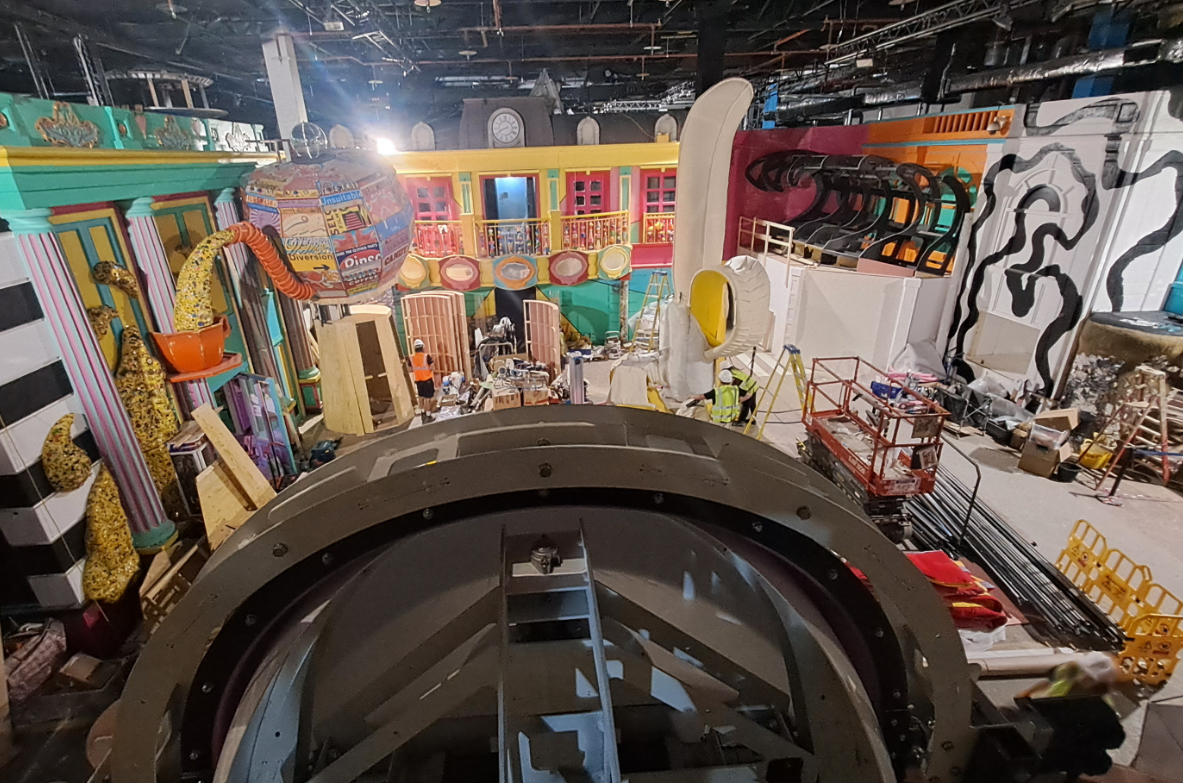
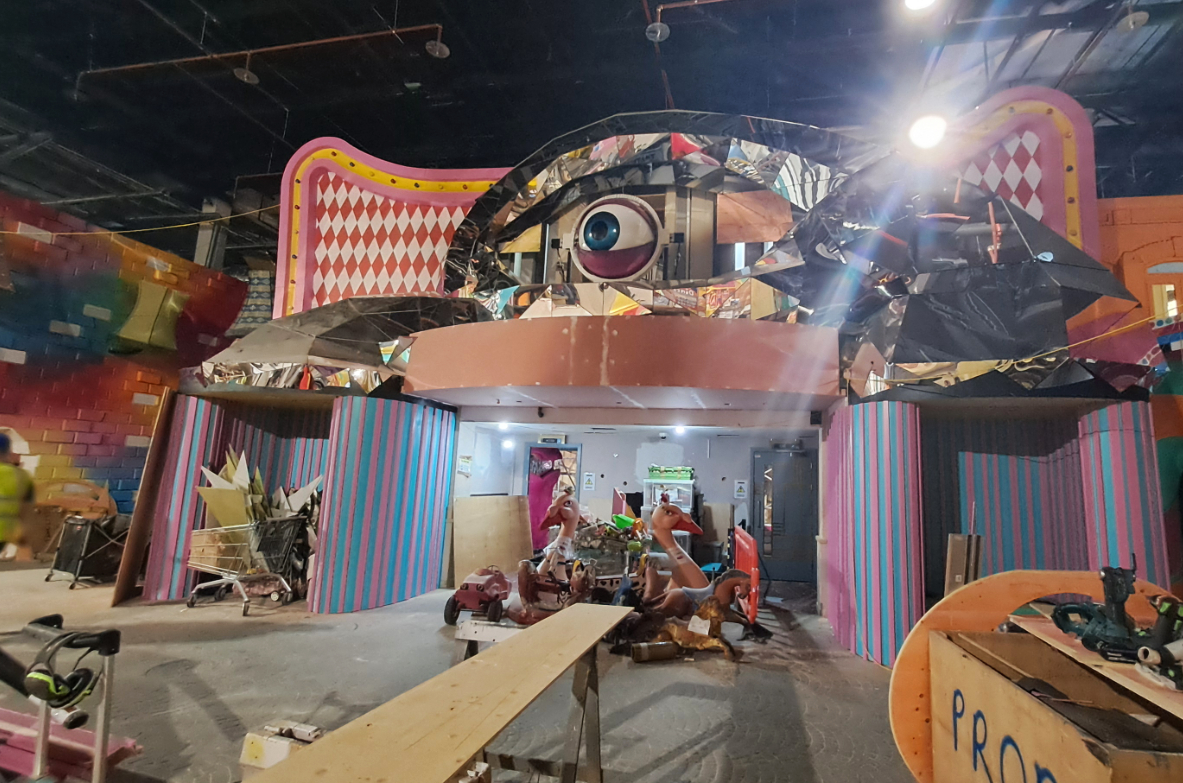
The image below was the single reference that was supplied, showing the eyeball integrated into the surrounding set. It was suggested that the eye didn't have to blink, and could just move in one axis, but WTT deserve a lot of respect for kindly allowing the moving eyelids and two axes of eyeball movement to go ahead.

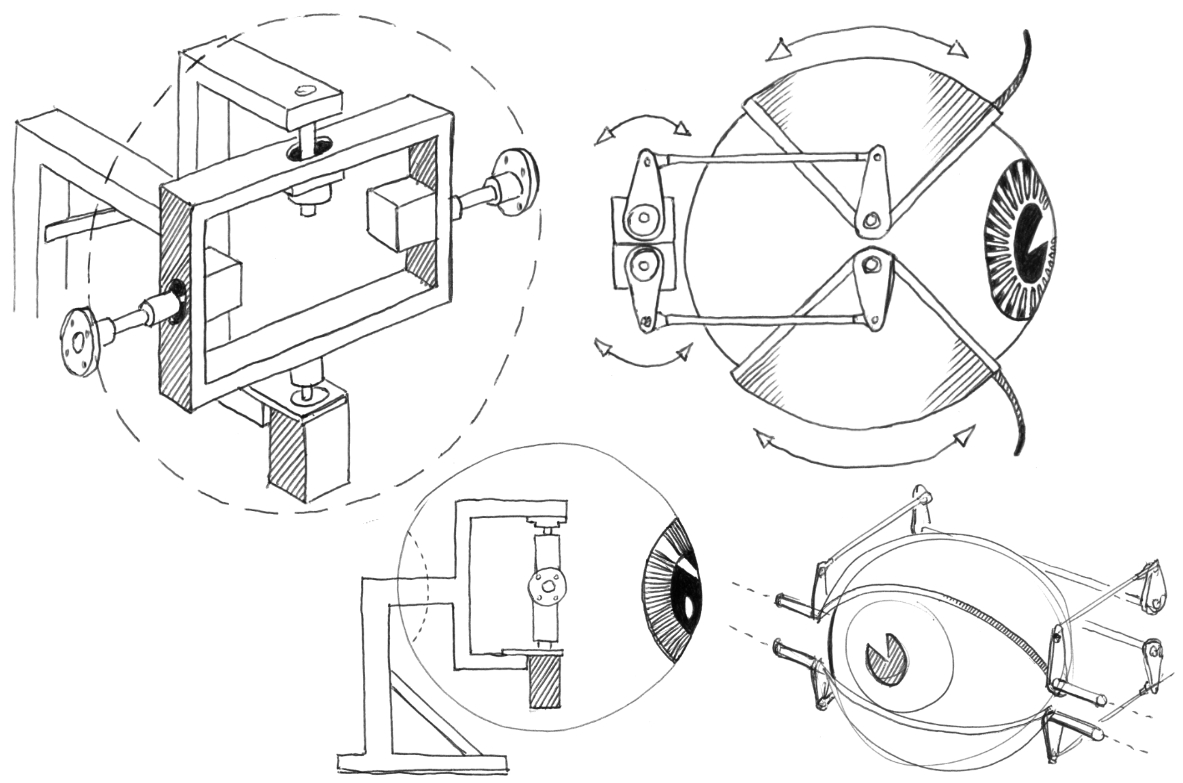
Although these early sketches were pretty basic, the 3 motor internal gimbal was figured out pretty much right from the start. The linkages as shown were replaced with direct drive from the motor gearboxes to keep everything simple and reliable.
The first step was to get the acrylic hemispheres fabricated, as they would dictate the exact size of the gimbal.
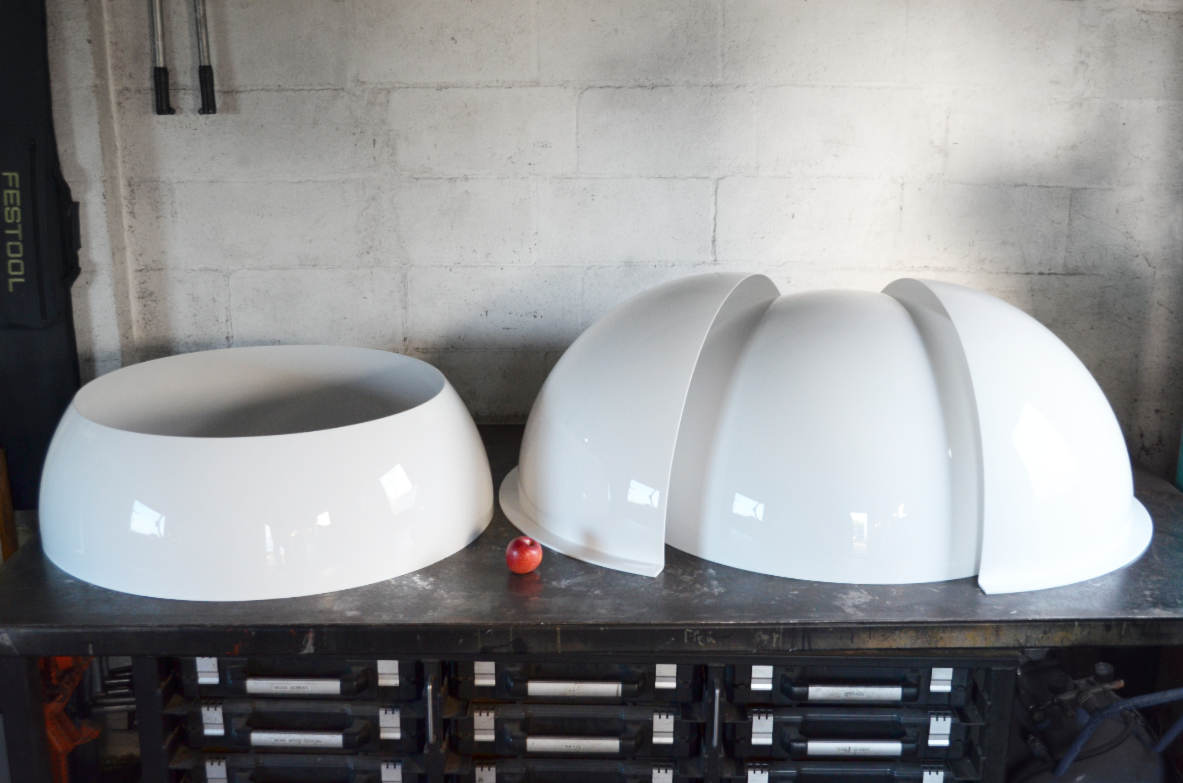
I found that the gimbal almost designed itself, as there was a clear path of sizes and choices to follow.
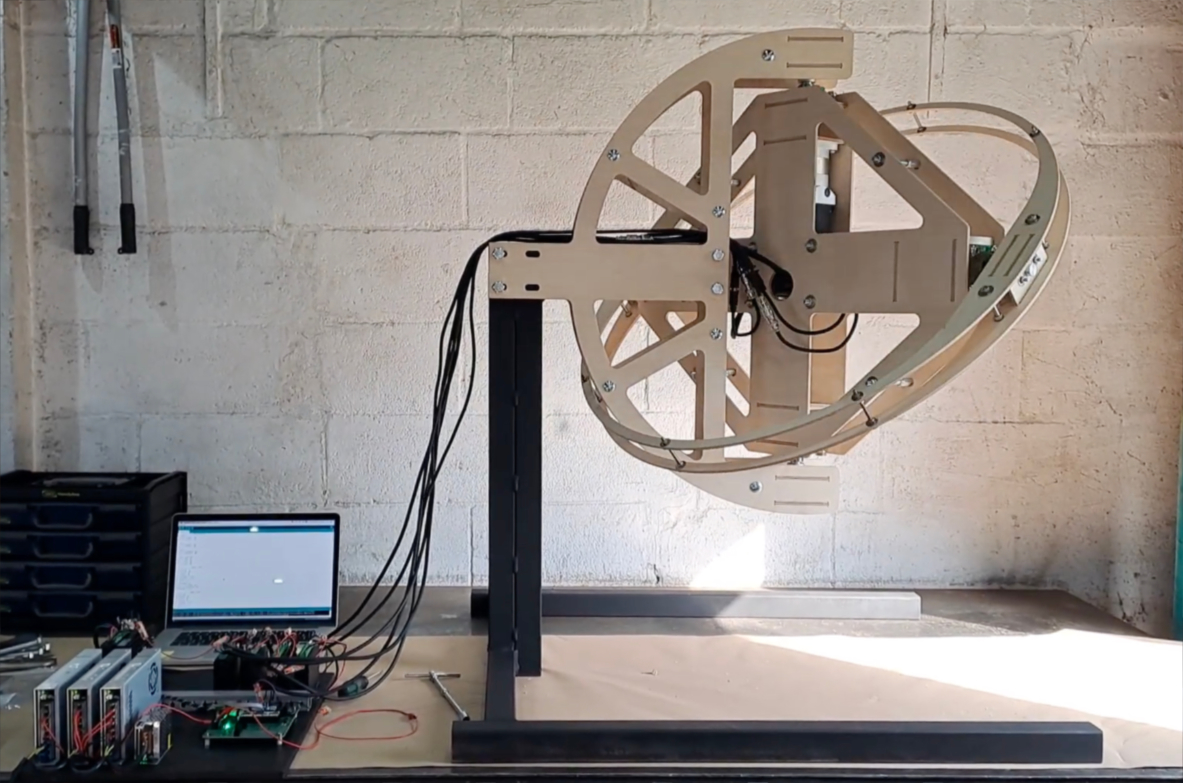
The prototype was made out of 6mm plywood.
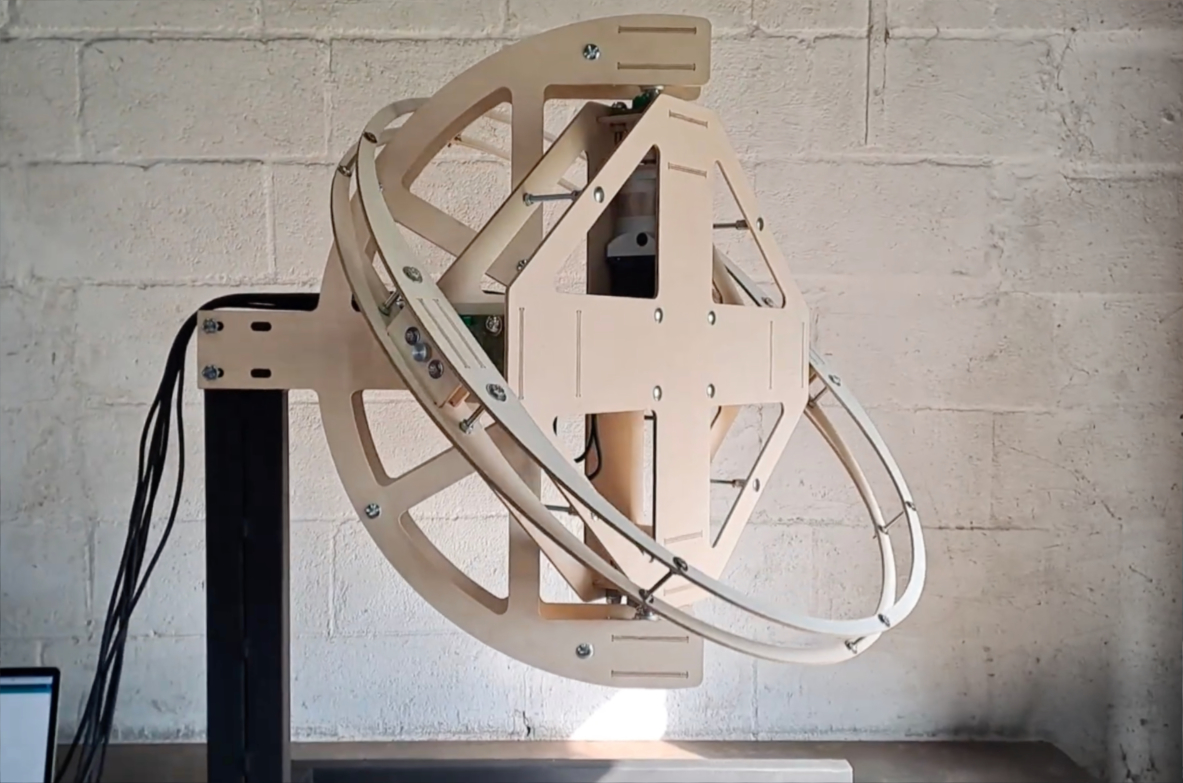
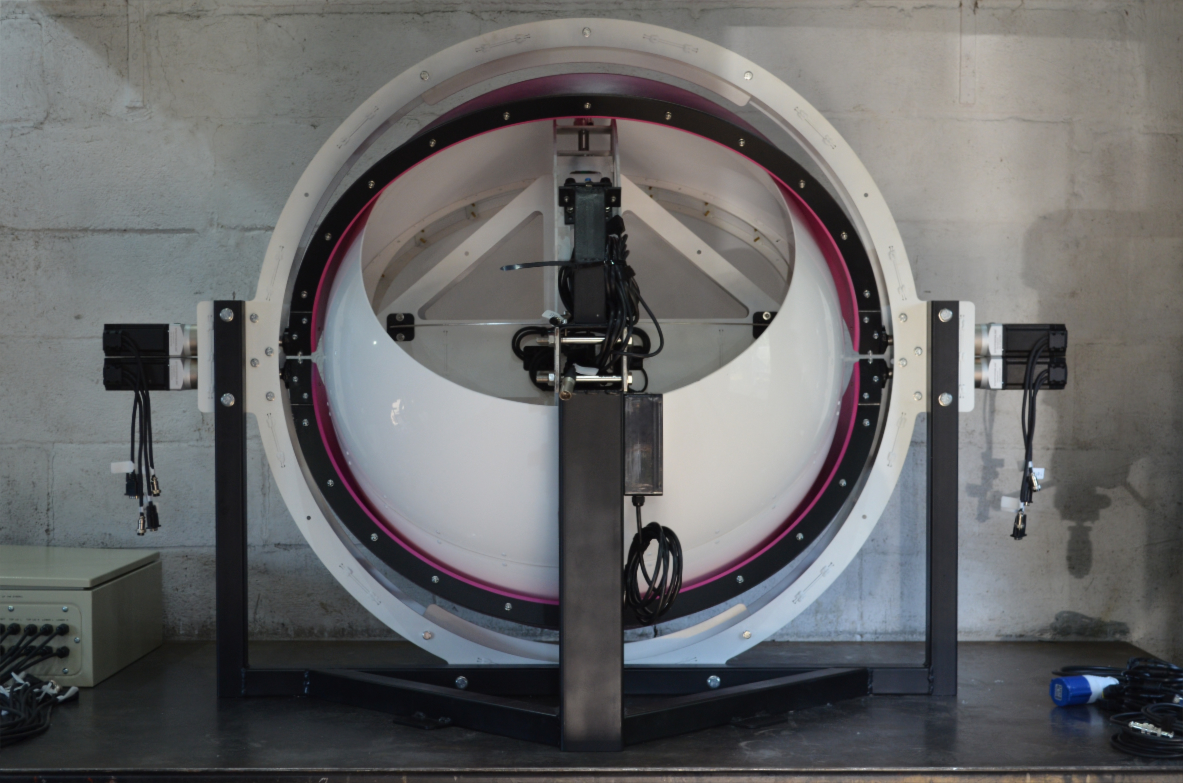
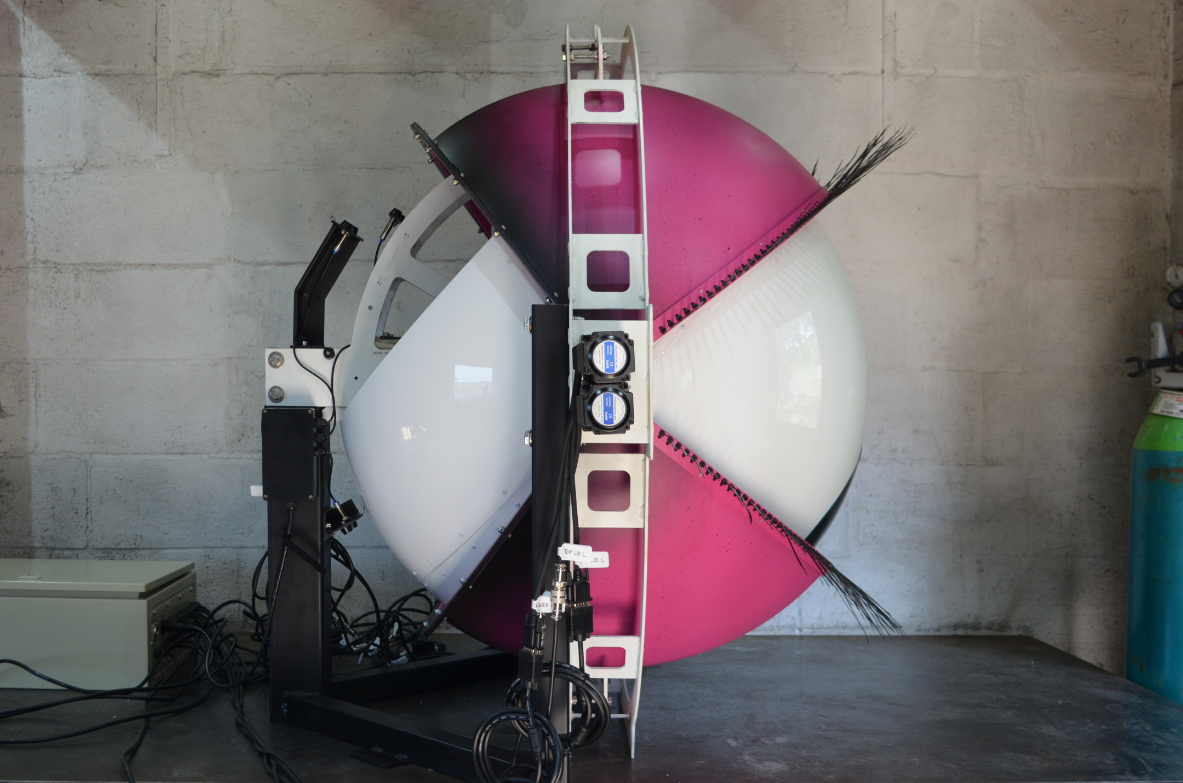
Here you can see the "eyelid gantry" has been added. The eyelids are operated using pairs of stepper motors with 10:1 ratio planetary gearboxes.
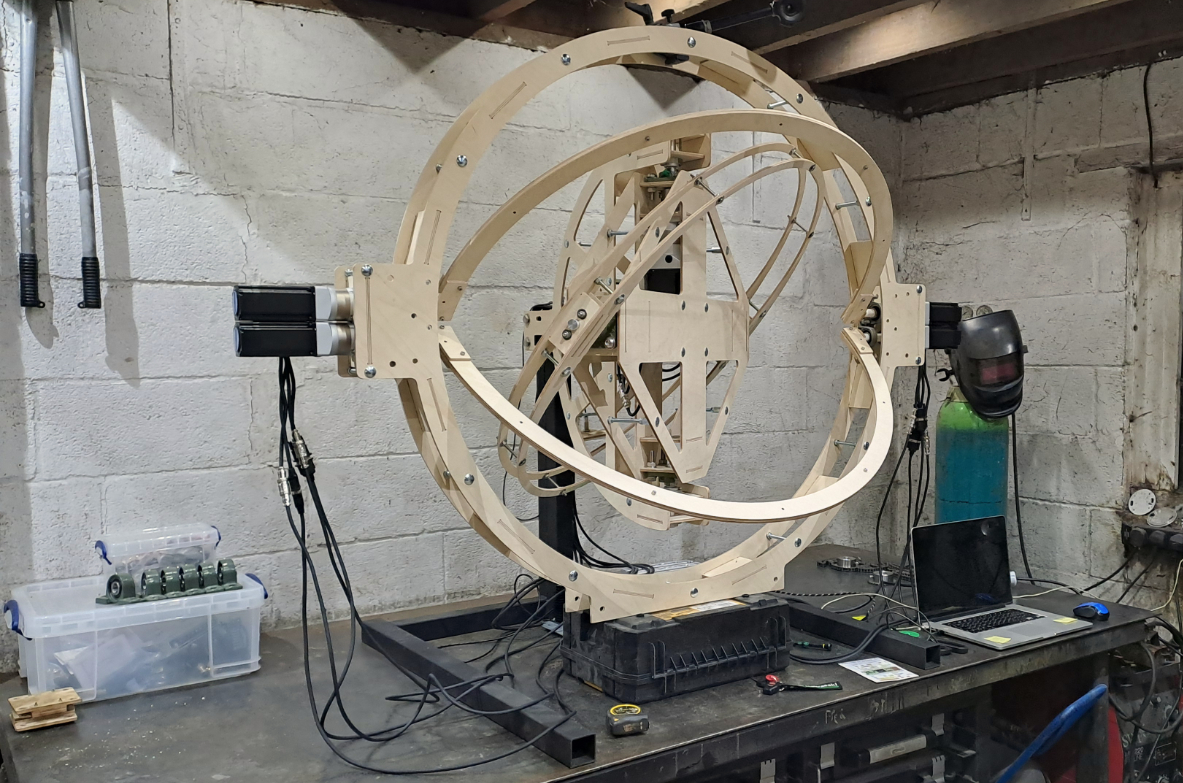
Once the prototype had been tested, the parts were tweaked if necessary and then laser cut in steel.
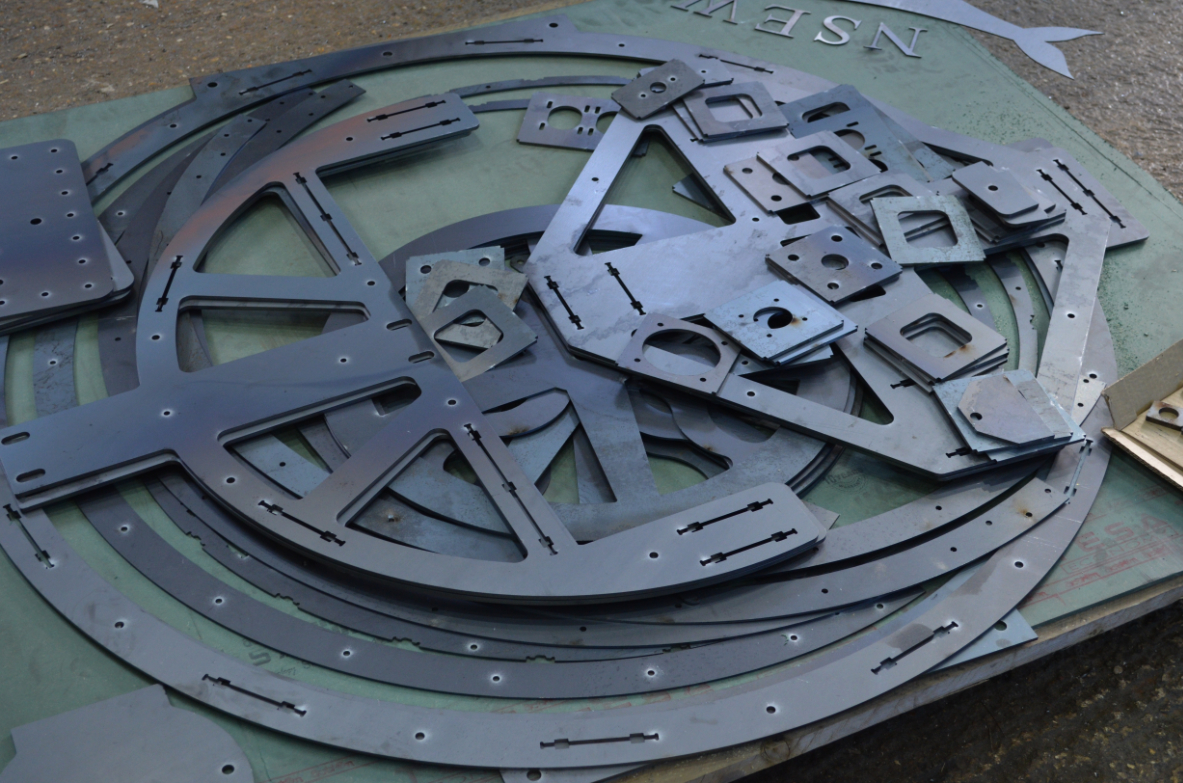
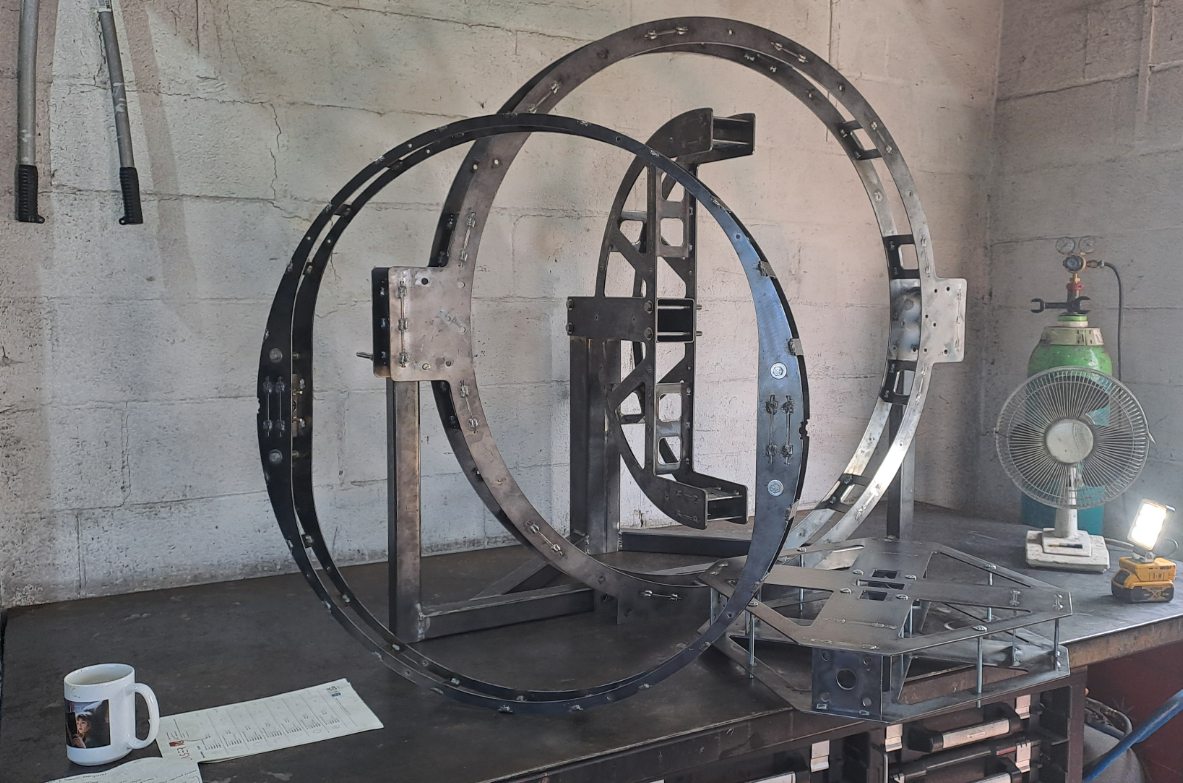
Notches were included in the steel components, to allow good weld penetration and to reduce heat distortion.
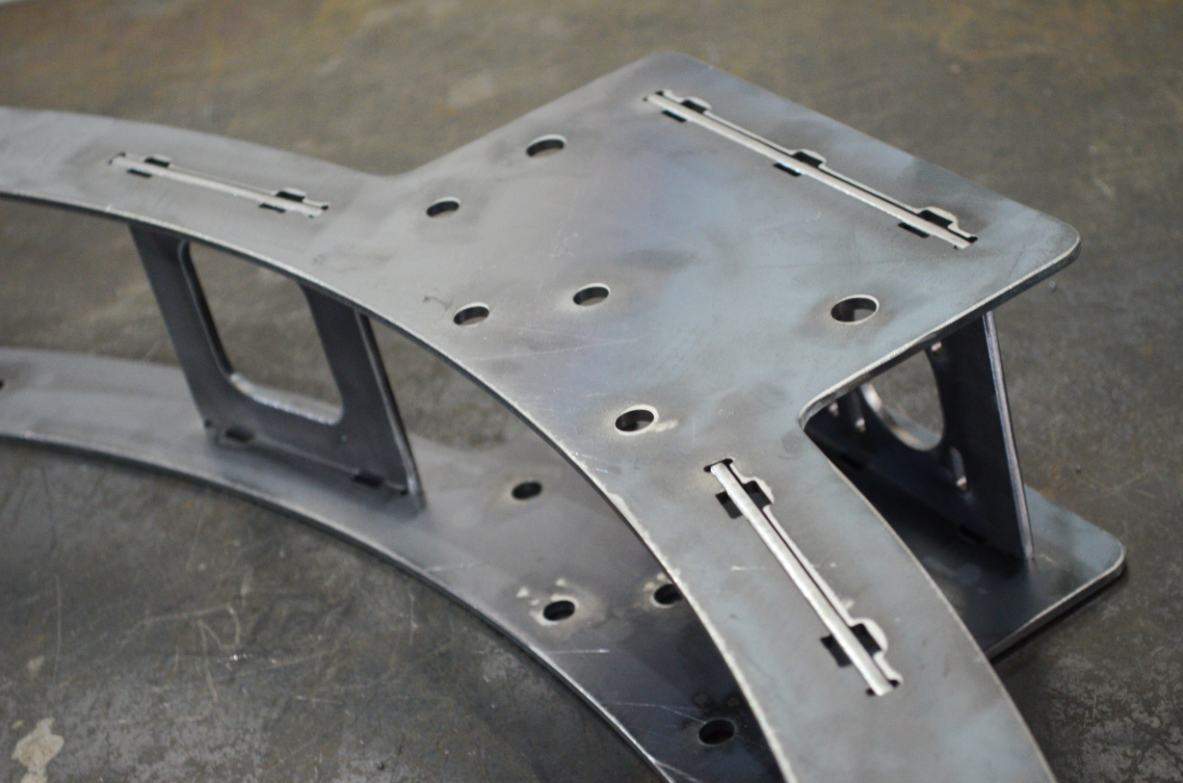
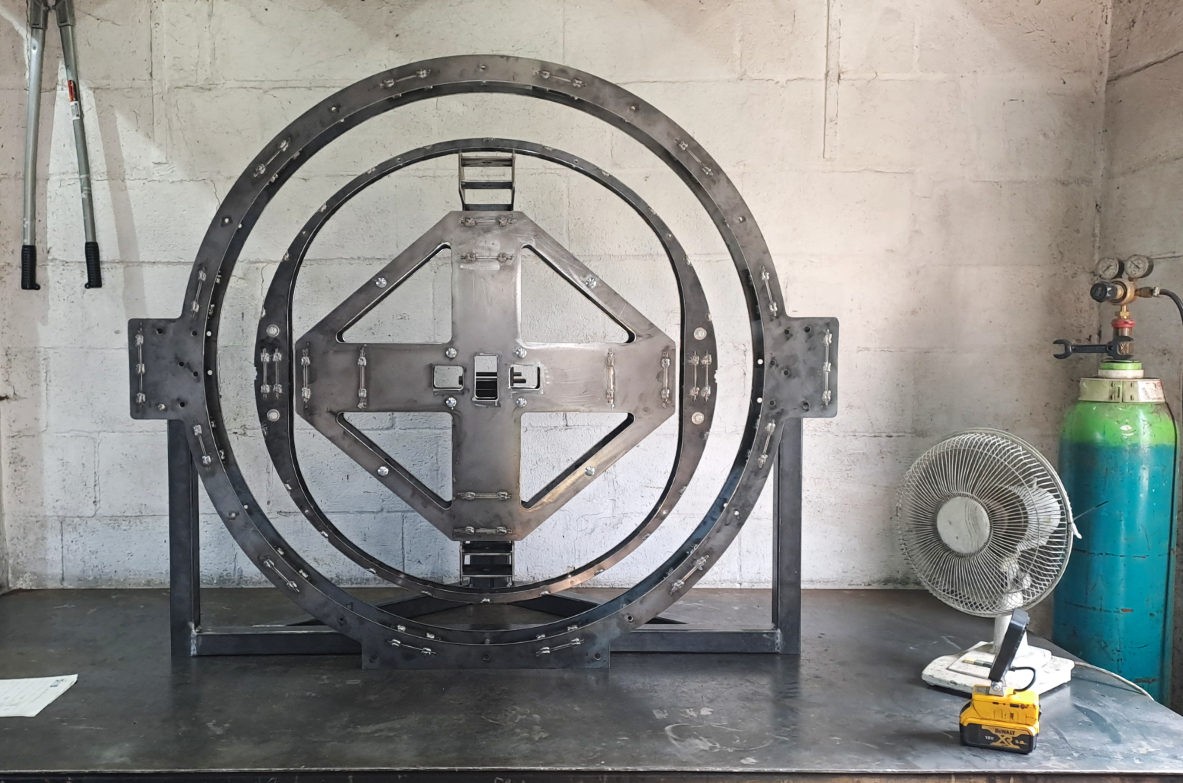
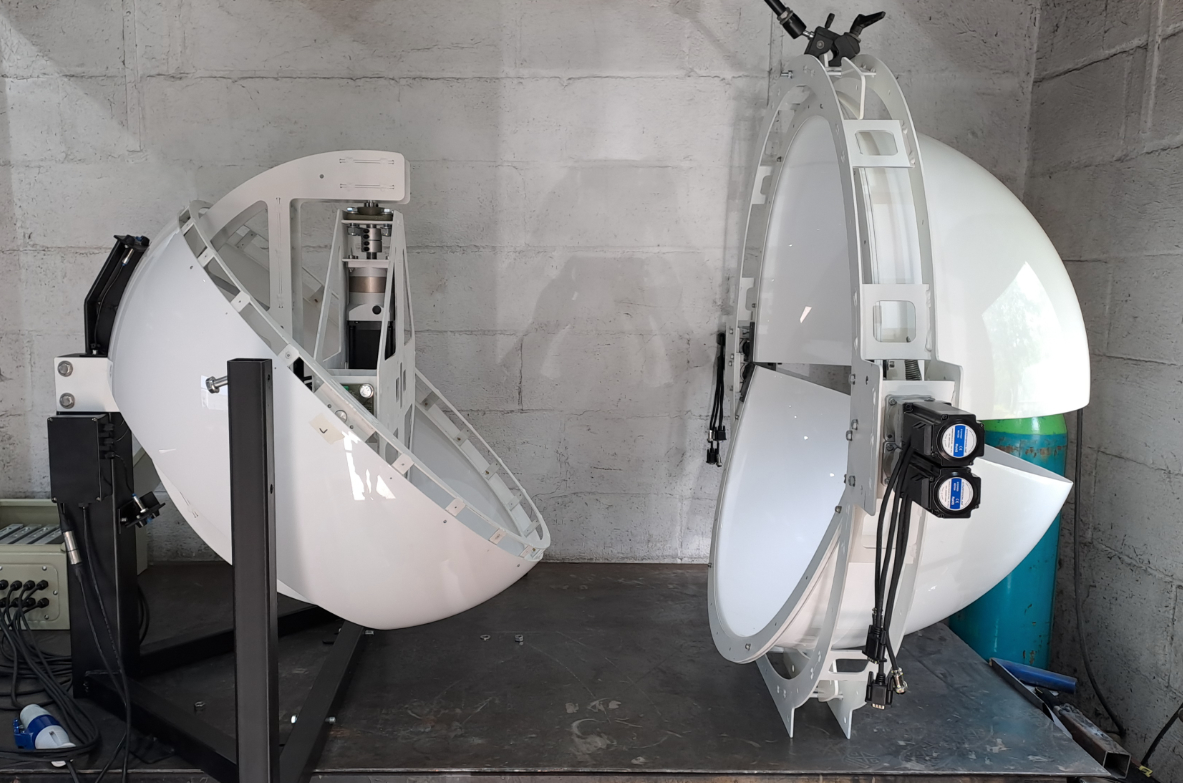
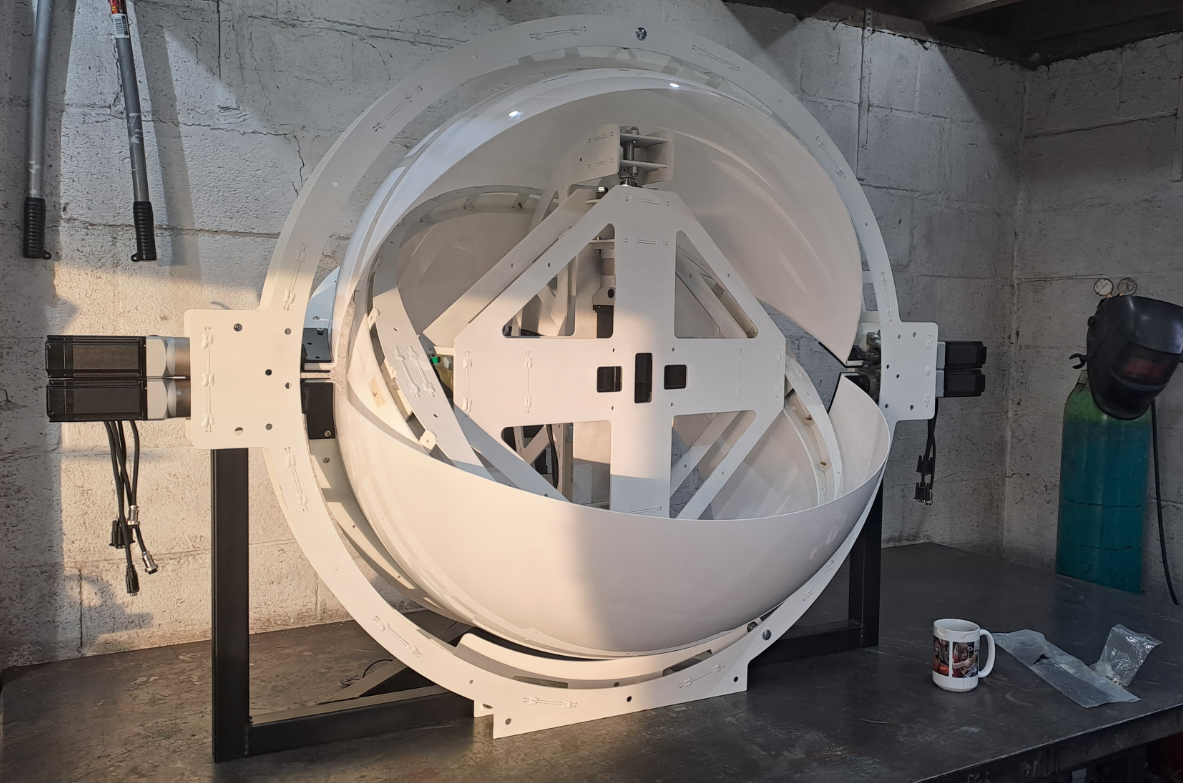
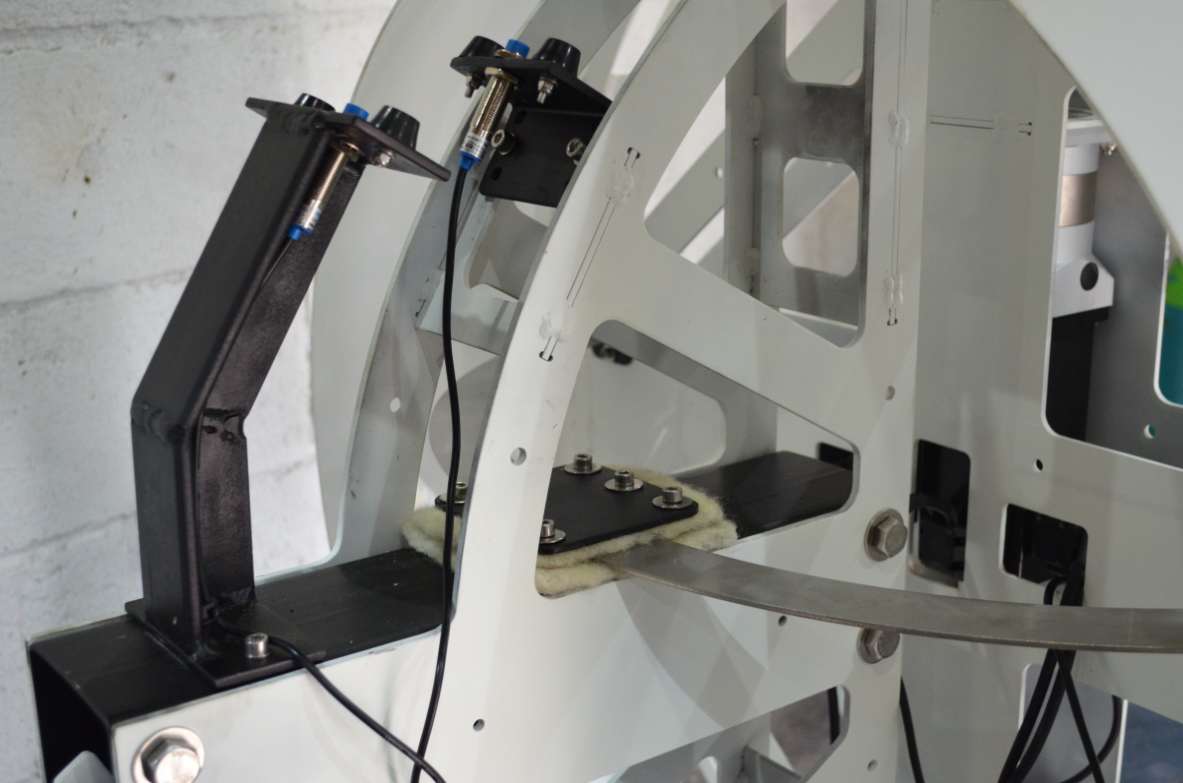
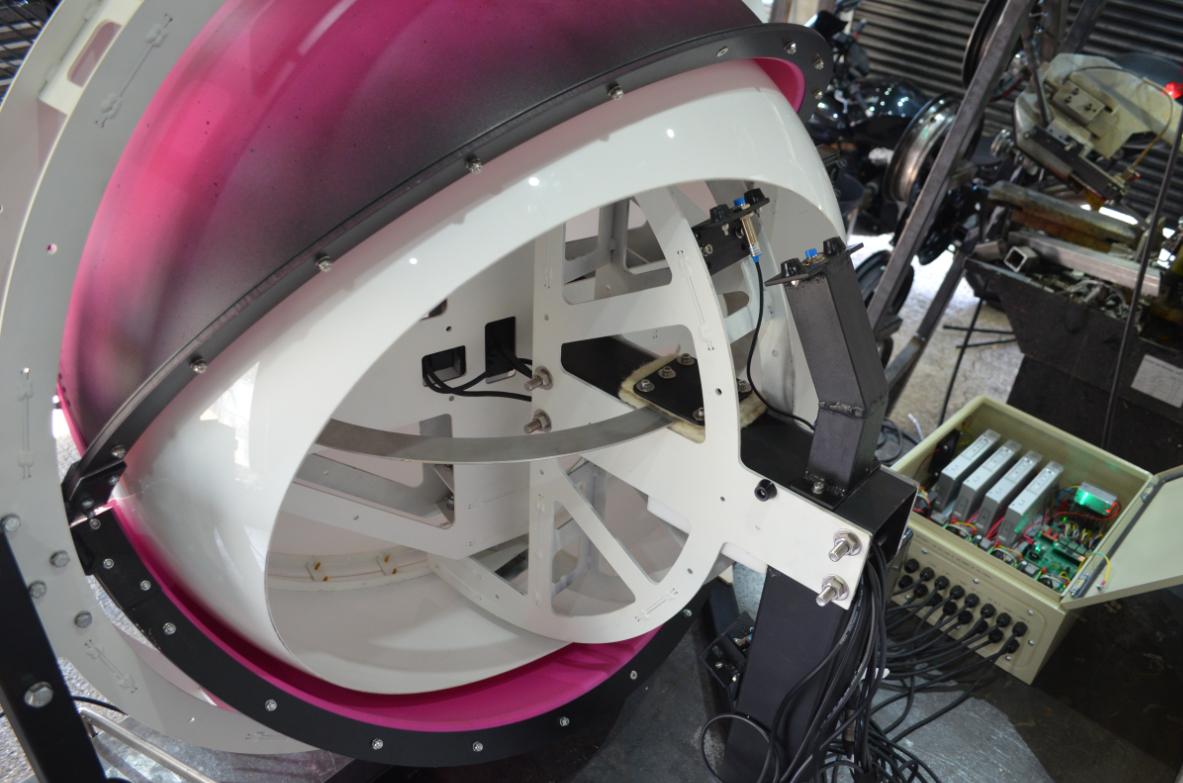
Inductive proximity sensors were used to set all the home postitions when the eyeball is powered up.
In this photo you can also see the rectangle of sheep's wool that was used to make the eyeball's movement a lot smoother. The pressure of the wool is adjustable, and is used to clamp a semicircular stainless steel bracket on the rear of the gimbal.
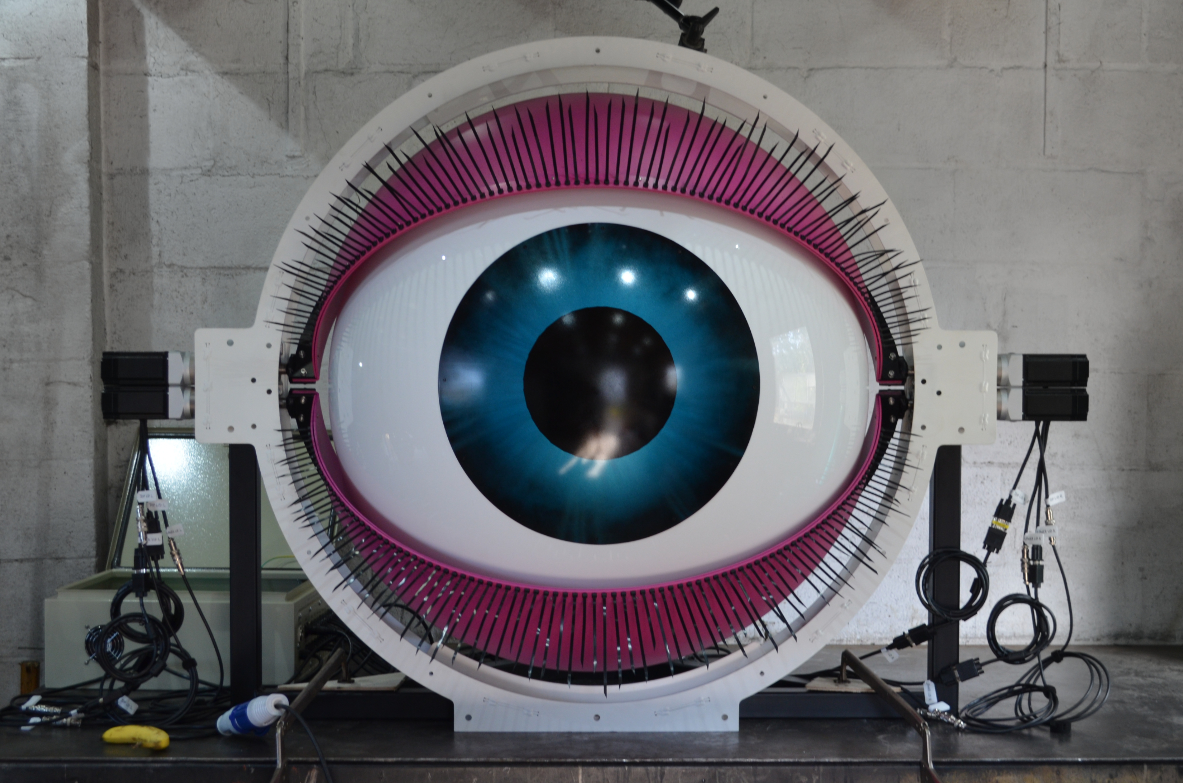
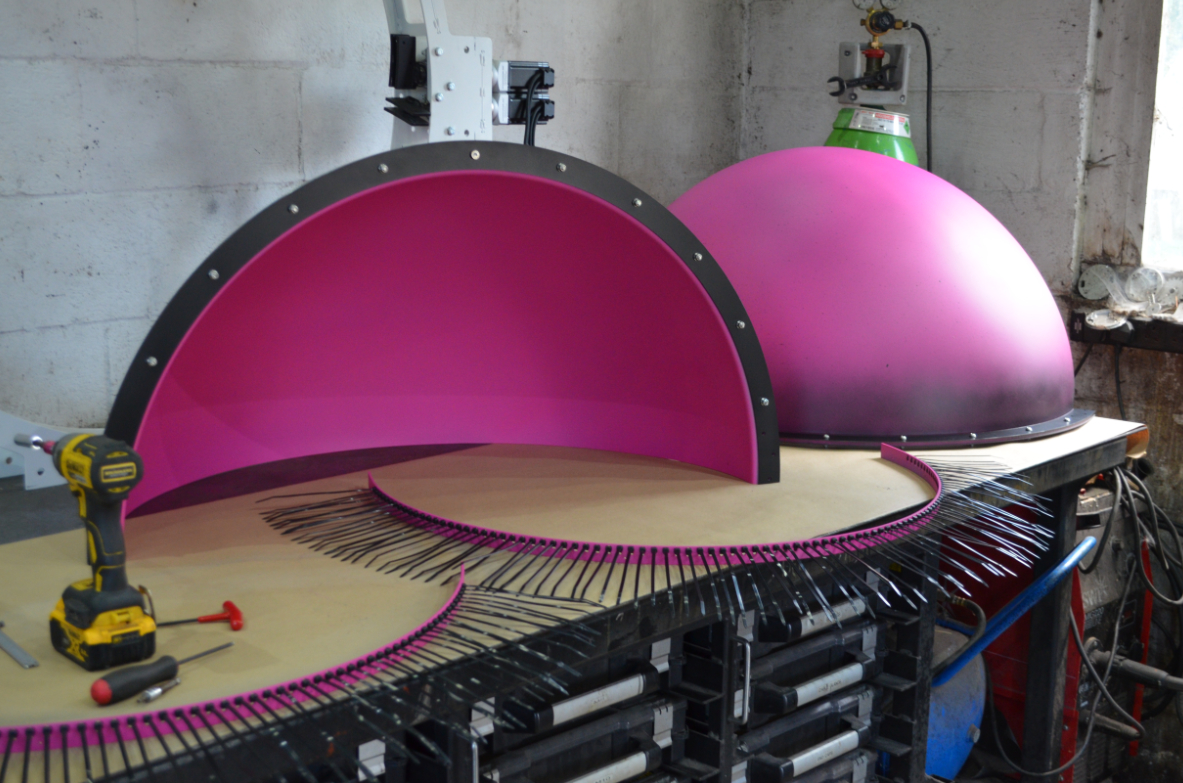
Cable ties were perfect for the eyelashes!
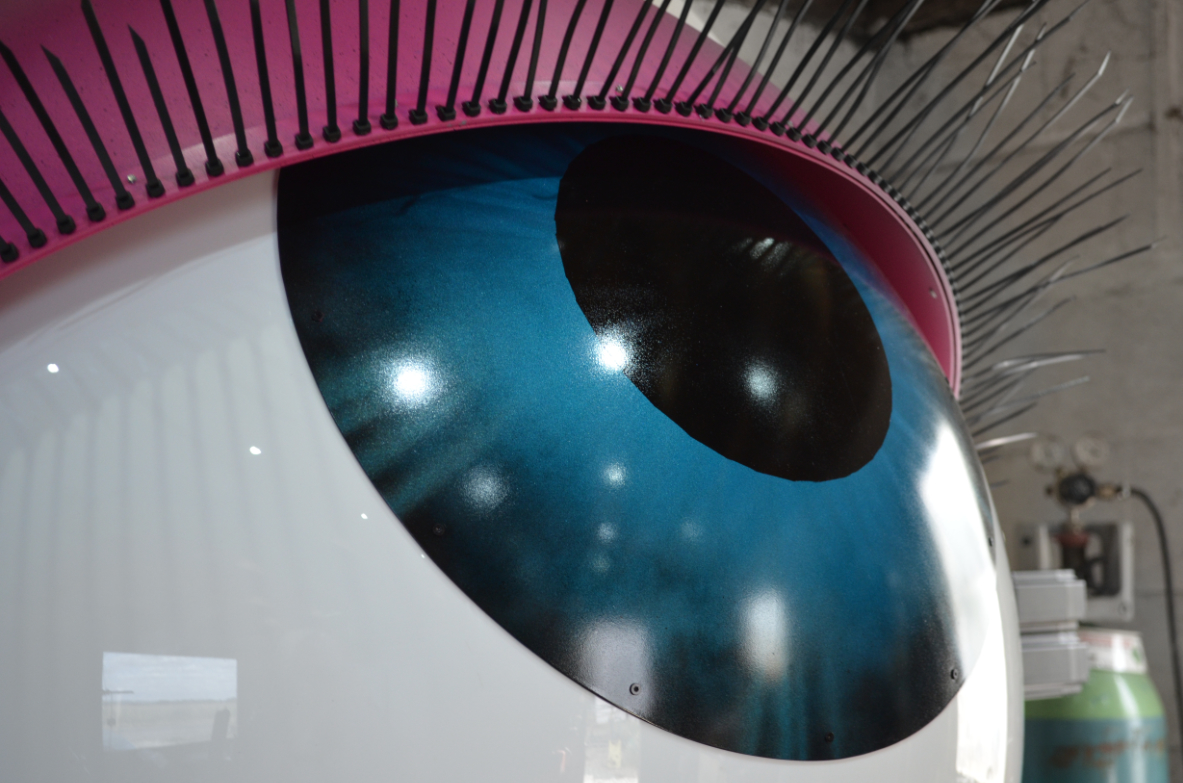
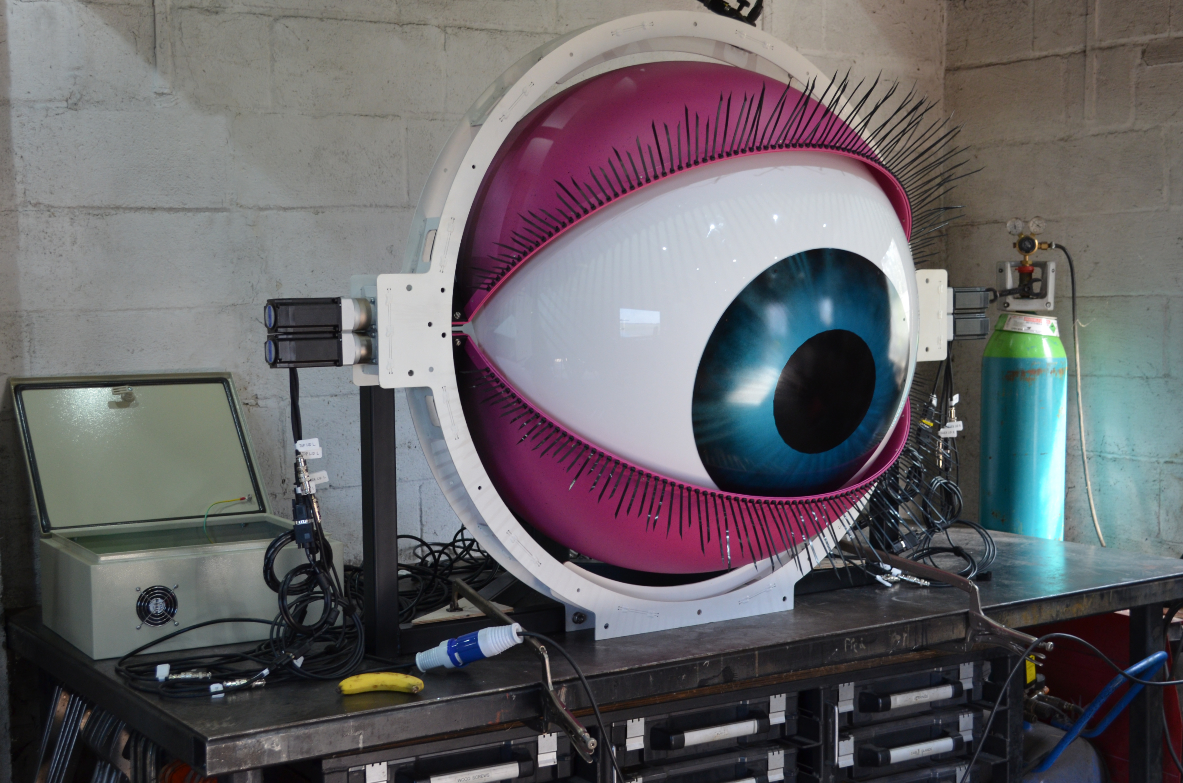
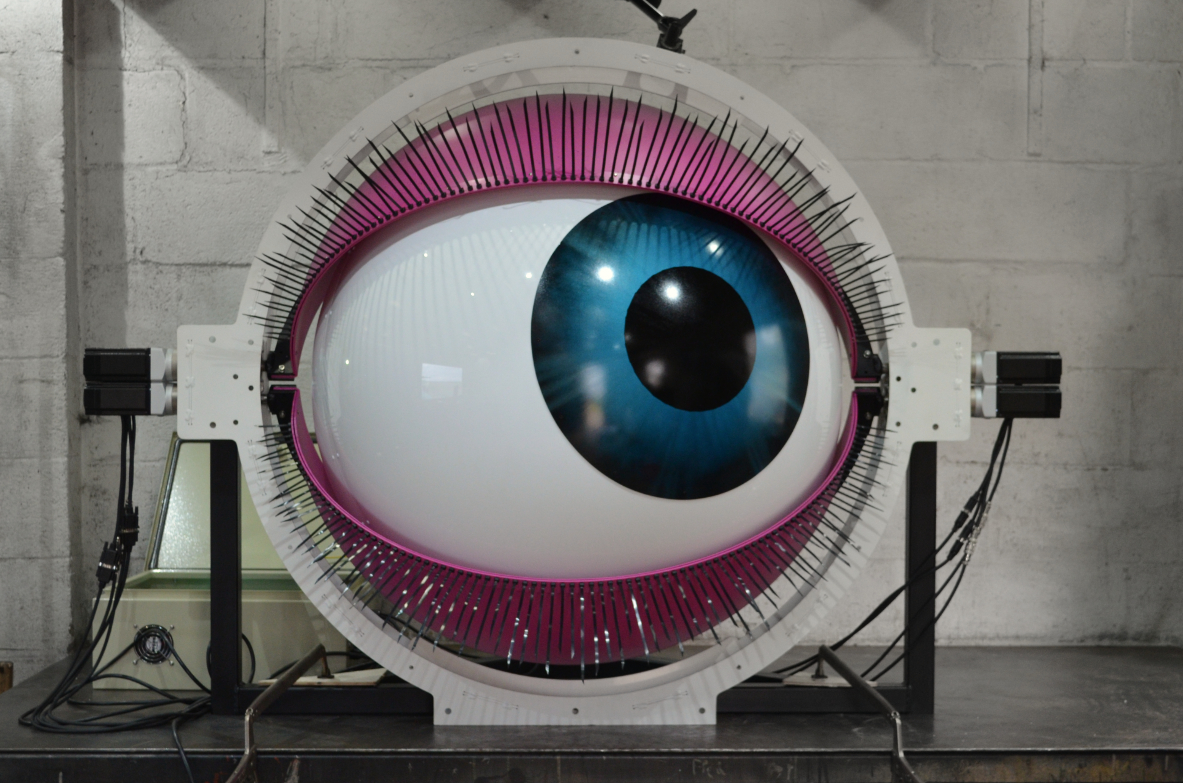
A lot of the eyeball was actually fairly straightforward, in that solutions seemed to present themselves as each stage was reached. One issue that I had been puzzling over, however, was how to cushion the acrylic parts if the power was cut. The two sections that needed cushioning were the top eyelid and the eyeball itself. I had been experimenting with foam pads and springs, but hadn't come up with anything particularly reliable.
On the 16th of July it was time to take a break and head to EMF Camp. I absolutely love EMF, it's such a great gathering of all the best people, described as a "non-profit camping festival for those with an inquisitive mind or an interest in making things: hackers, artists, geeks, crafters, scientists, and engineers".
During the first day of the festival I was chatting to Tim "Mitxela" Jacobs, and he mentioned that he had been considering building a gimbal system for his mechanical flip dot fluid simulator. A problem he was thinking about was how to damp the movement. Tim casusally mentioned he'd been considering stepper motors with the coils shorted together, and right there I realised I'd been given the perfect solution to the eyeball power off cushioning issue. Thanks Tim!
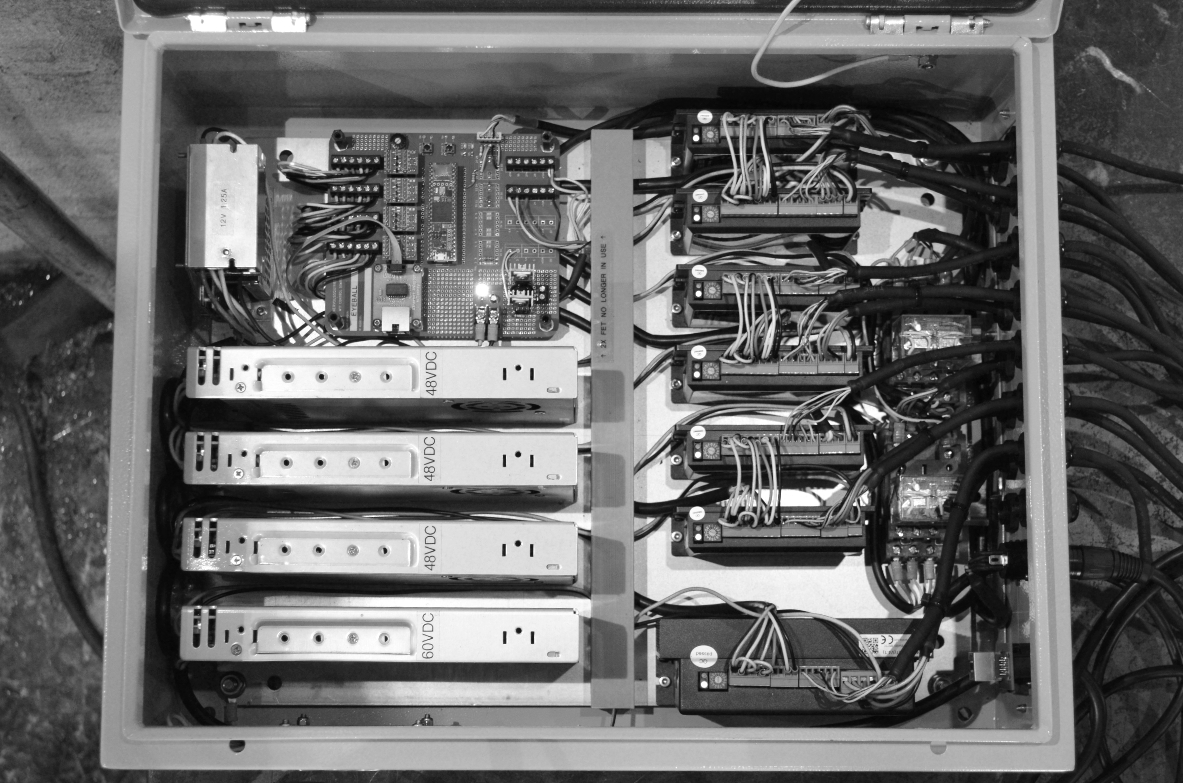
The final system has two 4PDT relays that are always on when power is applied. During everyday use each energised relay connects the four power outputs from a stepper driver to the corresponding motor. As soon as power is cut, the relay shorts the two coils of each motor together, causing the motor to act as a brake. This results in the eyeball and the top eyelid descending gently, rather than crashing down when the power is cut. It's such an elegant solution because it works no matter what position the motors are in, and I didn't have to make any modifications at all to the existing setup, apart from adding two relays.
I had been feeling guilty about taking a weekend off during the middle of a project, but it seems that there can be advantages to venturing out and talking to people! Particularly the folk at EMF Camp.
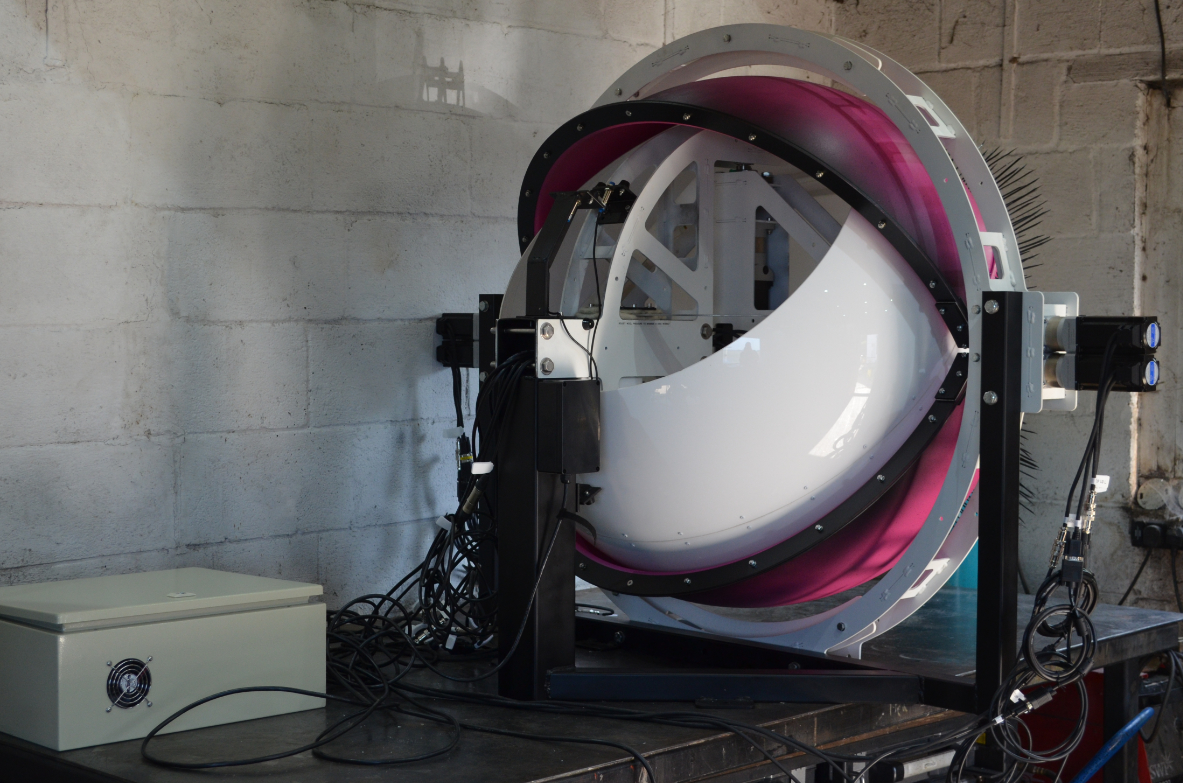
Control box, including power supplies, stepper motor drivers, the custom control PCB and the two big 4PDT relays.
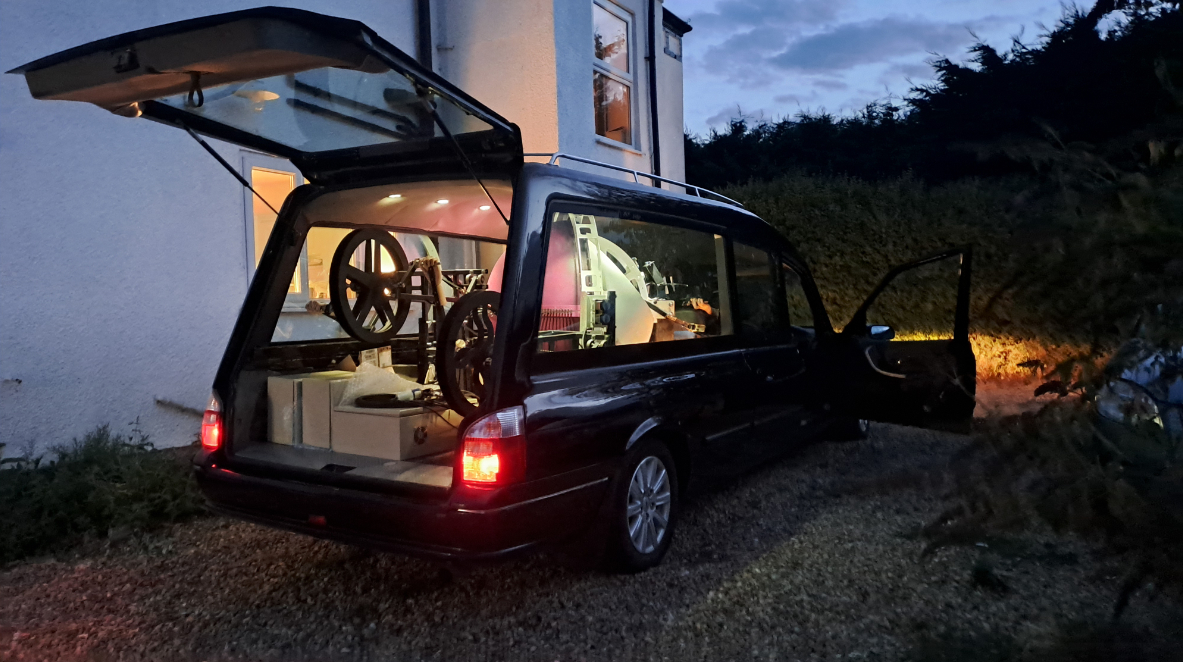
All ready to head to Shepherd's Bush for the first install, where the owner of the "JustPark" space I'd rented took offence at my car and told me never to park in his driveway again. UnjustPark, I'd say.