Kinetic sculptures for Wake the Tiger: Custom PCB
Even before the full functionality of all the kinetic sculptures had been worked out it made sense to produce a board that could be used to control each item.
The client requested Teensy 4.1 microcontrollers to be used throughout, with a view to adding ethernet connectivity once the sculptures were up and running. This would allow fault monitoring and show control functionality.
2.54mm pitch prototyping areas were added wherever there was spare space on the board, as well as breakout points for all of the Teensy pins and power connections.
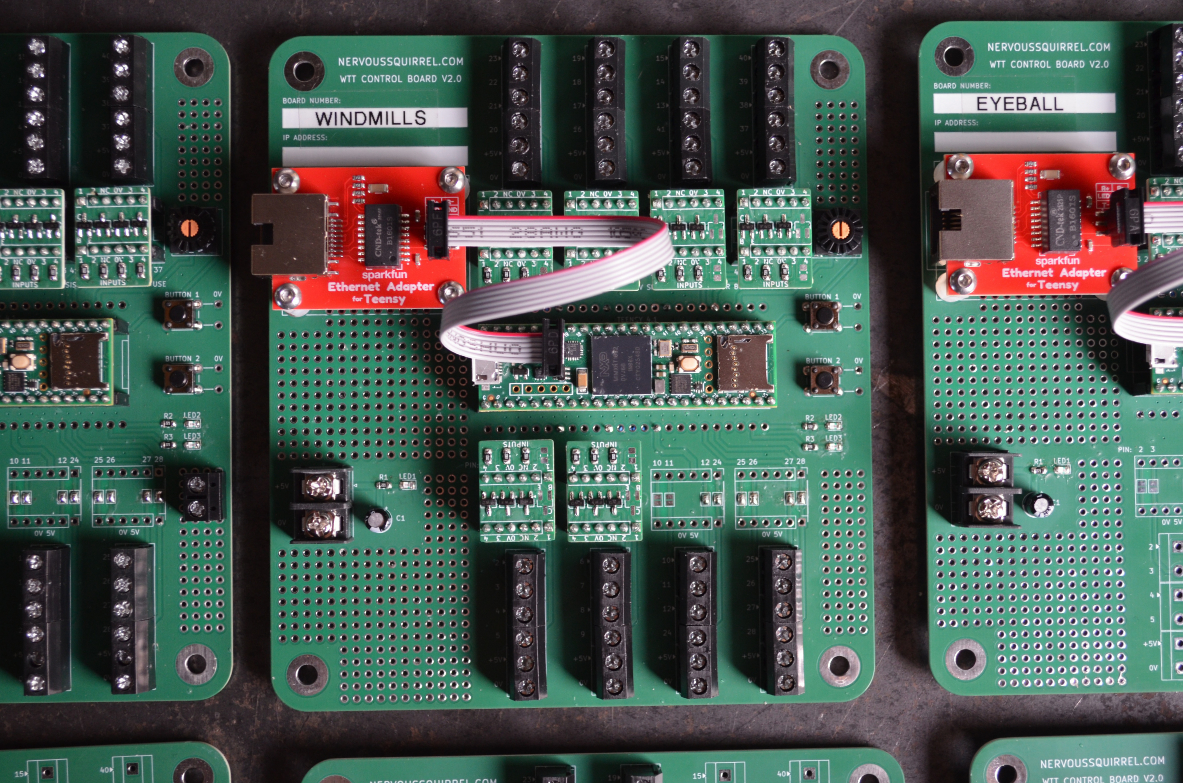
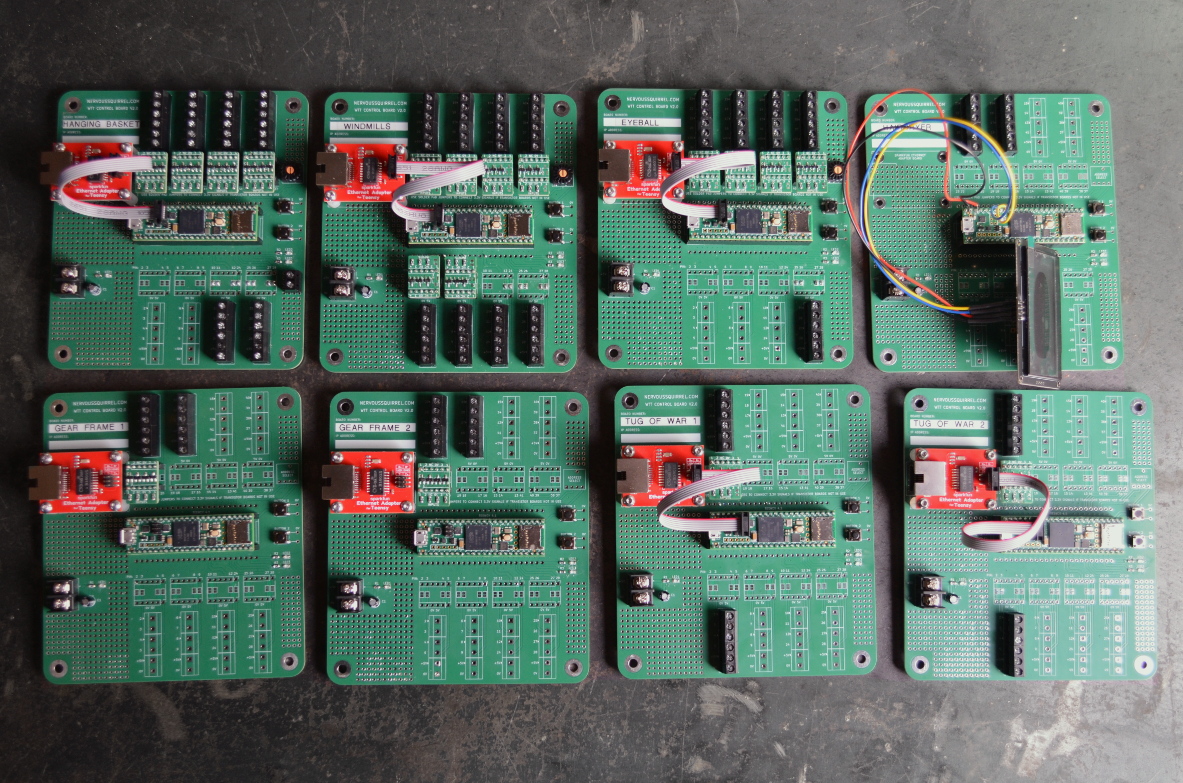
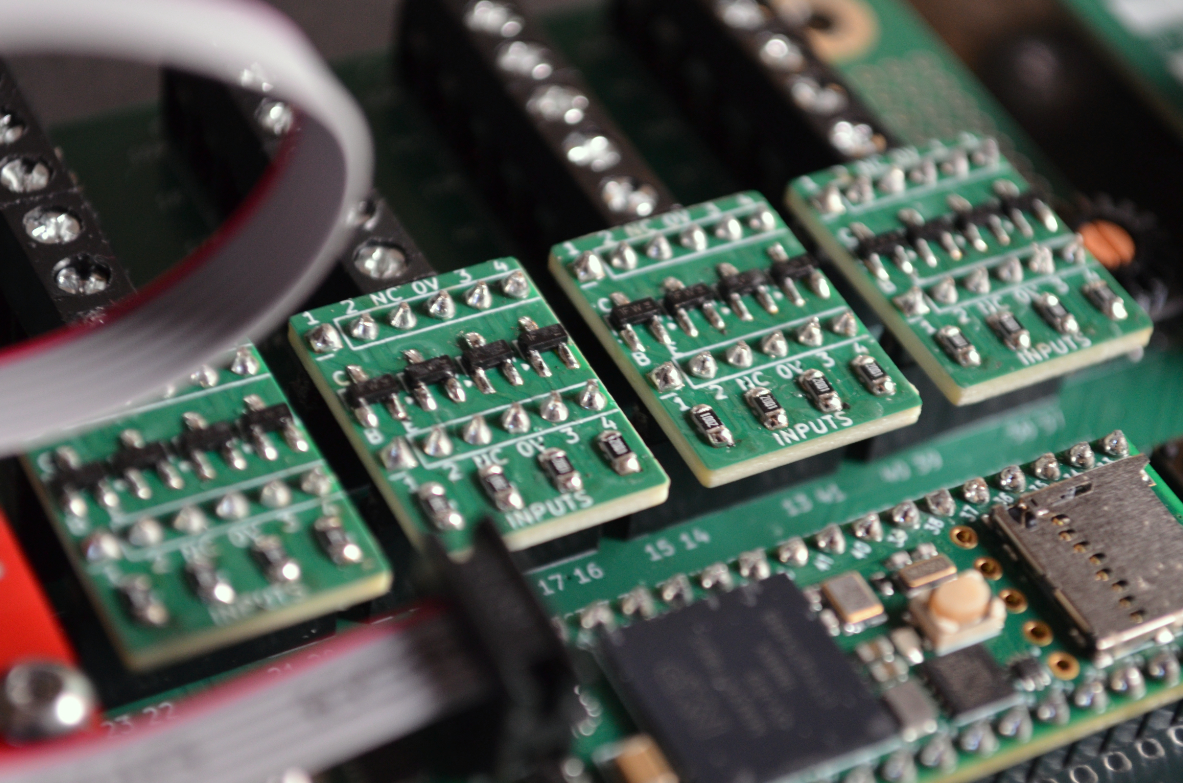
The Teensy uses 3.3V, and so buffer boards were required to interface with anything that required 5V, including the optocouplers on the stepper drivers.
There are off the shelf level shifter boards available, but these custom BC847 transistor boards could handle more current, as well as giving cleaner fast rising edges.
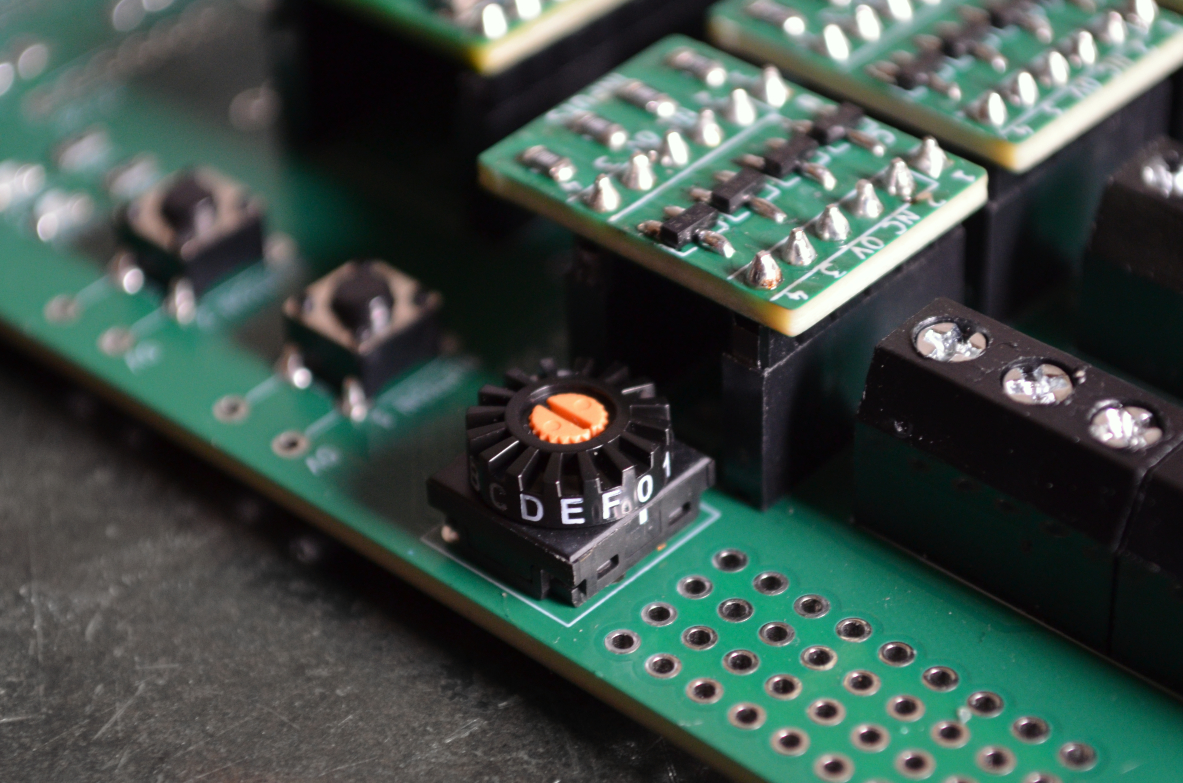
These 16 position rotary selector switches turned out to be hugely useful. Position 0 was generally reserved for normal everyday mode, but other modes could be saved for calibration and testing. I'd used these switches before on Frazer Merrick's ghost detectors, but I think next time I'll use full size selector switches, as they were great for testing but the numbers were hard to see on site in the dark.
Assignable push buttons and LEDs were also included, which were useful.
Next time on a project like this I'd like to include a method of logging the usage of each installed item, so that I can check how many times things have operated before any maintenance is potentially required. It would make it possible to check whether the installation was being shut down correctly in the evenings, i.e. not left running all night, and it could keep a record of how many times particular components can be used before they need replacing.
I supplied each of the kinetic items with code to run everything, but Louis and his team then took it to the next level to synchronise everything within the Wake the Tiger storytelling environment.