Kinetic sculptures for Wake the Tiger: Motorised pulley systems
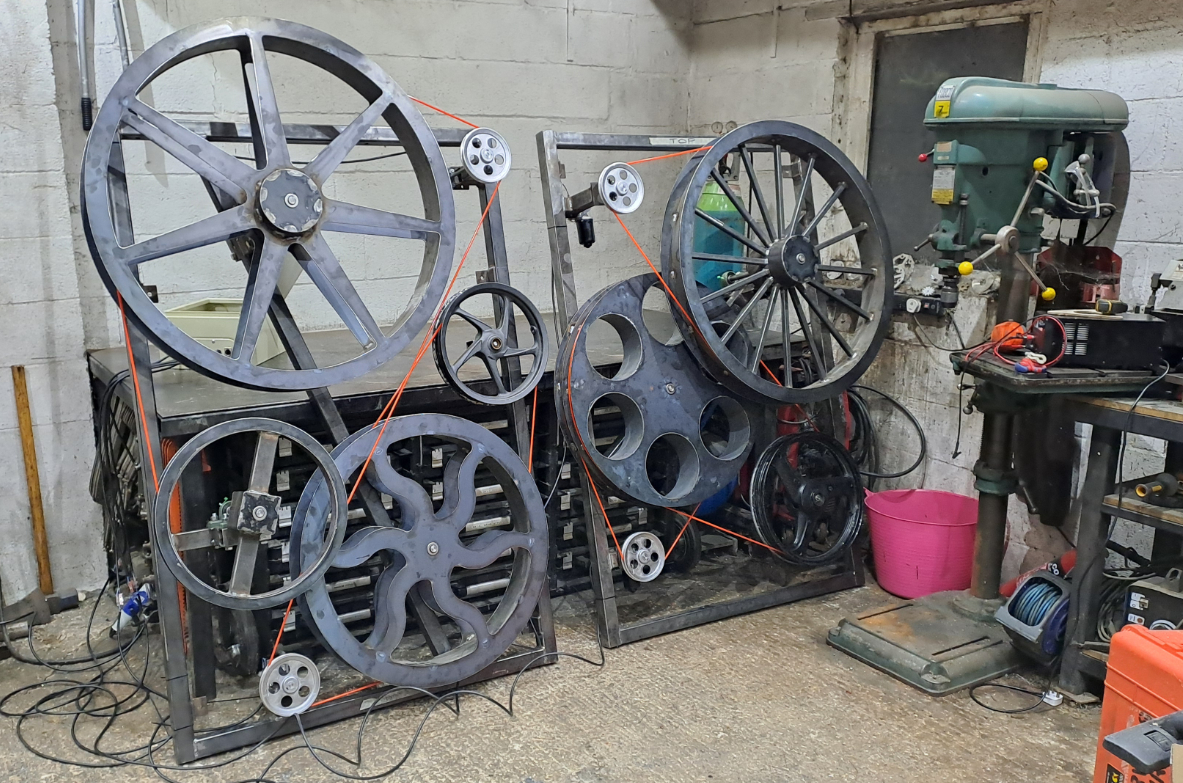
These decorative elements were requested to add some movement to the set.
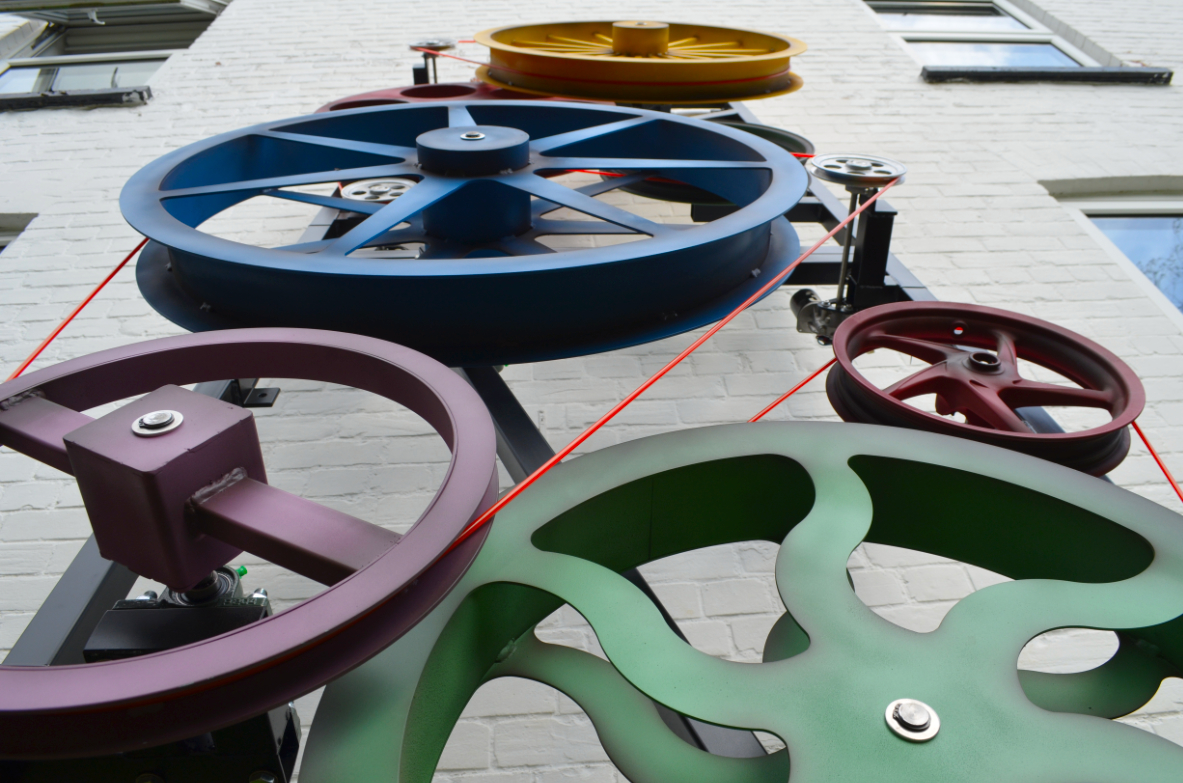
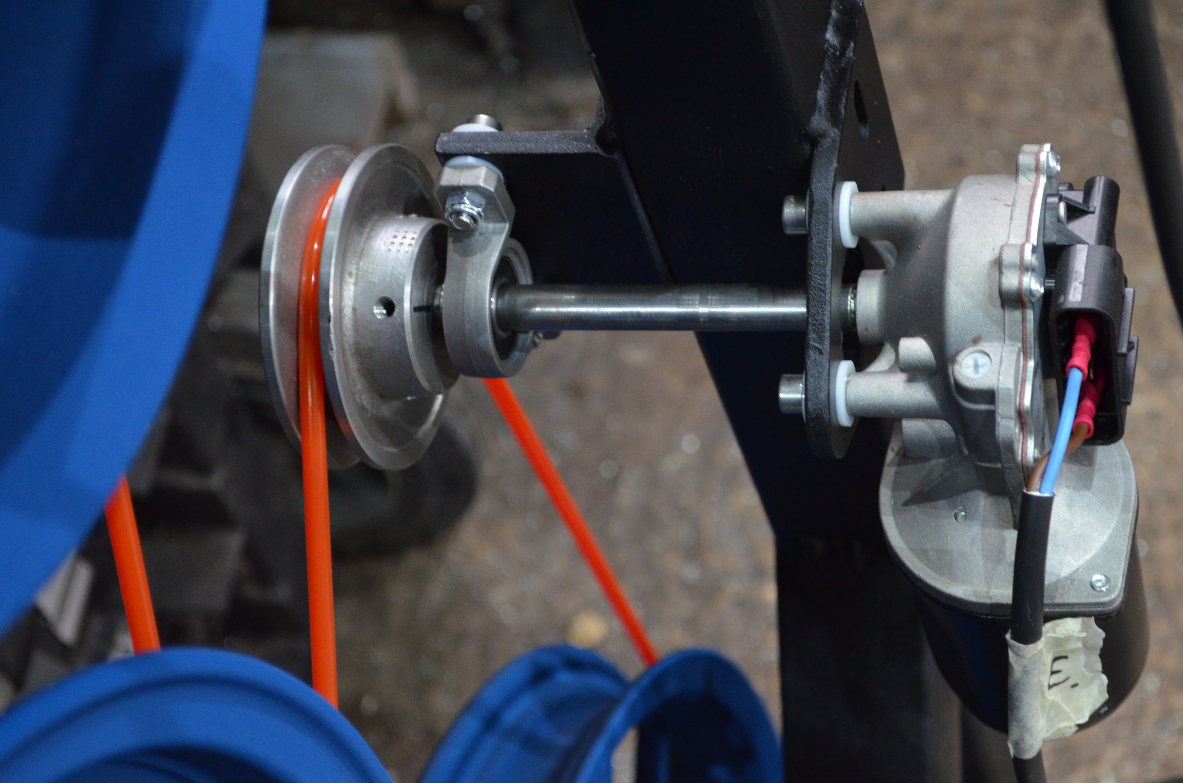
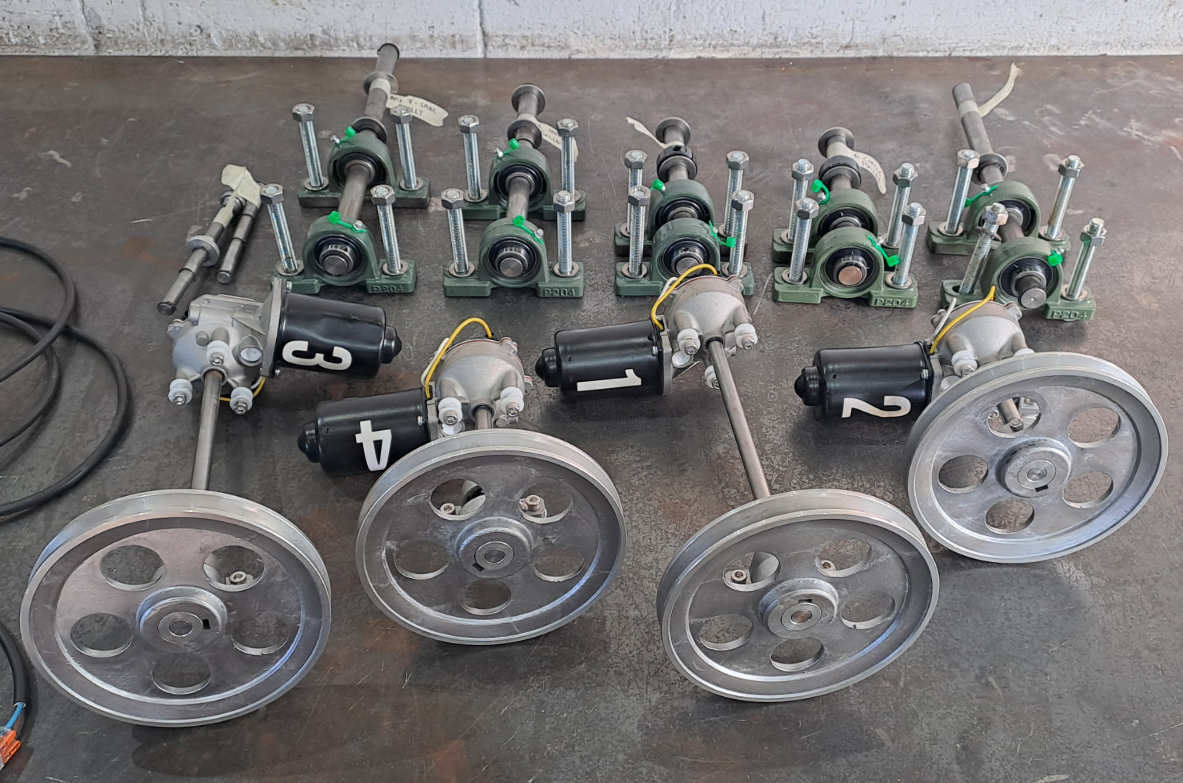
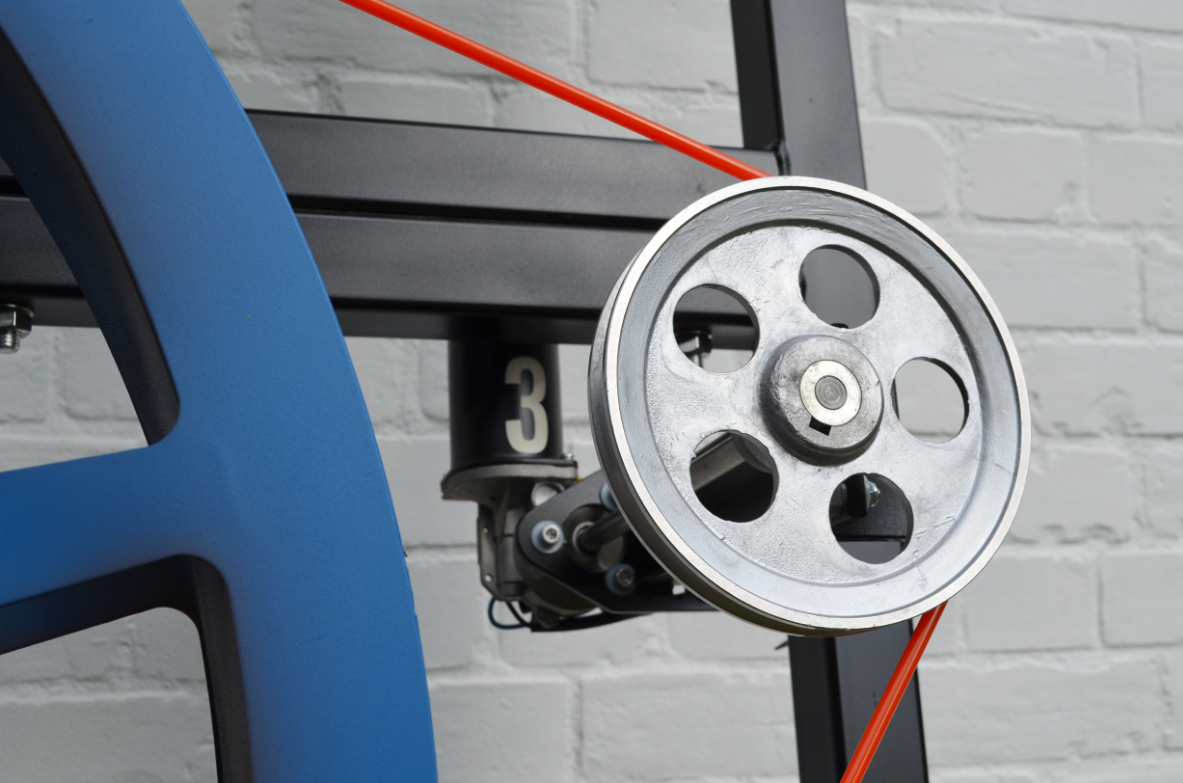
Automotive windscreen wiper motors seemed like a good choice to drive the pulleys, as they'll last a long time and can easily be replaced.
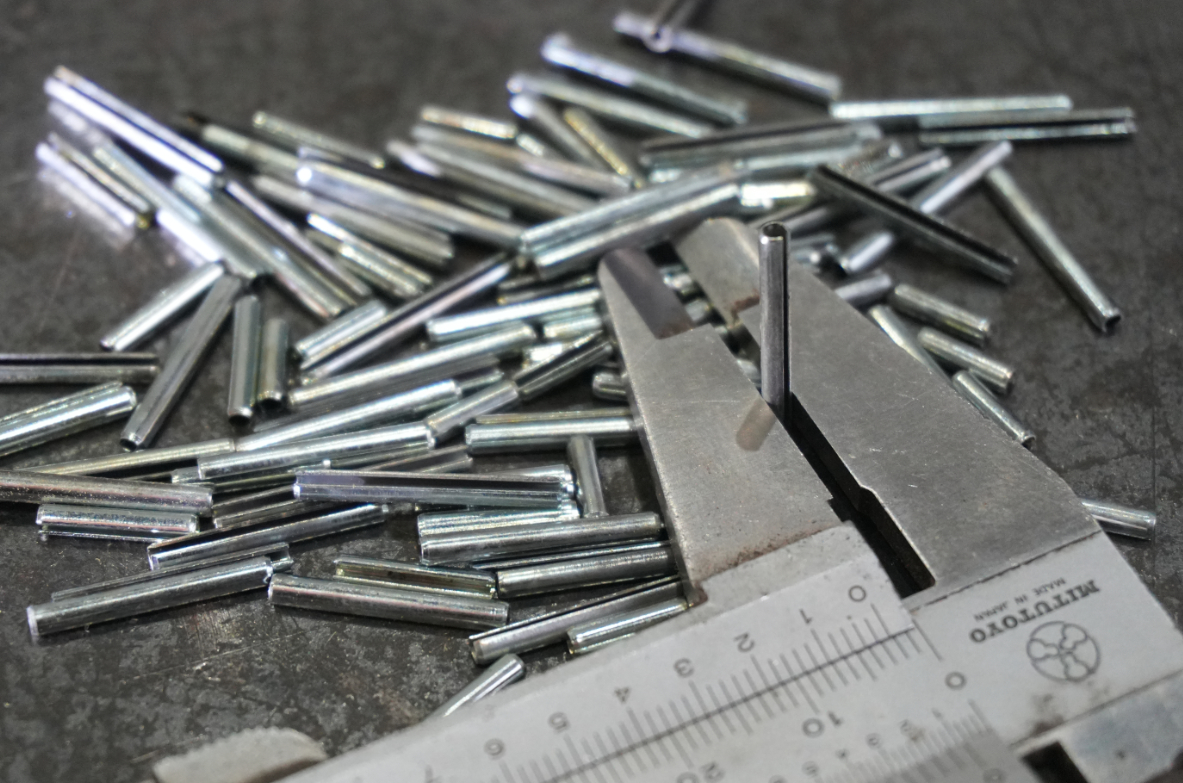
12mm bar was used for the motorised shafts, secured with a 2mm roll pin.
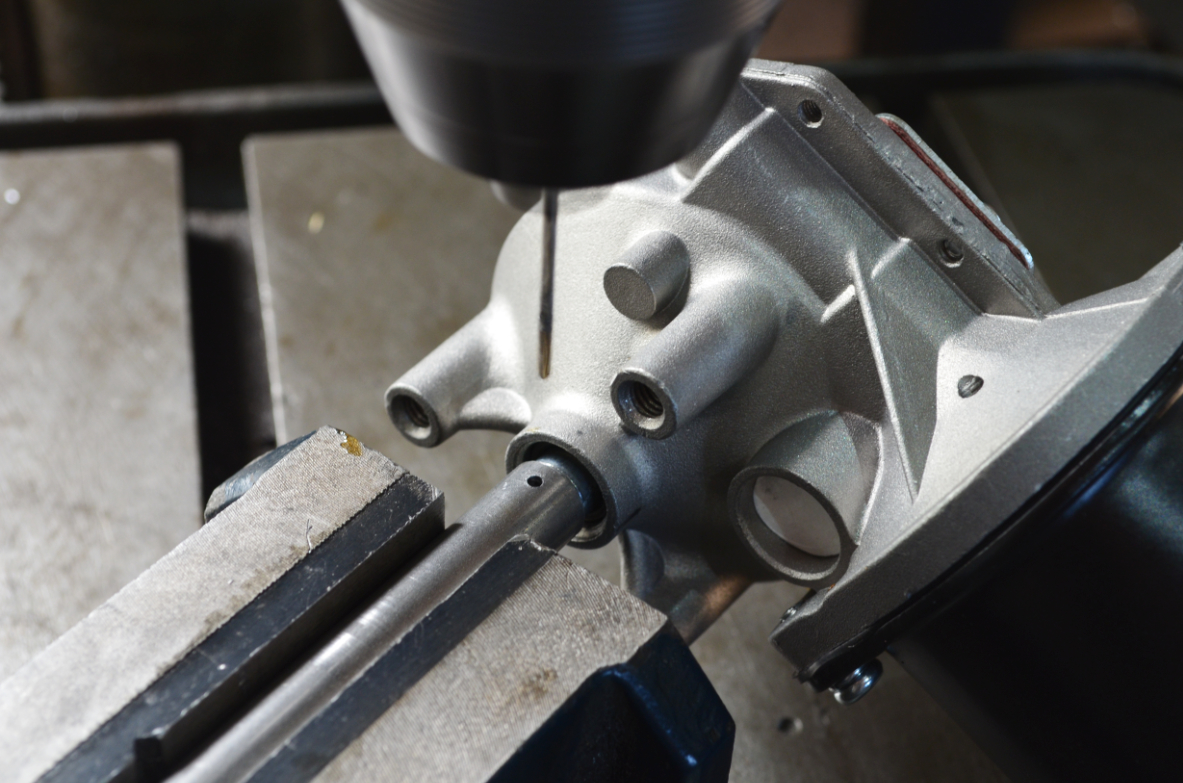
The pins are hammered in place using a parallel pin punch, and can be removed when necessary.
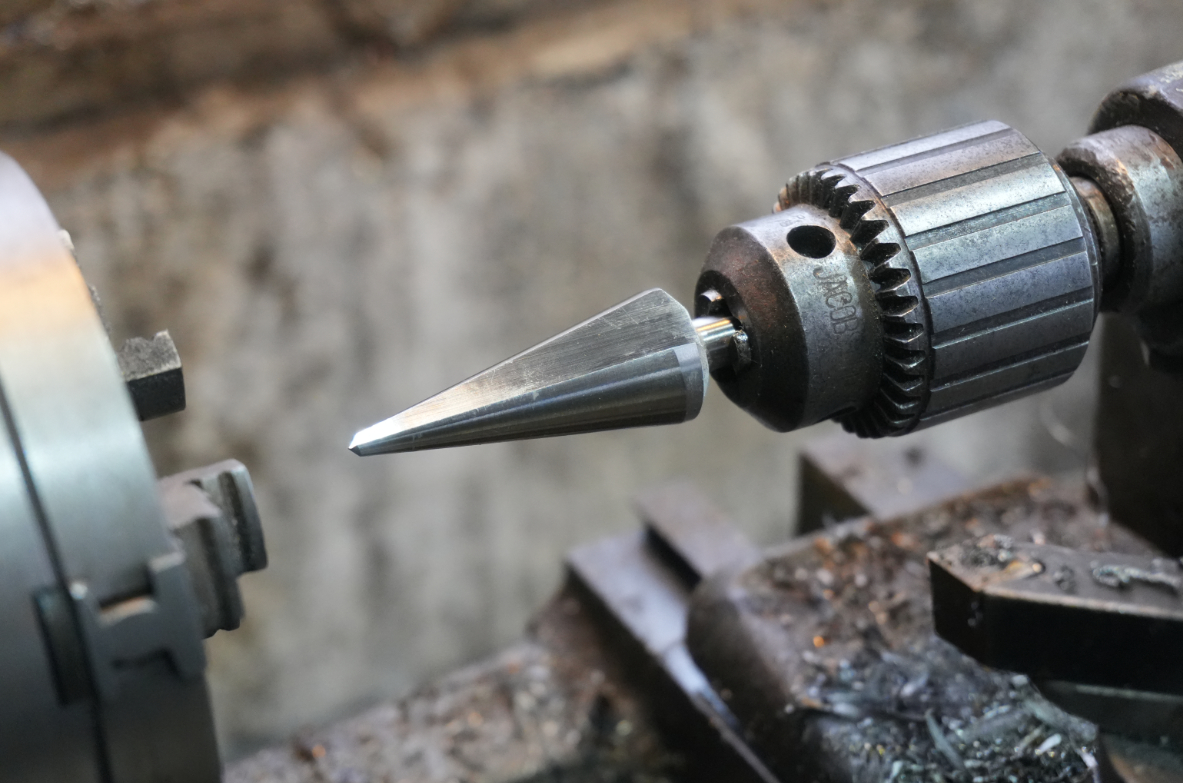
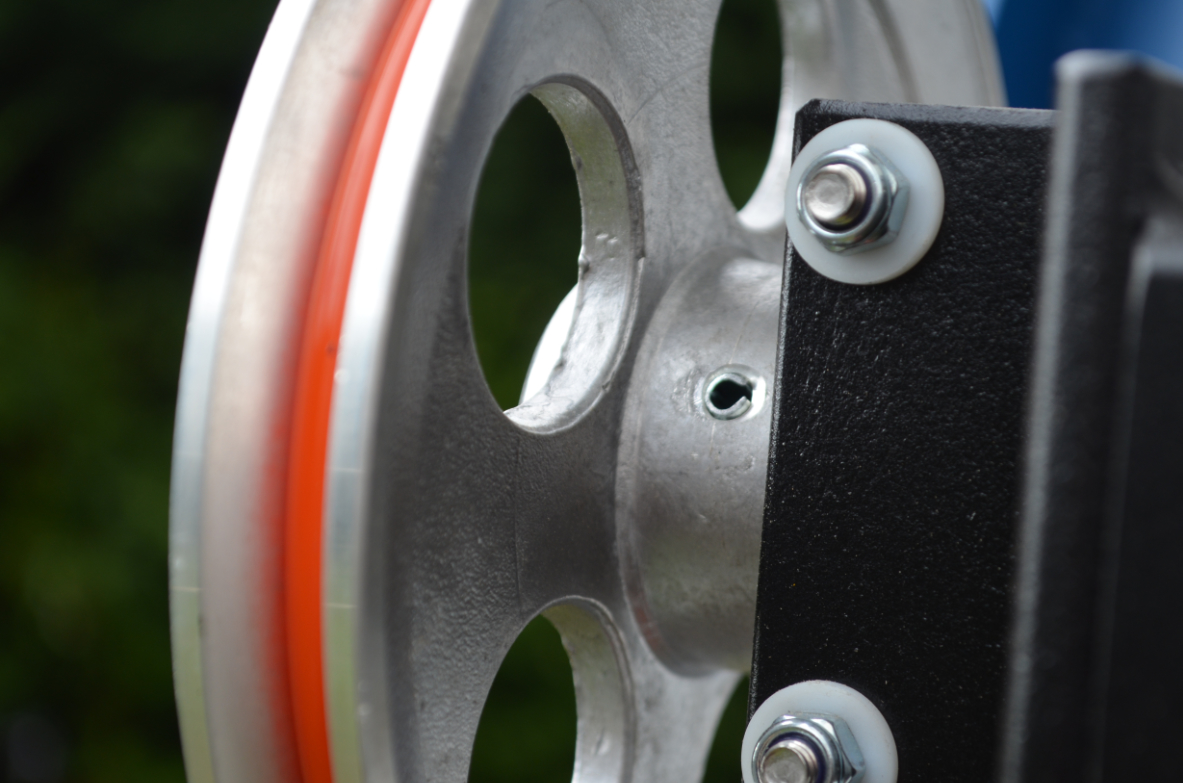
As well as drilling and tapping an M8 thread to screw onto the motor shaft, a conical drill was used so that the sloped part of the shaft was a really good fit. Combined with the roll pin this method worked really well.
Front wheels from 125cc motorbikes are a great source of interestingly shaped pulleys.
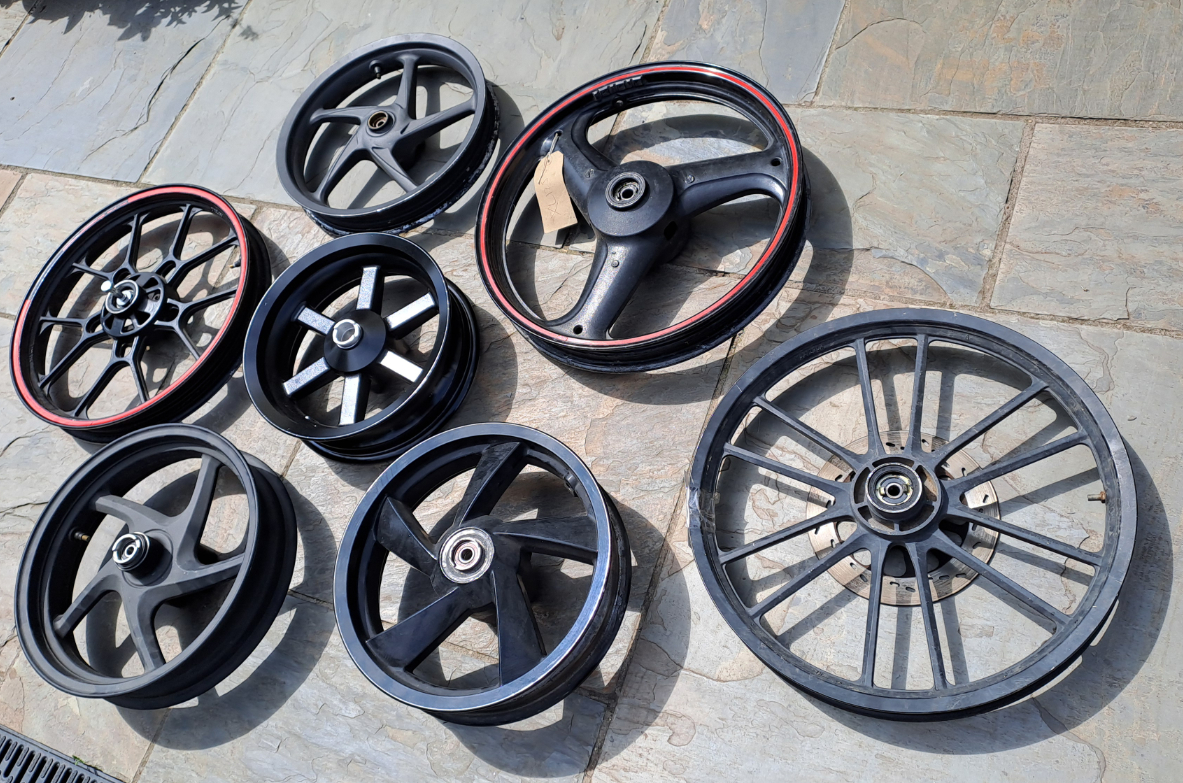
They also mostly arrived with their bearings still fitted, and so could be easily attached using circlips.
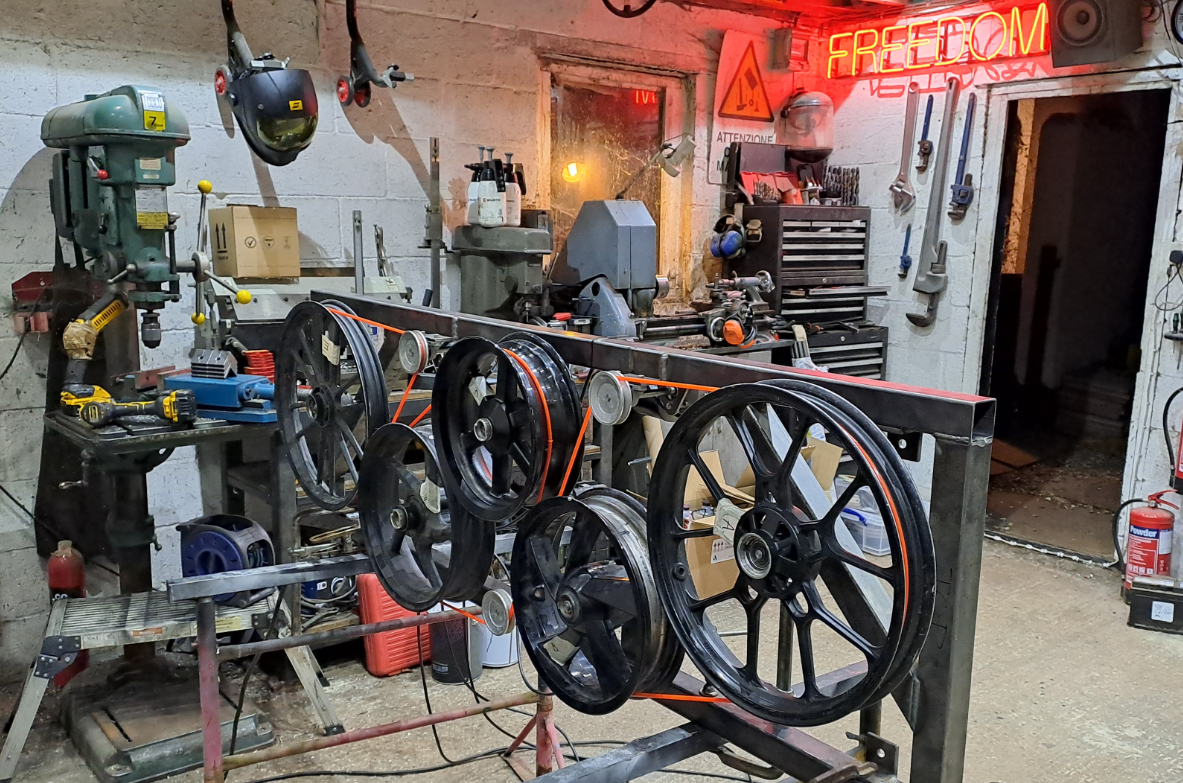
The motor pulleys drive the larger pulleys using 6mm polyurethene round belt, which can be bought by the metre.
Tim Hunkin describes a great technique to join polyurethene belt in his "Secret Life of Components" episode about chain and belt drives. All you need is a soldering iron with a wide tip, which can be used to melt the ends of the belt. Clamp the soldering iron in the vice, and it's then just a case of sliding the ends of the belt off the tip and pressing them together.
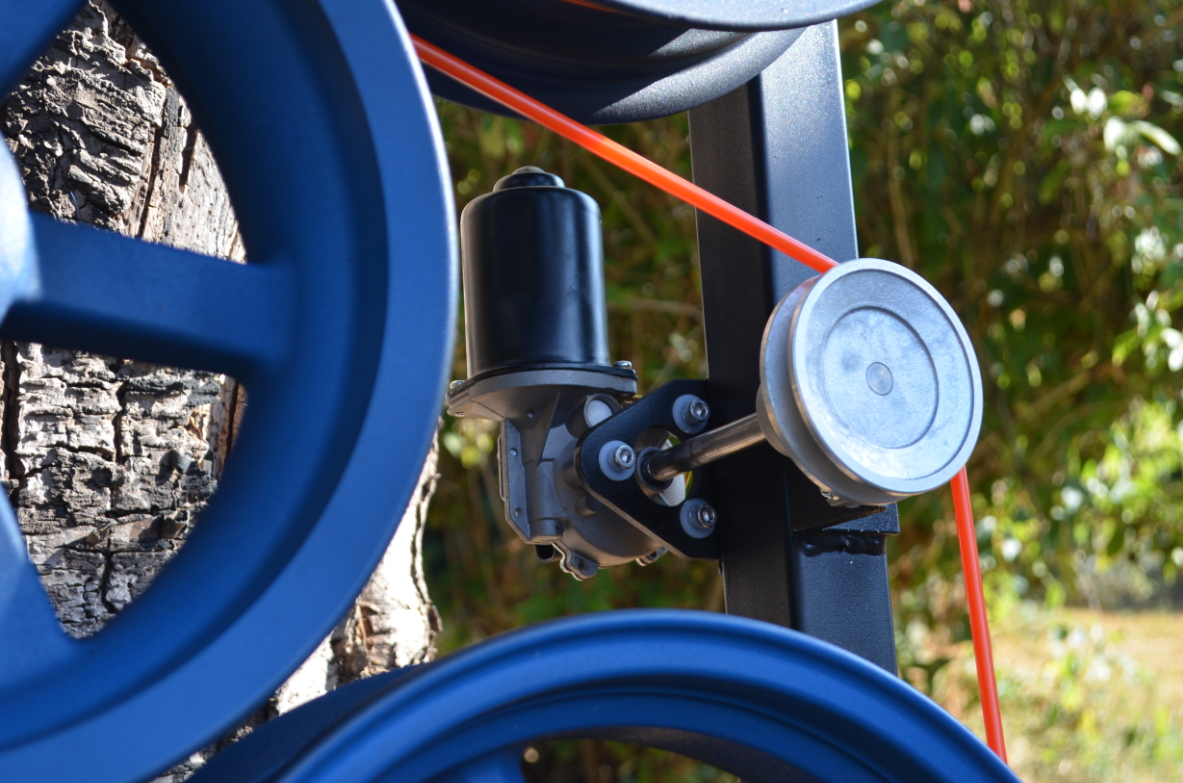
If you look carefully you can see that the motor and bearings have nylon washers and "top hats" to electrically insulate them from the steel frame. This is because the casing of the motor is connected to ground, and so the motor needs to be isolated so that the polarity can be reversed to change the motor direction when necessary.
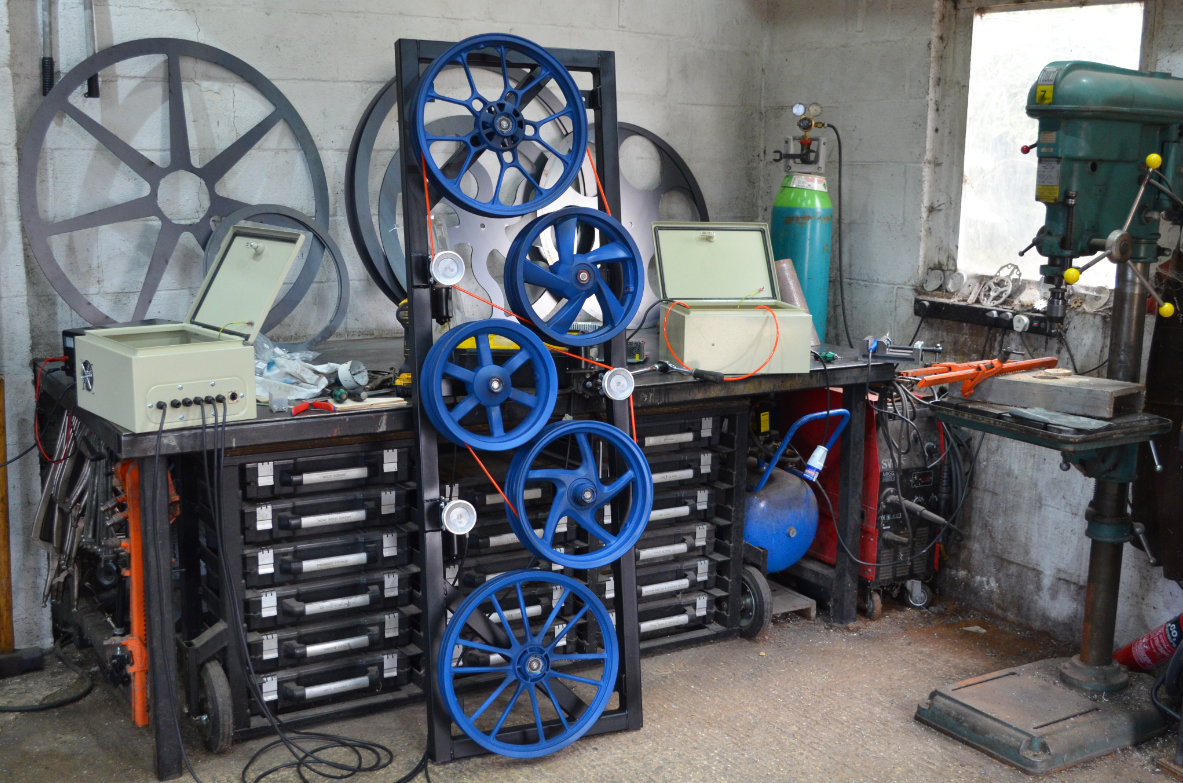
Small frame done, now on to the larger frame...
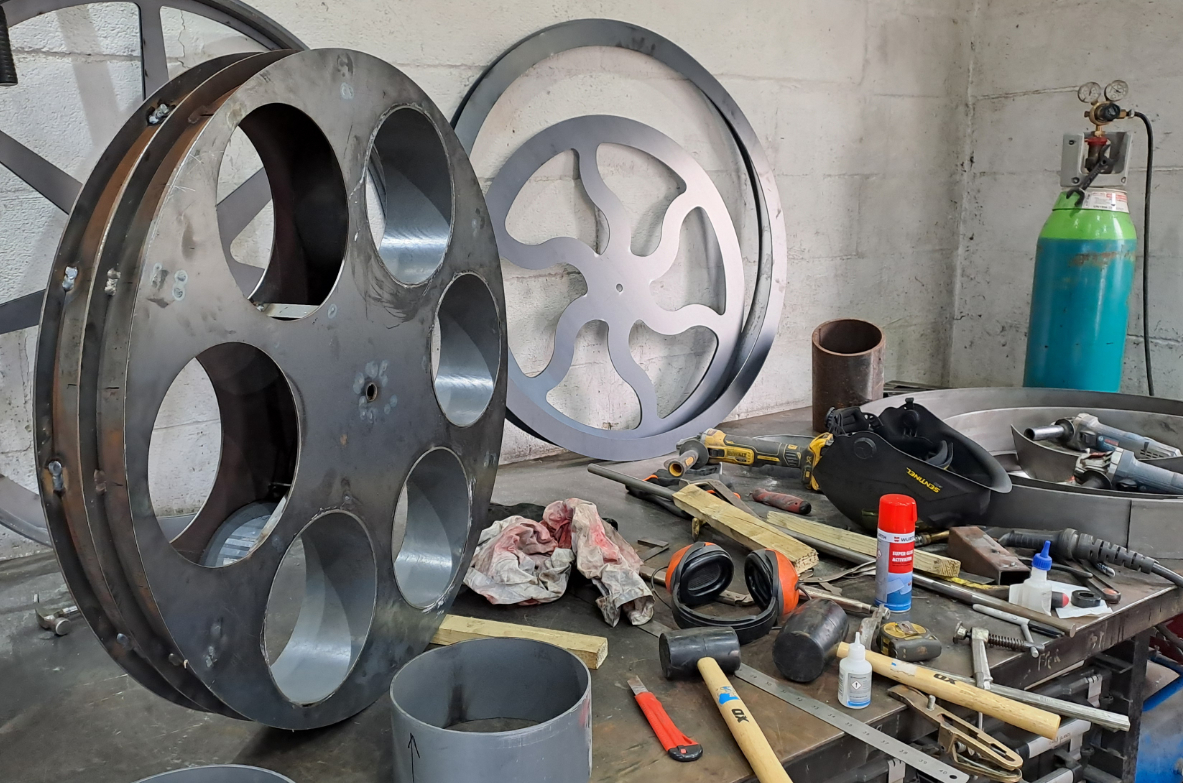
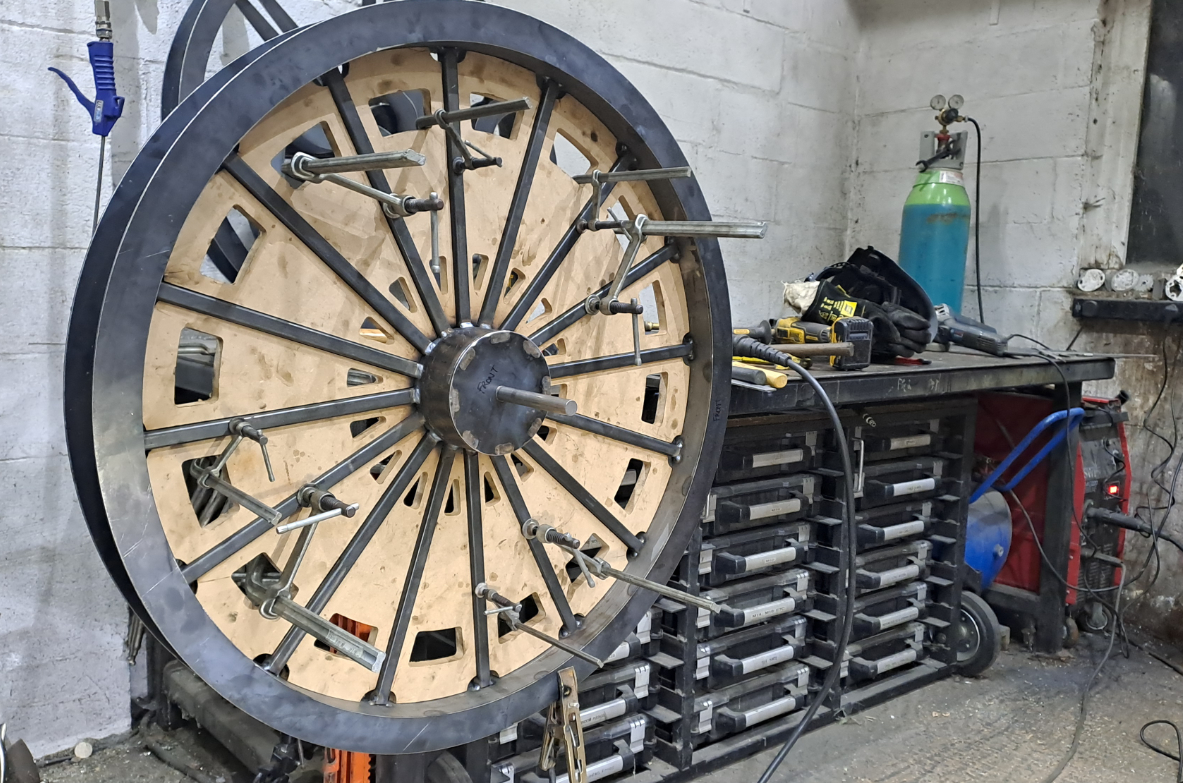
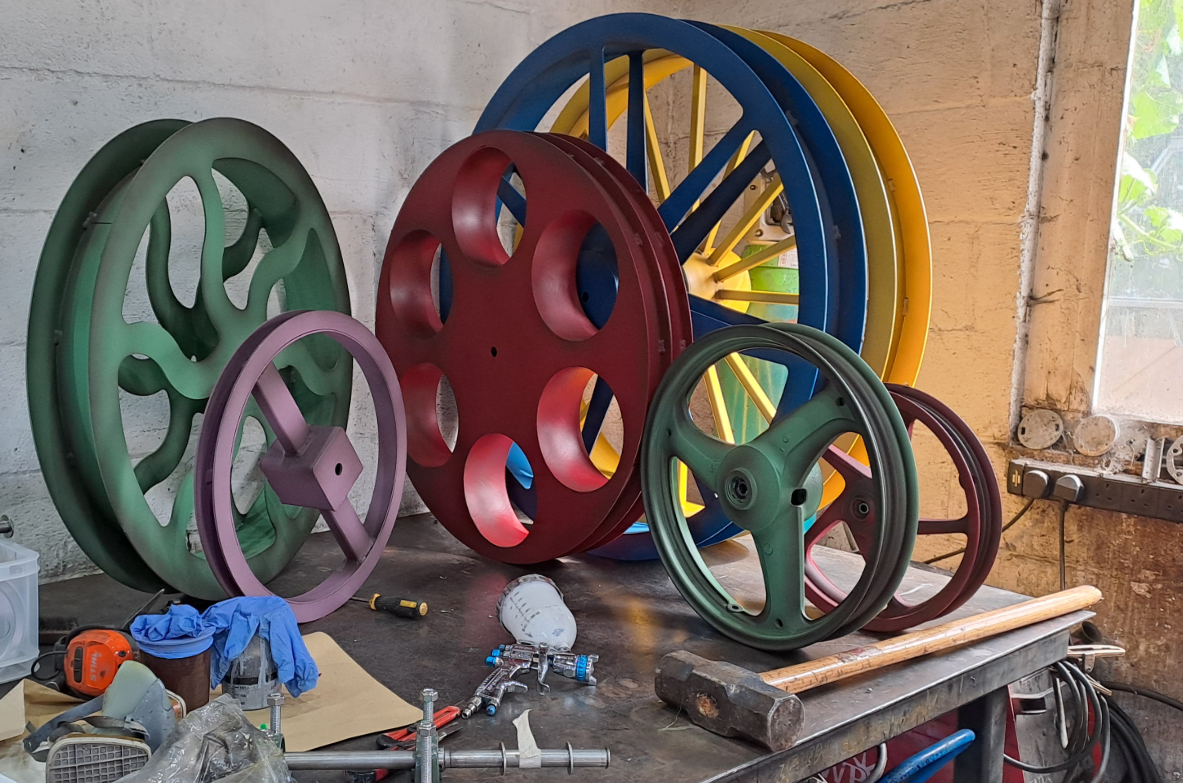
The larger pulleys ran on 20mm shafts and bearings, all held with circlips.
Notice that again roll pins have been used - much better than grub screws.
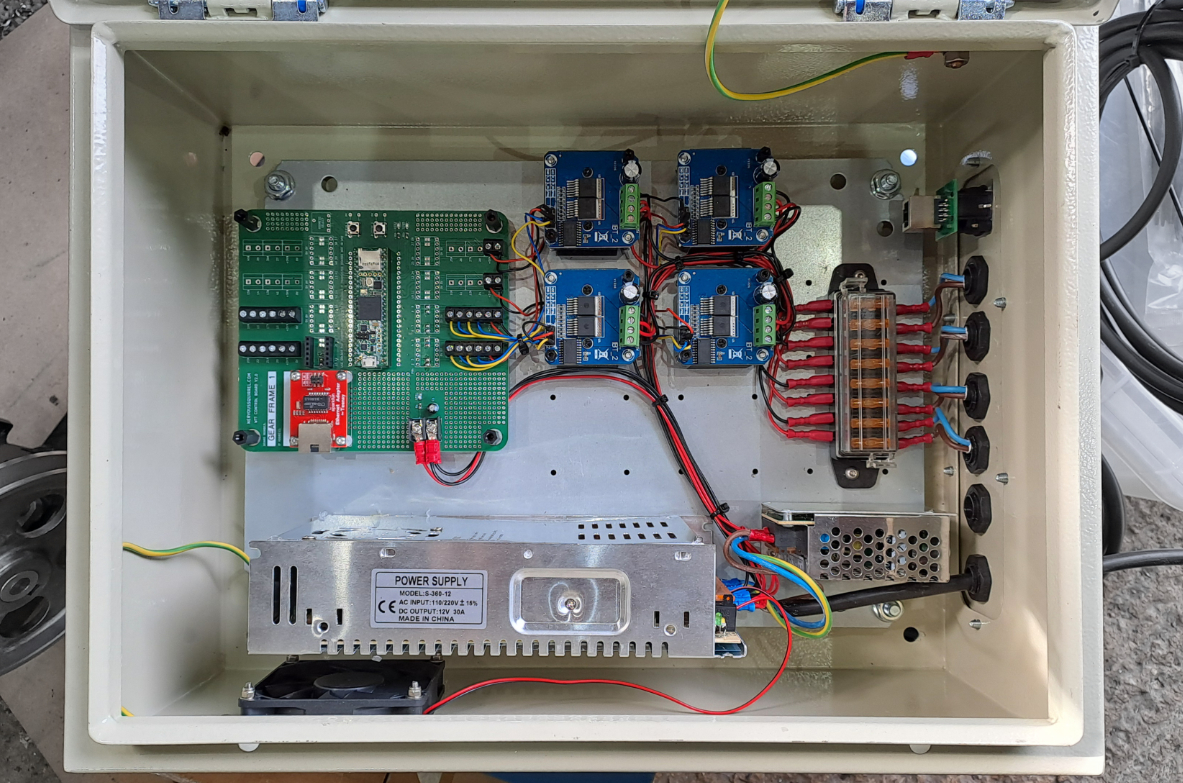
Both pulley systems used BTS7960 PWM H-bridge drivers to allow speed ramping. The soft start will make everything last a lot longer.
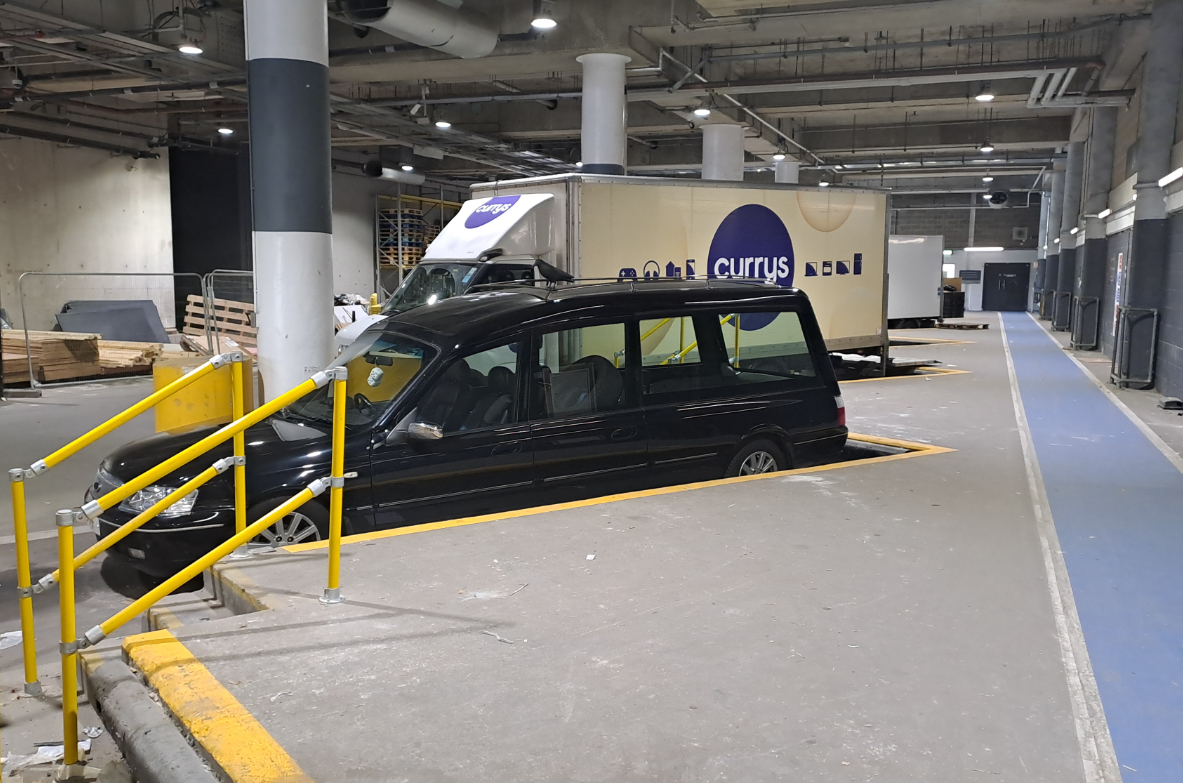
To make a delivery to Westfield shopping centre, a slot must be booked, and you have to head to your allocated loading bay in the right service yard at the right time.
To enter the gate, you pull up at the intercom, and a man asks for your vehicle registration number, amongst bursts of static.
Then begins the farcical ordeal of repeatedly shouting your number plate at the orange fencepost. The man cannot or does not want to hear you, and replies via a series of distortion pedals through which he has routed his microphone.
After spelling out the number plate a few times, and flustered by the queue of lorries waiting behind, I begin using stranger and stranger descriptions.
"No! E for echidna!"
It wasn't until about the third install visit that I realised it was of course a game devised by bored security employees: see how many times we can get an unsuspecting driver to repeat their number plate. I must've helped them achieve a new record. They can probably see the plates on a camera anyway.
The loading bay is a desolate place. It's a place where no-one wants to be, like a motorway hard shoulder, and just as unlikely to be chosen as a destination for a family picnic.
"E for xylophone?"
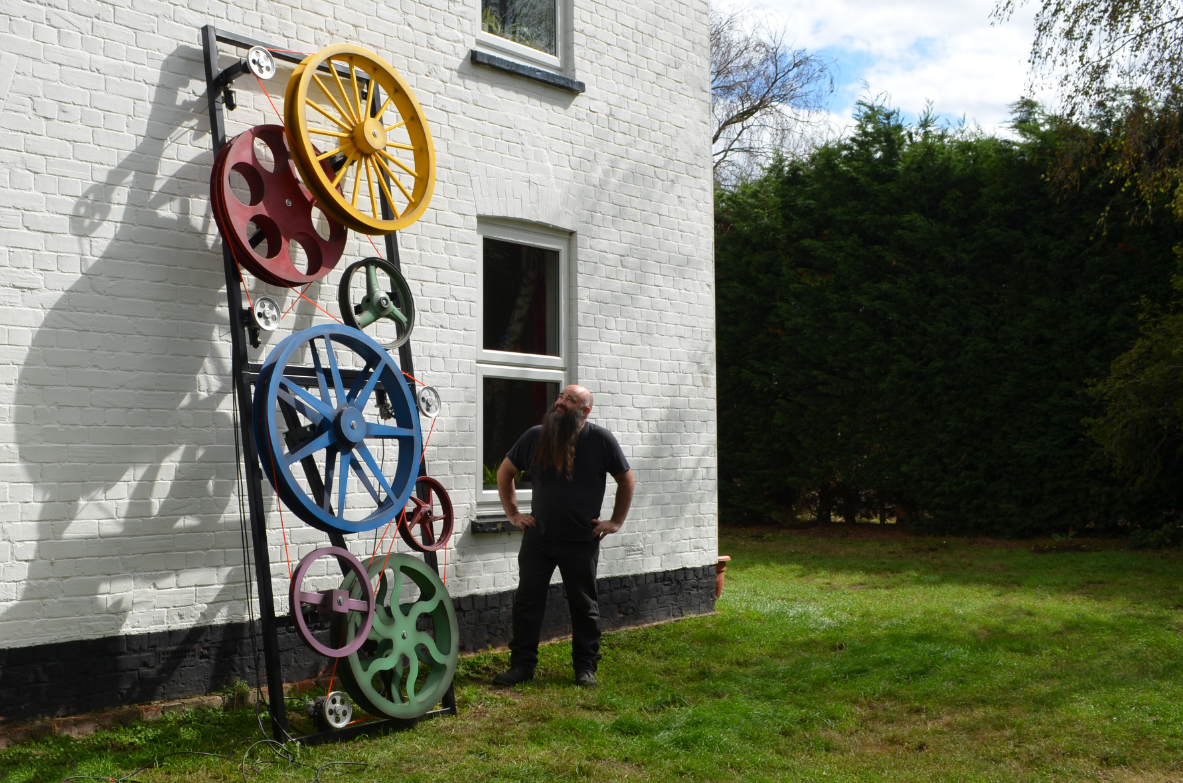
Here's the larger frame, built into the set at Wake the Tiger.
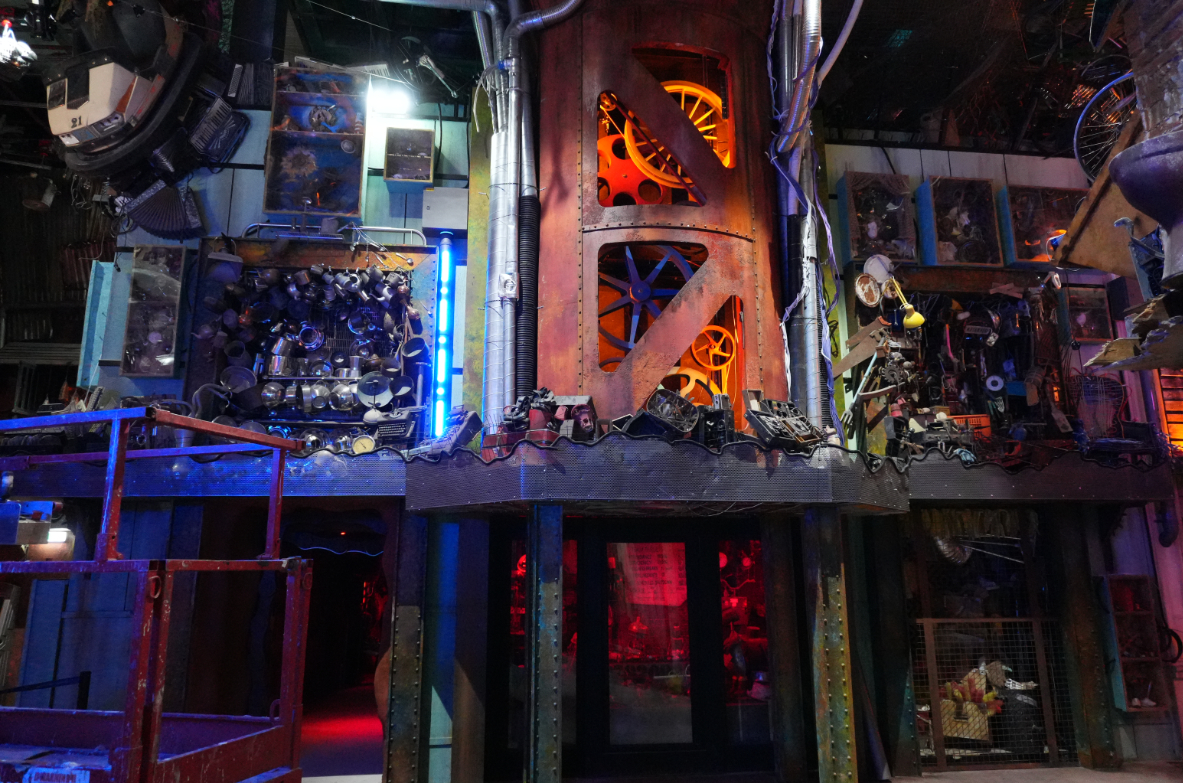
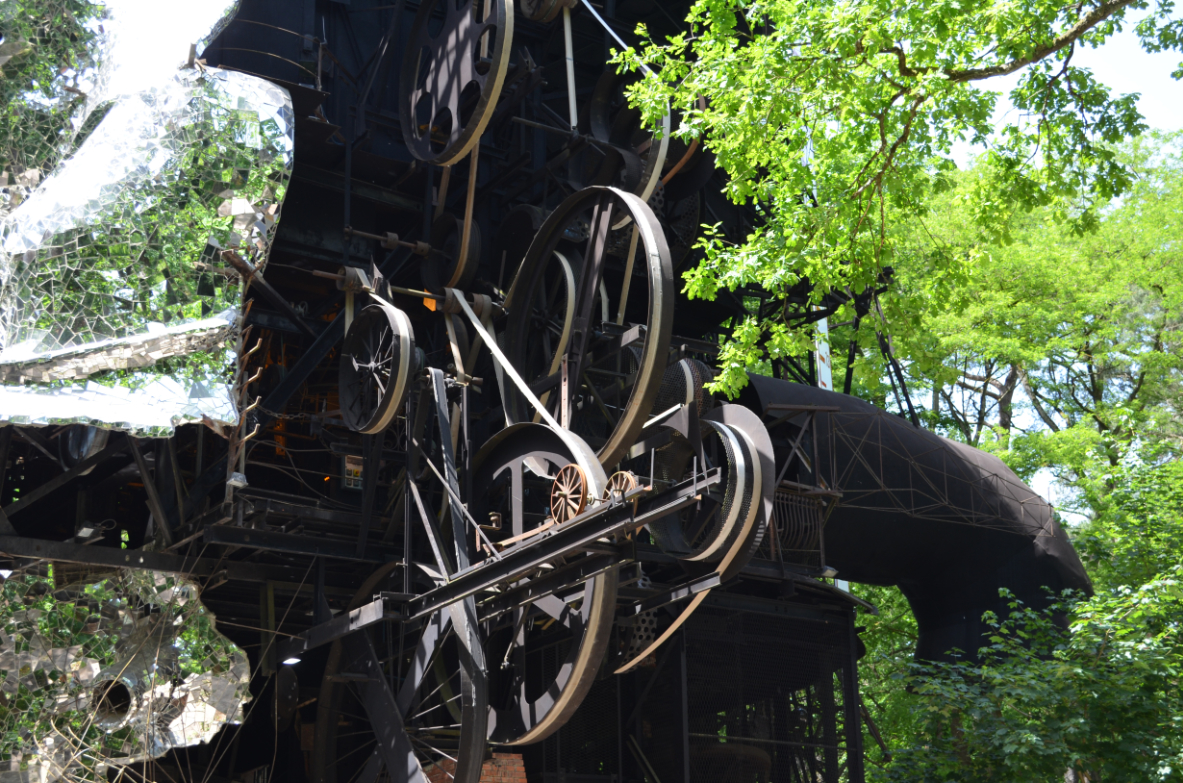
During this project I made a trip to Milly-la-Forêt to visit Jean Tinguely and Niki de Saint Phalle's amazing sculpture, "Le Cyclop". This had a big influence on the larger pulley frame, which I enjoyed making as a homage to Tinguely's fantastic work.
It was also quite fitting that the sculpture had a mechanical Cyclops eye, as part of the project for Wake the Tiger also involved an animatronic eyeball.
I'm very envious of Tinguely's access to such a golden era of scrapyard material. I couldn't easily source so many agricultural parts, and had to cheat by getting shapes laser cut, as the deadline was a few weeks rather than 25 years.
Get in touch if you'd like to commission something similar to Le Cyclop - I'd love to make something on that scale.
I'm a big fan of Tinguely's work, and recently was very lucky to be involved with the ghost train project to celebrate what would've been his 100th birthday.